The Legacy Portrait Project was born out of an idea to commemorate Yom HaShoah (Holocaust Remembrance Day) by photographing survivors together with their grandchildren. These portraits capture a moment in time, a glimpse into the individual triumph of each survivor, having prevailed over evil by building families, finding love and joy after the Holocaust. Poignantly it will be this next generation’s responsibility to share their grandparents' legacy, to be the ones left to tell the stories, keeping their grandparents' memories alive.
Six million Jewish lives were lost in the Holocaust, a tragedy unparalleled in history. We mourn those who perished and celebrate those who survived.
Pinchas and his twin sister were born in Lodz, Poland in 1932. In 1939, his family was forced into the Warsaw ghetto. After the Warsaw ghetto uprising in 1943, Pinchas and his family were sent to Majdanek, where his family was murdered. From Majdanek, Pinchas was sent to a work camp, to Buchenwald and then on a death march from Germany to Theresienstadt. Pinchas was liberated in 1945 by the Soviet Army. After liberation, Pinchas was taken to Britain, then lived in France, Israel, Brazil and South Africa before moving to Canada with his wife, Dorothy. Together they have children and grandchildren. Pinchas has also written a memoir called Memories in Focus.
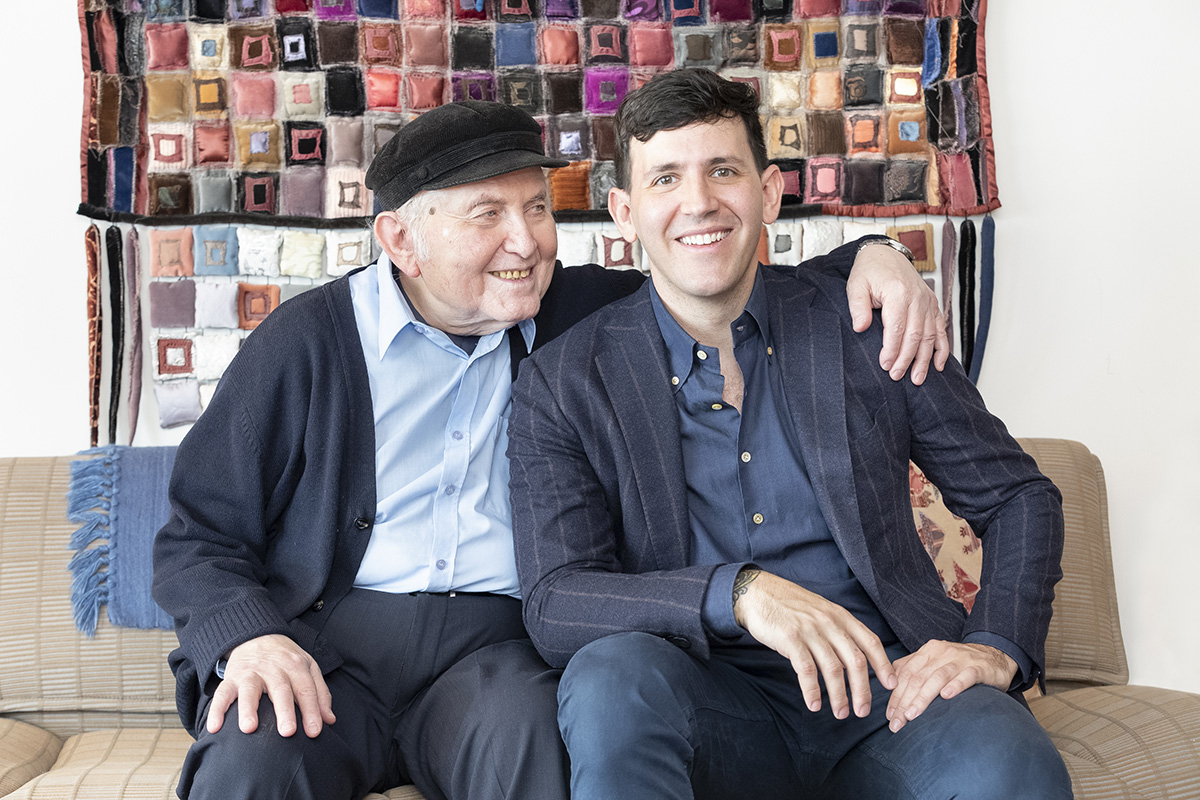
Pictured: Holocaust survivor Pinchas Gutter with his grandson, Dan Gutter.
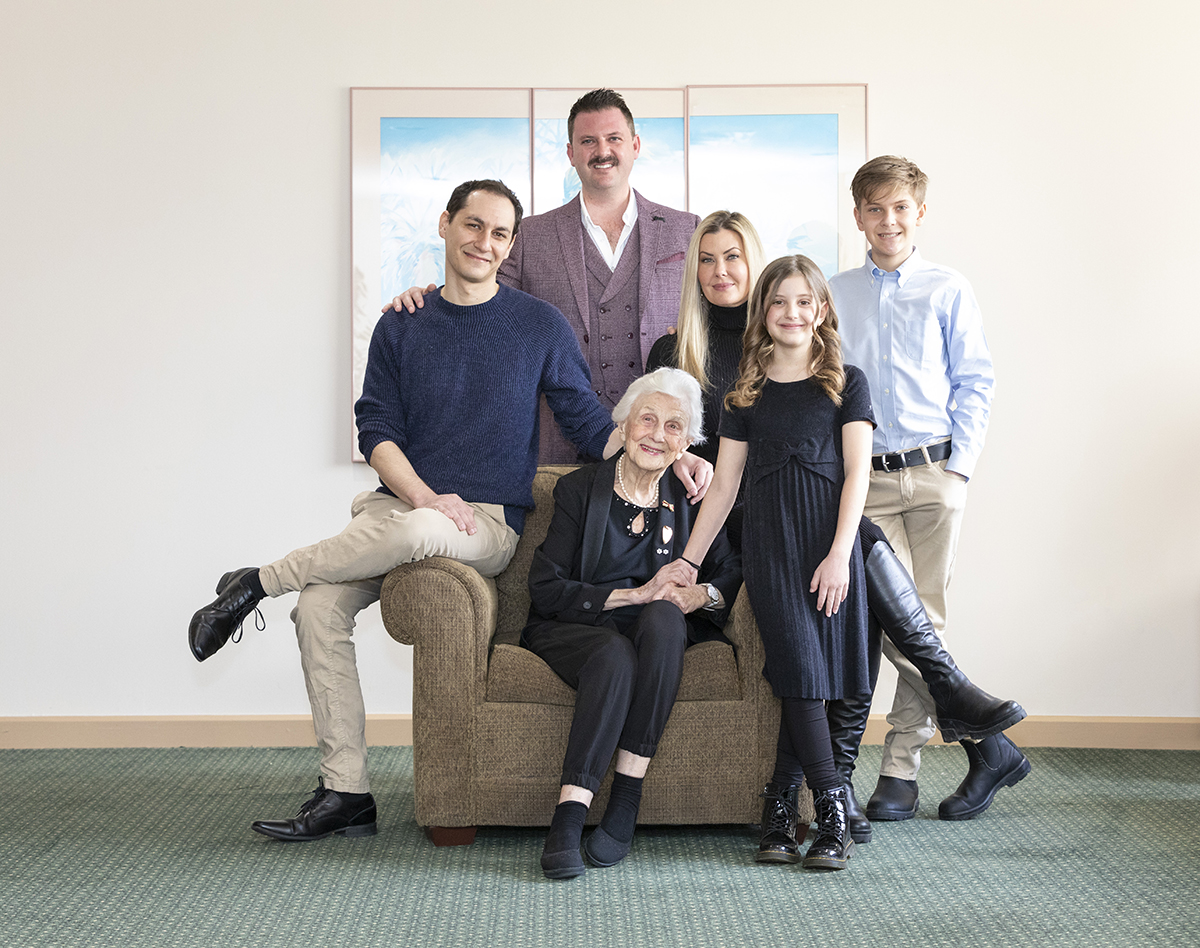
Pictured: Holocaust survivor Vera Schiff z”l with her grandchildren, Deena Richter,Ethan Schiff and Matt Schiff, and great-grandchildren, Ayden and Sloan Richter.
Vera's family lived in Prague for many generations. When the Nazis occupied Czechoslovakia in 1939, Vera and her sister were no longer able to attend school and her father lost his job due to anti-Jewish measures. In 1942, Vera and her family were deported to the Theresienstadt ghetto and Vera was assigned to work in the hospital. Vera was able to avoid deportation to death camps, but her parents, sister and grandmother died in the ghetto. Vera met her husband, Arthur, in the Theresiendstadt ghetto and moved to Israel in 1949 after the war. She has two sons, grandchildren and great-grandchildren.
Miriam was born in Krasnostav, Poland in 1936. She and her family lived in a cellar in the Warsaw ghetto until 1941. Before the ghetto was burned, Miriam’s father saved his family by escaping through a hole in the wall and was able to board the last train to Bialystok, Poland. From Bialystok, they went to Russia. In Russia, they were sent to Magnita Ghorst and then to Serbia. After the war, Miriam returned to Poland where she stayed until 1957. From Poland she moved to Israel, and from Israel, she moved to Canada with her husband in 1966. She has two daughters and three granddaughters.
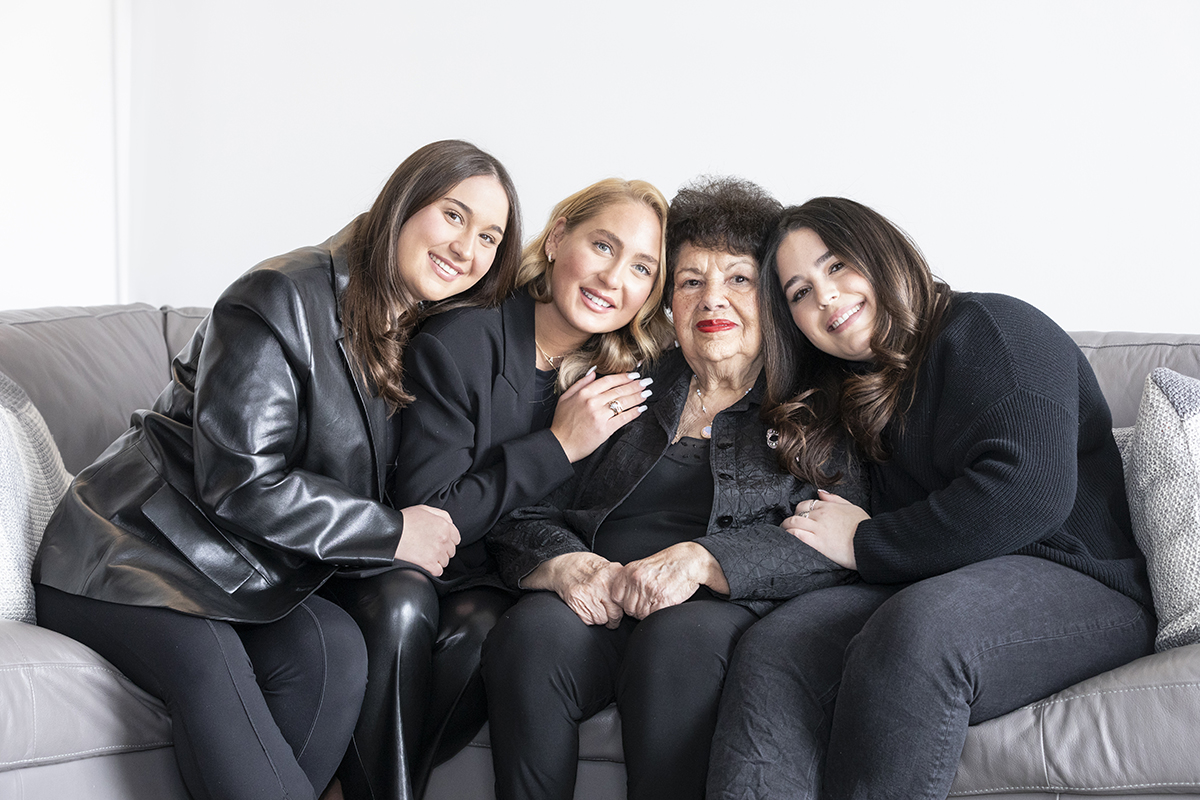
Pictured: Holocaust survivor Miriam Zakrojzcyk z”l with her three granddaughters, Tayler Levine, Paige Levine and Maxine Kesten.
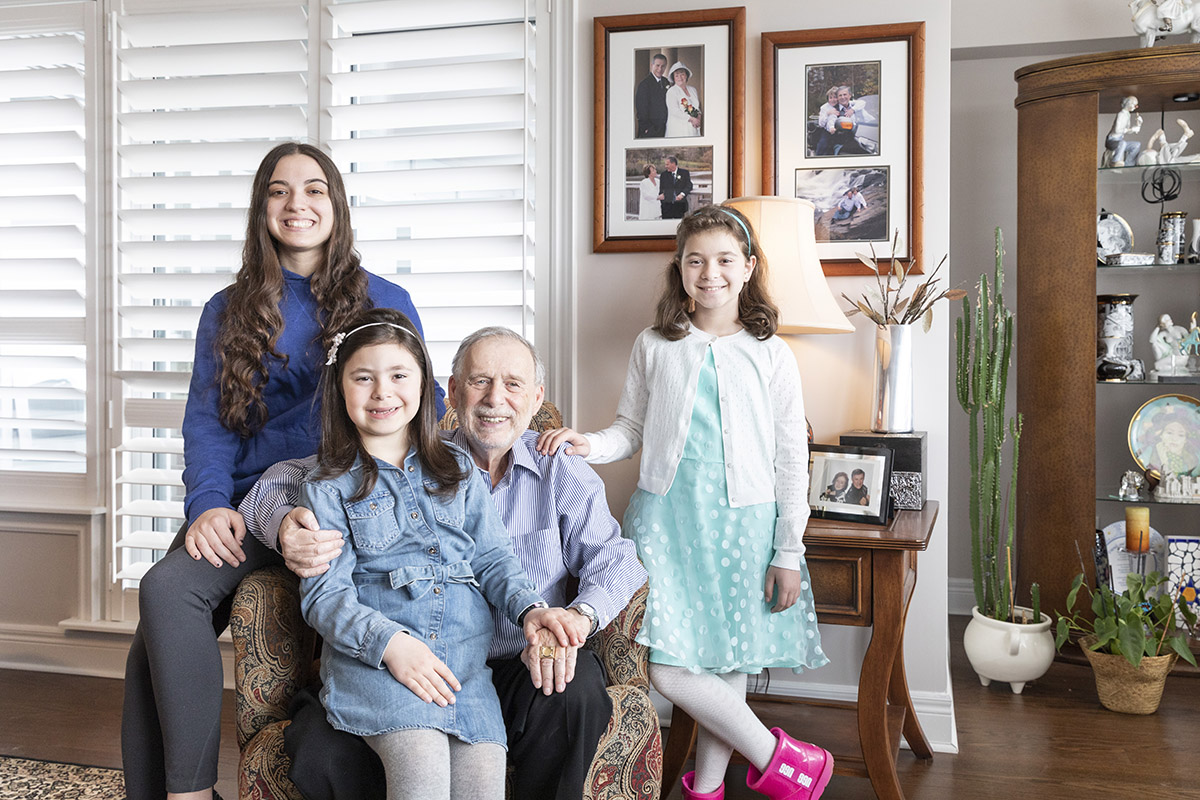
Pictured: Holocaust survivor Andy Réti with his granddaughters, Eliana, Andrea and Tara.
Andy was only two years old when his mother and grandmother were forced into the Budapest ghetto. Andy’s father was already sent to a forced labour camp. He was liberated from the Budapest ghetto on January 18, 1945 by the Soviet Army. He survived the Holocaust with his mother, grandmother and grandfather. Andy wrote a joint memoir with his mother, Ibolya Grossman, titled Stronger Together.
Eva and her mother were sent to the Budapest ghetto in 1944 after her father was taken to a forced labour camp in 1942. From the ghetto, they were taken to a safe house, where they obtained false papers called Schutzpass from Raoul Wallenberg. Eva was liberated by the Soviet Army and reunited with her family after the war. She then immigrated to Canada in 1956, and in 1959 she met her husband, Leslie z”l, who was also a Holocaust survivor. They wrote a memoir together titled Suddenly the Shadow Fell. Together they have two daughters and four grandchildren.

Pictured: Holocaust survivor Eva Meisels with her four grandchildren, Jessica Dover, Rachel Dover, Jordan Levson and Jaimee Levson.

Pictured: Holocaust survivor Hedy Bohm accompanied by one of her two grandchildren, James Bohm.
Born in 1928, Hedy was an only child and attended an all-girls Jewish school until Grade 10 in Oradea, Transylvania (Romania). In April 1944, she and her family were sent to the Oradea ghetto, and from there she was deported to Auschwitz-Birkenau. In 1944, Hedy was selected with a large group and shipped to Germany as slave labour to an ammunition factory in Fallersleben (now Wolfsburg). Hedy worked there until early 1945, when she was sent to another German camp, Salzwedel. She was liberated by the American Army on April 14, 1945. After the war, Hedy went back to Oradea and lived with her aunt from August 1945 to December 1947. It was also in Romania that Hedy married her husband, Imre, and left for Prague, eventually immigrating to Canada in 1948. They have two children and two grandchildren together.
Jolan was born in 1933 in Budapest, Hungary. She and her mother, as well as her uncle and his family, were the only survivors of her family. She and her mother were together the entirety of the war and were placed in an apartment that was meant for just Jews, as well as a ghetto. She was able to say goodbye to her father before he went with the troops to fight in west Hungary, and, unfortunately, she never saw him again. The atrocities Jolan endured are unimaginable, but she was able to move to Canada with her mother after the war and start a new life for herself. She moved to Toronto and got married to her husband, Dr. Robert Schneider z”l. She continued her studies and got a medical degree. She has two children, two grandchildren and two great-grandsons.
.jpg)
Pictured: Holocaust survivor Jolan Schneider with her grandchildren, Daniel and Jodi Schneider, as well as one of her two great-grandchildren, Ari.
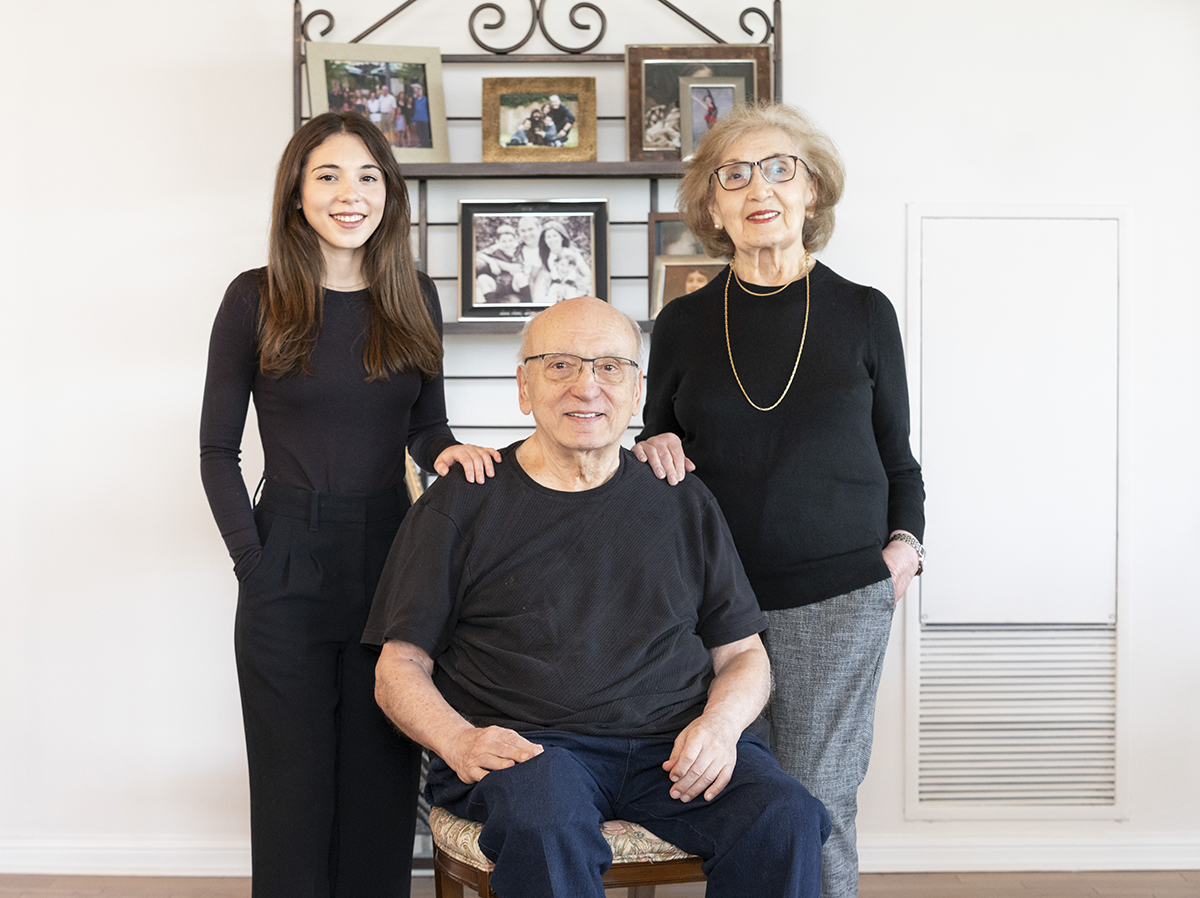
Pictured: Holocaust survivors Robert Hirschel and Georgette Lash z”l, accompanied by Robert’s granddaughter, Lauren Dombrower, a representative for their combined nine grandchildren.
Georgette was born in 1932 in Budapest, Hungary, and her brother, Robert, was born in 1934. When the Nazis invaded Hungary, their apartment building became a part of the ghetto. Their mother would not let Robert join the men who were being taken to work, and the superintendent of the building hid them in the corner of the building. However, it was theGlass House that saved the three of them. A cousin of theirs, who also survived the war, brought them to the building used by Swiss diplomat Carl Lutz as a safe house to help Jews in Budapest. In 1948, they immigrated to Canada and settled in Montreal. Robert then came to Toronto in 1980, and Georgette followed in 1981. Robert has three children and five grandchildren. Georgette has two children and four grandchildren.
Kathleen was born in 1929 in Nyiregyhaza, Hungary, which was home to about 10,000 Jews. The Nazis invaded Hungary in 1944, and Kathleen and her family moved into the ghetto. At 14 years old, Kathleen and her family were deported to Auschwitz where her parents were murdered, but she and her two sisters, Ilona and Magda, survived. From Auschwitz they were deported to Dachau, and from Dachau to Bergen-Belsen where they were liberated on April 12, 1944. One of Kathleen’s sisters, Ilona, died soon after liberation. When they returned to Hungary, they discovered they were the only survivors of their family. Kathleen moved to Canada from Israel with her husband, Robert Zahavi z"l, and daughter, Irrit, in 1959. She had her second child, Michael, in Canada. She has four grandchildren.
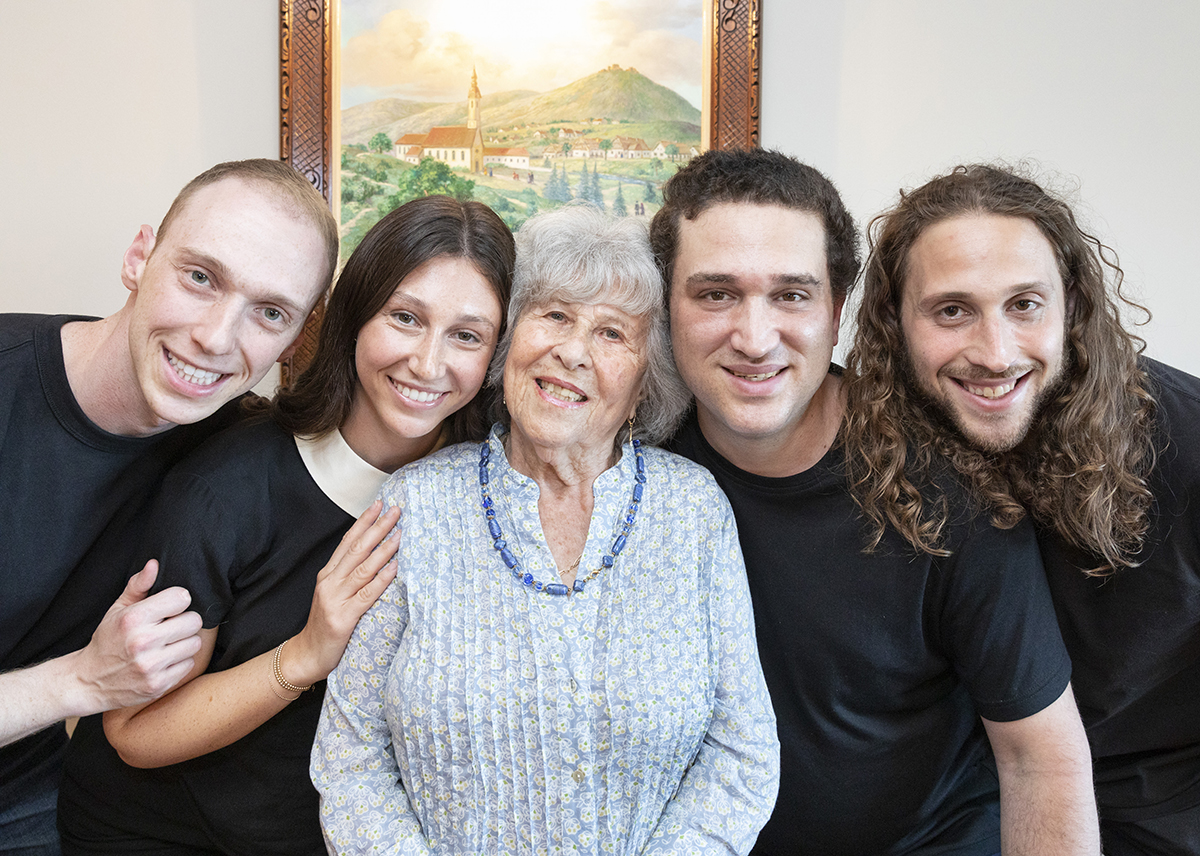
Pictured: Holocaust survivor Kathleen Zahavi with her four grandchildren, Shawn and Erin Zahavi and Daniel and Eric Steinhart.
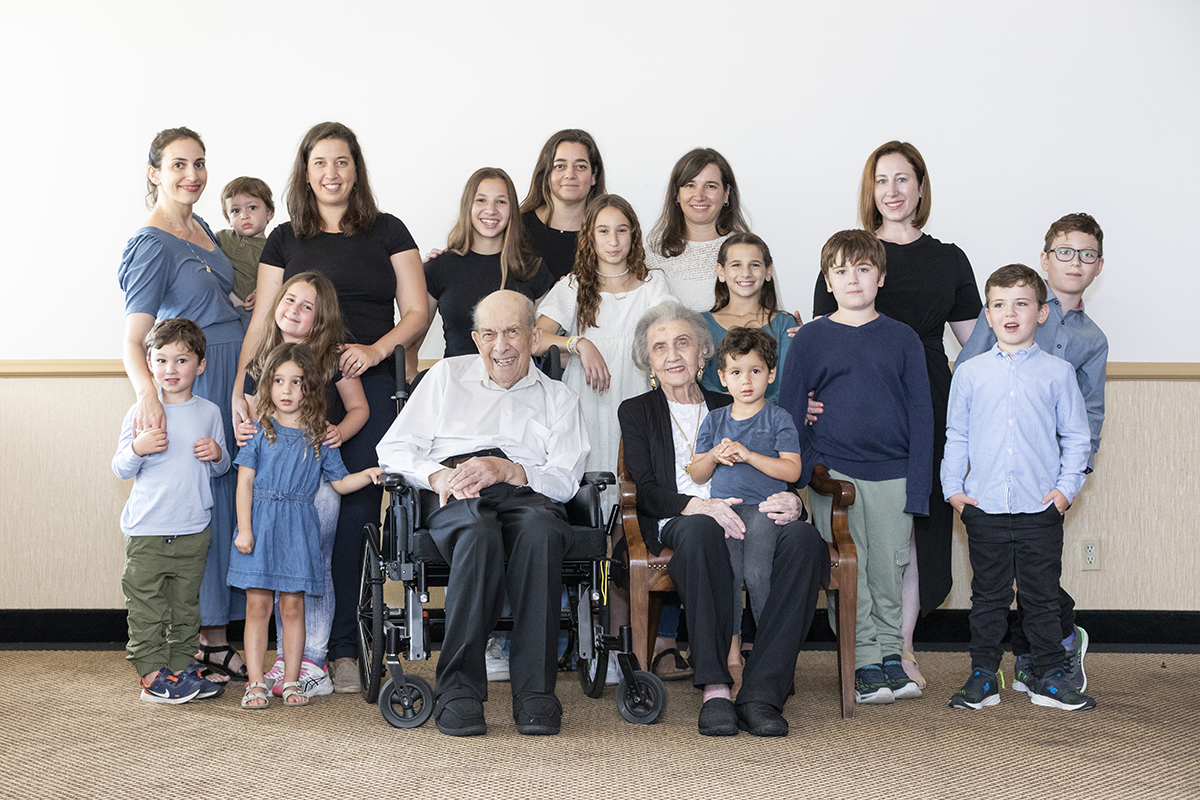
Pictured: Holocaust survivors Adam Z”L and Paula Porepa with their five grandchildren, Andrea, Elissa, Liane, Jodi and Michelle, and 11 great-grandchildren, Max, Charlie, Micha, Joey, Aaron, Alice, Robin, Russell, Nina, Sari and Tillie.
Adam Porepa was born in Krakow, Poland. When the Nazis invaded in 1939, Adam and his family moved to Niepolomice. In 1942, he was sent to Wieliczka, where he and his brother, Max, were separated from the family and sent to a work camp, Stalowa Wola. He escaped and returned to the Krakow ghetto in an attempt to reunite with family. From the ghetto, he was sent with other young men into forced labour to build Plaszow Concentration Camp and eventually ordered to stay there as inmates, surviving the selections of 1943-1944. He was ultimately separated from his brother. From Plaszow, he was assigned to Melk Concentration Camp and taken on the death march to Gunskirchen. He was liberated by the American Army on May 4, 1945 and learned his family, including his grandfather, Samson, were all murdered.
Paula was an only child, born in Rzeszow, Poland. When the Nazis invaded Poland, Paula’s father and three uncles fled to Lviv. Paula lived with her mother and aunt in the Rzeszow ghetto before being sent to forced labour at Biesiadka Concentration Camp. She was then sent to Huta Komarowska Concentration Camp where she became sick with typhoid. During this time, the residents of Rzeszow, including Paula’s mother, Erna, were deported to extermination camps. Paula was then sent to a number of other concentration camps, including Plaszow, Skarzysko-Kamienna and Leipzig-Schonefeld where she was forced to work, but then eventually taken on a final death march. She was liberated in April 1945. After the war, she returned to Krakow and learned her father and uncles survived, promising herself to never separate from her father again.
Adam and Paula found their way to Bindermichl Displaced Persons Camp, where they met and married in 1948. Their first child, Joseph, was born in Austria; they all later moved to Montreal in 1949. There, they had their second child, Erna.
The family eventually grew to include five grandchildren and 11 great-grandchildren who currently reside across Montreal and Toronto. Adam and Paula have celebrated 74 years of marriage.
The Legacy Portrait Project is a powerful testament to survival and legacy. It embodies resilience, love reclaimed and the urgent passing of memory to the next generation, those who will carry these stories forward.
The first Legacy Portrait Project film was released in January 2023 in honour of a special International Holocaust Remembrance Day program.