

In 2024, FSWC was heavily
engaged fighting hate in
Canada during a particularly
difficult year
To say these are challenging times for Canadian Jews is to state the obvious. For our community, 2024 was indeed sobering. It was a year that saw the worst antisemitic onslaught on record, leaving Canadian Jews on edge, praying for better days, with little sign their prayers will be answered anytime soon.
Based on police hate crime statistics, antisemites broke new ground in Canada this past year, with a record number of attacks on Jewish individuals, synagogues, schools, businesses and community centres. Each new incident involving a Jewish target seemed to spur on the haters. All that without mentioning the toxic abuse directed at Jews on university campuses, in labour unions, in the cultural sphere and online.
The present situation demands our vigilance and resolve, but we never lose hope. We know the importance for our community of perseverance, tenacity and bouncing back from hardship. We refuse to let hate rule our lives or to yield ground to those who seek to harm us. We will not be cowed.
We also know we’re not alone, that good people of moral fortitude, horrified by rampant Jew-hatred, stand with us in solidarity. Such allies provide much-appreciated comfort and reinforce our determination to stand up to the haters.
In 2024, true to form, FSWC was at the forefront of the fight against rising hate in Canada, demanding swift government action, stronger law enforcement responses and meaningful policy measures to combat antisemitism. Through our advocacy, we worked to ensure that hate crimes targeting the Jewish community are met with zero tolerance; we pushed for increased security funding, enhanced police protection and stronger legal consequences for perpetrators.
We mobilized public awareness campaigns, engaged political leaders at all levels and worked closely with law enforcement agencies to ensure that antisemitic incidents weren’t ignored or downplayed. Our advocacy led to arrests in key cases, heightened police presence at Jewish sites and increased pressure on authorities to treat antisemitic hate crimes with the gravity they deserve.
As the threats to the Jewish community escalate, FSWC remains unwavering in its mission to expose, confront and defeat antisemitism in all its forms. In keeping with our mandate, we will continue to push for action, accountability and justice, ensuring that Canadian Jews can live safely and freely without fear.
In response to the rise in Holocaust distortion and outright denial, FSWC has expanded its educational programs throughout Canada, especially for young people, both in person and online. We hold institutions to account, demanding integrity in public memory, and ensuring that commemorative spaces reflect our nation’s values of justice, remembrance, and respect for all victims of genocide.
FSWC is engaged on the front lines and behind the scenes, making a positive impact where it matters. That’s what drives us on the forefront of fighting the forces of hate, as you will see in the following pages.
As always, we are profoundly grateful for the tremendous support that FSWC receives from our incredible community and beyond, as we all work toward a better future for all.
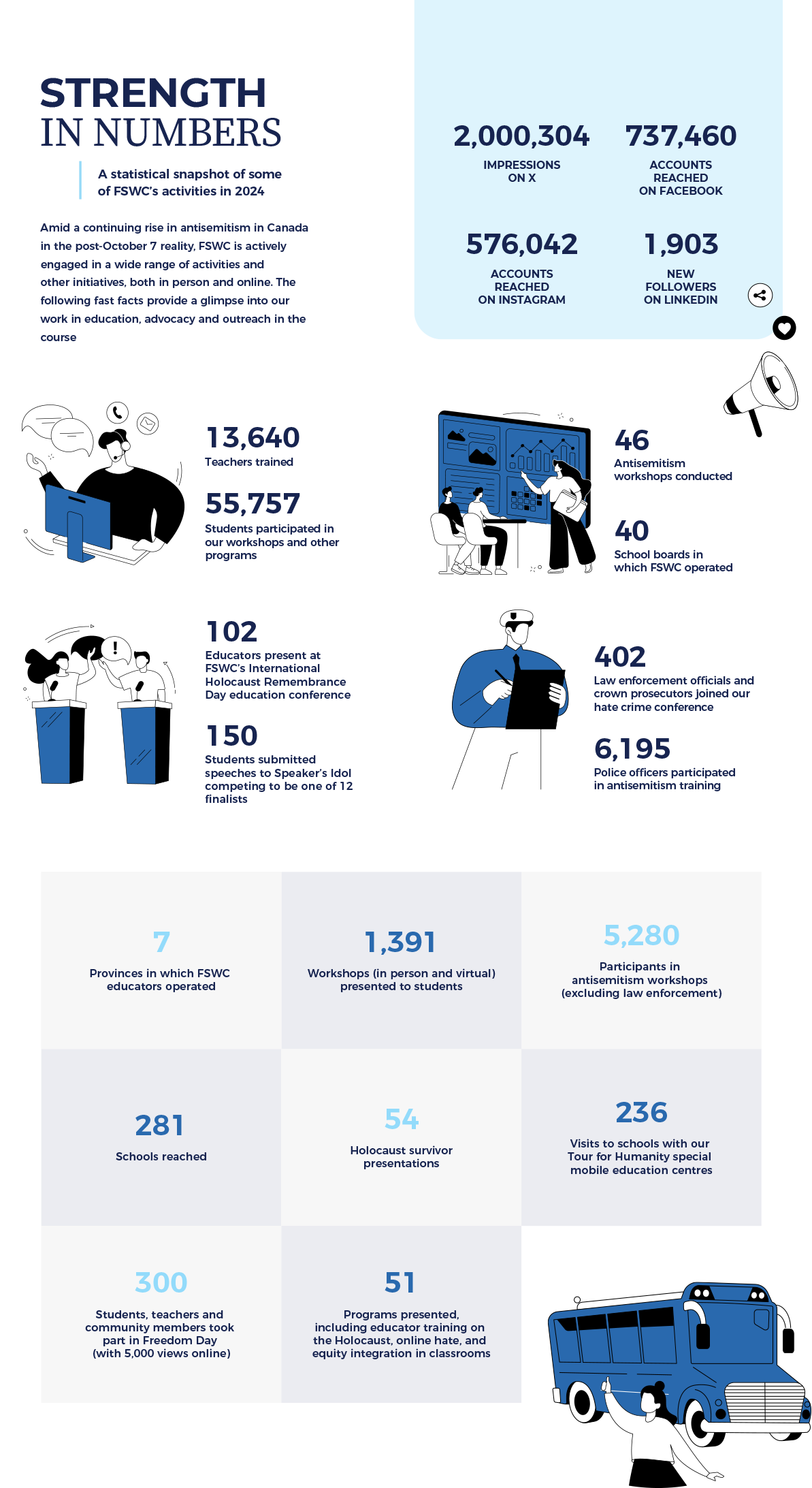
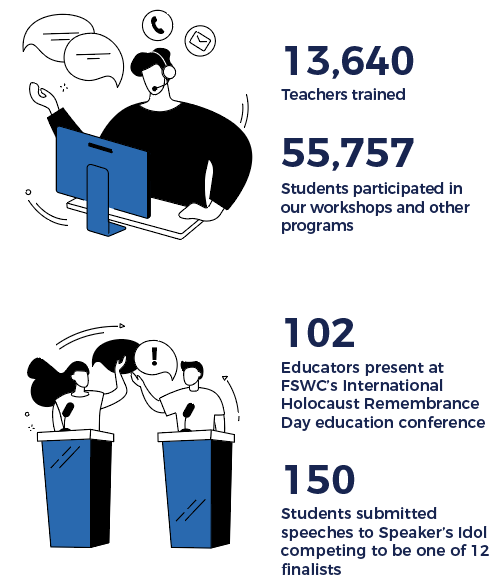
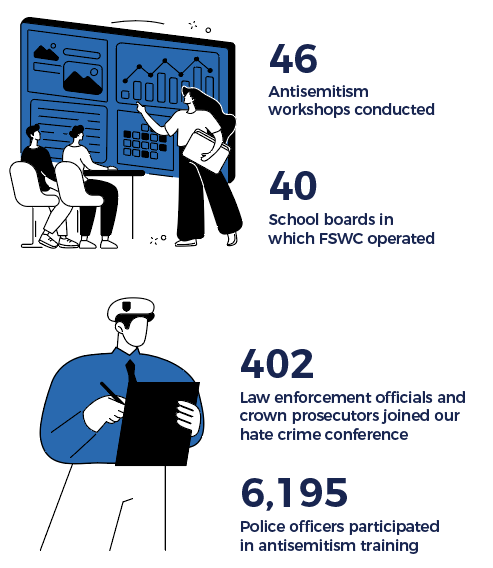
A statistical snapshot of some of FSWC’s activities in 2024
Amid a continuing rise in antisemitism in Canada in the post-October 7 reality, FSWC is actively engaged in a wide range of activities and other initiatives, both in person and online. The following fast facts provide a glimpse into our work in education, advocacy and outreach in the course of a year.

Donors show their approval of FSWC’s work, with a resounding response to our fundraising efforts, enabling us to further broaden our multi-faceted work
Given the evolving challenges that Canada’s Jewish community and other minorities are facing due to rising antisemitism and other forms of hate, the need for FSWC’s advocacy and educational programs is greater than ever. That means the financial resources required to conduct our expanding work are more substantial.
Thankfully, we are fortunate to receive generous support from our community – from individual donors and family foundations to corporate sponsors and government bodies – all of whom recognize the importance of FSWC’s mission. It’s reflected in the substantial increase in funds raised compared to the previous year.
Our fundraising work is critical to our future. Equally meaningful, the symbolic impact of so many donors, big and small, supporting FSWC is a source of added motivation for our entire team in carrying out our work. In addition to our ongoing donor stewardship of existing supporters, we also take various initiatives that generate funds to make our actions possible, attract new supporters and increase our impact.
The symbolic impact of so many donors, big and small, is a source of added motivation for our entire team.
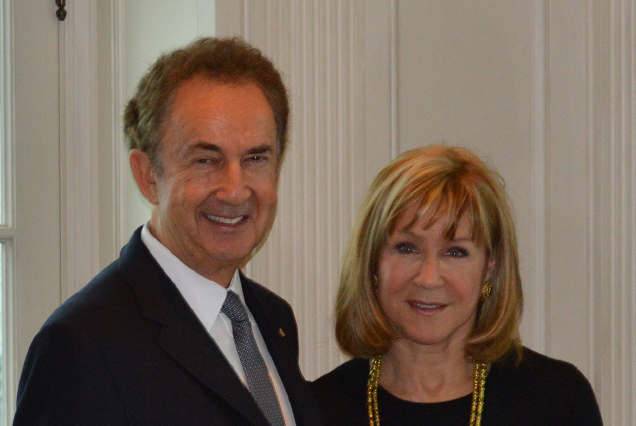
In a hugely important development for FSWC, the Schwartz Reisman Foundation made a $1 million donation to expand our education and advocacy work, teaching the lessons of the Holocaust and combatting rising antisemitism in Canada and other forms of hate. In making the announcement of their incredibly generous gift, Gerald Schwartz and Heather Reisman both reaffirmed their longstanding support of FSWC and paid tribute to the work of our organization.
Under the leadership of Benji and Lauren Levy, the Toronto-based Levy Foundation made a generous $1 million commitment to our organization, spanning a two-year period. The decision was based on the family’s appreciation of FSWC’s efforts in the field of Holocaust education and advocacy, especially in the fight against rampant Jew-hate in Canada, and their desire to provide financial resources to help us further develop our programs and other activities.

In addition to FSWC’s extensive digital communication and marketing content, we still believe in the value of printed material for select purposes, such as direct mail fundraising campaigns. Based on results over the past year, many of our donors seem to like receiving our direct mail pieces in printed form given the positive response and the contributions they generate.
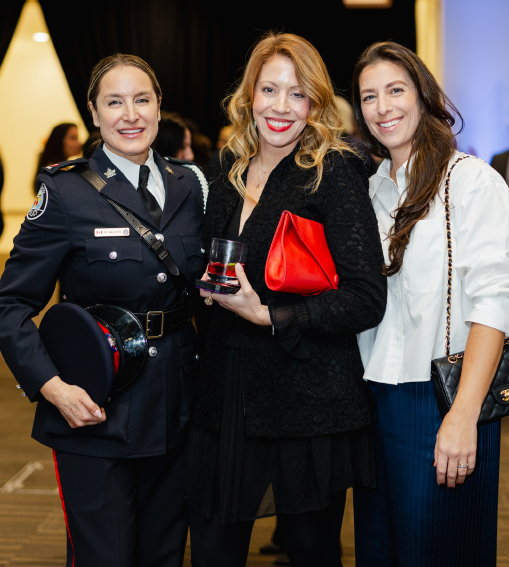
FSWC strengthened a year-round fundraising campaign, first initiated in 2023, that offers sponsors prominent recognition at all our events throughout the calendar year, including Spirit of Hope and Voices of Change. The campaign, which attracted a range of participants, including banks, other major companies and many of Canada’s philanthropists, raised $1.2 million. In 2024, in the second iteration of our year- round campaign, we doubled the number of participants, including large companies and major philanthropists, and nearly tripled the amount raised a year earlier, reaching $3 million.
In person and online, FSWC educators teach important lessons of the Holocaust and other historical chapters in a way that engages today’s youth
As one of the main pillars of FSWC, our education programs are central to the organization’s mission. Over the past year, schools – both public and private – booked hundreds of sessions conducted by members of our team. At the same time, government agencies and private corporations increased their requests for FSWC educators to provide diversity and inclusion-related workshops and other programs, some with live testimony from Holocaust survivors. This in addition to our popular special annual programs such as Freedom Day.
As always, the central focus of our workshops, lesson plans and other activities was on tying past atrocities to current events with the aim of influencing people to advocate for protecting human rights and a more equitable future for all. FSWC educators presented lessons on the Holocaust, antisemitism, and other forms of racism and discrimination in Canada, and developed conversations about how to change the cycle of hate and intolerance through the power of standing up and speaking out.
FSWC educators teach about the past to provide timely lessons for the present for people of all backgrounds.
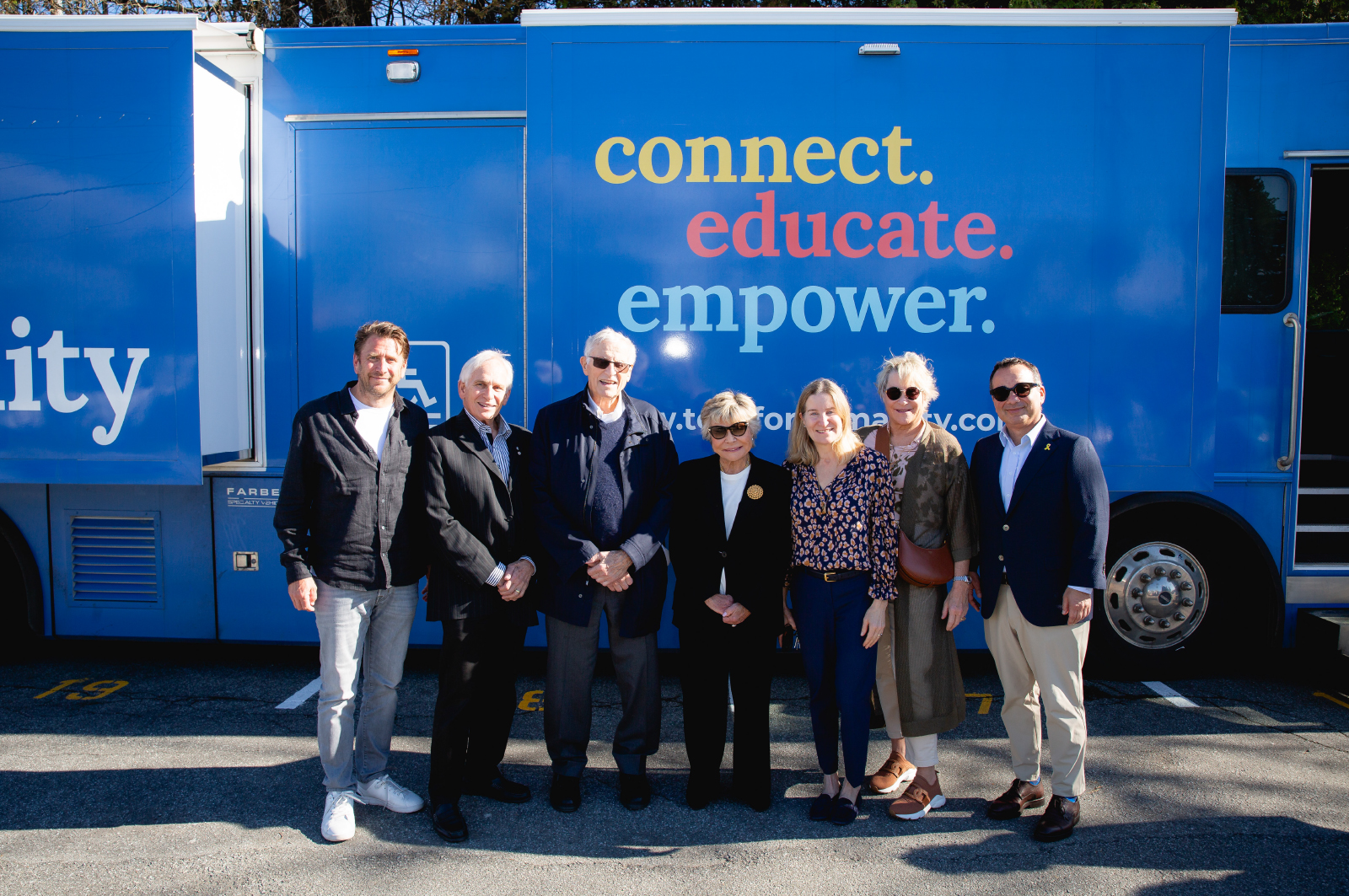
In the spring, FSWC’s specially equipped Tour for Humanity mobile classroom travelled to western Canada for the first time. Over the course of a seven-week trip, our educators made stops in Winnipeg, Saskatoon and Calgary before settling in the Vancouver area for two weeks of programming at local schools. In total, Tour for Humanity educators conducted workshops involving 2,600 students during visits to Manitoba, Saskatchewan, Alberta and British Columbia. Designed for those in grades 3-12, the educational workshops covered a range of topics including the Holocaust and other genocides; residential schools; Japanese internment camps; antisemitism and the turning away of the St. Louis ship with Jewish refugees fleeing the Nazis; the story of Simon Wiesenthal; hate crimes today; online safety and cyberbullying and encouraging students to stand up against hate, antisemitism, racism and discrimination in all forms. The trip to western Canada followed a successful visit to Atlantic Canada a year earlier.
Closer to home, both Tour for Humanity buses were on the road five days a week during the school year, visiting more than 230 schools and communities in the Greater Toronto Area, across Ontario and beyond. Partnerships with school boards saw FSWC educators spending time at schools in the Kitchener-Waterloo region and eastern Ontario communities including Brockville and Cornwall.
We’re thrilled to announce that a third Tour for Humanity bus will be on the road to start the 2025 school year. This remarkable expansion is made possible thanks to a generous $1 million gift from the Greenberg family, through BridgeGreen Capital Inc. and the Minto Foundation Inc. Their leadership comes at a critical moment, helping us grow this program when it’s needed more than ever.
In the early fall, FSWC hosted the 15th annual Freedom Day, our biggest educational event. Commemorating the life and legacy of our organization’s namesake, Simon Wiesenthal, it educates and motivates youth to be upstanders against hate and take a stand for freedom, justice and human rights in their communities.
Taking place at City Playhouse in Vaughan, north of Toronto, in partnership with York Region District School Board (YRDSB), it attracted about 300 YRDSB high school students in person while more than 4,700 students from across Canada registered to attend virtually through their classroom teachers. At the time of writing, the video had 679 views, which, translated to classrooms,
Educational materials to support the use of the program were also created and circulated for teachers to access and use. Speakers at Freedom Day included Canadian Olympic Medalist Akeem Haynes and student activist and blogger Hannah Alper who joined Holocaust survivor Gershon Willinger in conversation about antisemitism, and musical guest Brian Melo who won Canadian Idol in 2007. TV and radio personality Rick Campanelli returned to MC the program.
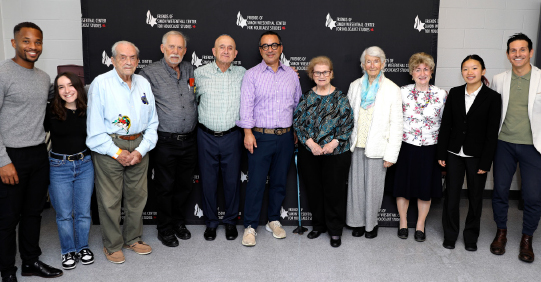
In recognition of International Holocaust Remembrance Day, FSWC hosted our annual Holocaust Education Conference in Toronto, featuring keynote speaker Dr. Valerie Hébert and author Kathy Kacer. Other speakers included Holocaust survivors and educators, who discussed their best practices in Holocaust education. Representatives from boards across Ontario and from all levels of education, administration through to classroom teacher, attended the one-day event, which saw more than 100 educators present.

FSWC delivered 16 professional development (PD) sessions in Ontario and British Columbia that reached 13,640 educators. The training included both Holocaust education and specific training about antisemitism. To expand our PD work, FSWC hired a new Manager of Professional Learning in September. Focusing on private and independent school educators, she secured training contracts with new private/independent schools. At such schools in Ontario, she also delivered seven PD programs and organized 17 student programs.
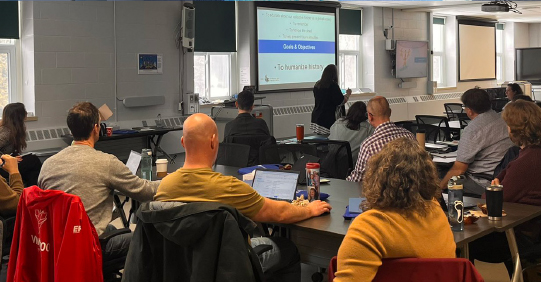
Continuing rise in reported hate crimes in Canada, especially those targeting Jews, underscores need for FSWC’s advocacy efforts and community engagement
Critical to fulfilling FSWC’s mandate, our advocacy work covers a lot of ground. It starts with raising Holocaust and genocide awareness and includes a focus on human rights, hate crime, racist and extremist groups, hate propaganda and online hate. Given the preponderance of antisemitism today, confronting it dominates our prolific advocacy and community engagement initiatives involving many parties. They range from politicians to educators, police officers to journalists and allies in other communities. As part of our work in this field, we also assist people who are victims of anti-Jewish hate.
Often, we draw much-needed attention to issues in our purview. To that end, we engage legislators, law enforcement officials and university leaders along with public institutions in government and civil society, stressing the seriousness of antisemitic incidents as human rights violations and the need for action. On the next few pages, we spotlight a selection of both our ongoing advocacy work and related initiatives.
In our advocacy, we stress the seriousness of antisemitic incidents as human rights violations and the need for action.
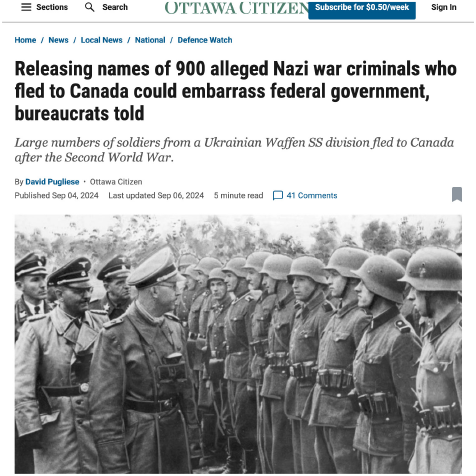
FSWC remains at the forefront of advocating for the release of Part II of the 1986 Deschênes Commission report, which documents the war crimes committed by some 900 suspected Nazis who immigrated to Canada after World War II. In September, FSWC, alongside Holocaust survivor Gershon Willinger, participated in a stakeholder consultation with Library and Archives Canada (LAC), stressing the need for transparency and the public’s right to confront this disturbing chapter in Canada’s post-war history in which Nazi war criminals evaded justice by settling in this country.
Despite these efforts, LAC announced in November it would continue to withhold the names, which FSWC publicly condemned as a continuation of Canada’s longstanding reluctance to confront its past. Our Senior Director of Policy and Advocacy, Jaime Kirzner-Roberts, told the media, “It’s utterly disgraceful the federal government has determined that Canadians don’t deserve to know the names of Nazi war criminals who entered this country and went on to live a life of freedom and impunity.”
Leading efforts to expose and challenge the inclusion of Nazis and their collaborators in Ottawa’s Memorial to the Victims of Communism, we revealed that the monument’s “Wall of Remembrance” featured more than 300 people with suspected ties to Nazi forces, many of whom participated in the persecution and murder of Jews and other innocent civilians during the Holocaust. Honouring these individuals in a national monument not only distorts historical truth but also undermines Canada’s commitment to Holocaust remembrance and the fight against antisemitism. FSWC called on the federal government to correct this grave injustice. Despite initial resistance and a lack of accountability from officials, our advocacy – including direct engagement with policymakers, a robust public awareness campaign and extensive media coverage – forced the government to act. Rather than taking responsibility for this deeply troubling oversight, it quietly removed all names from the monument without transparency or an admission of wrongdoing. While this outcome prevents Nazis from being publicly honoured, it falls far short of the accountability and historical reckoning that Canadians deserve.
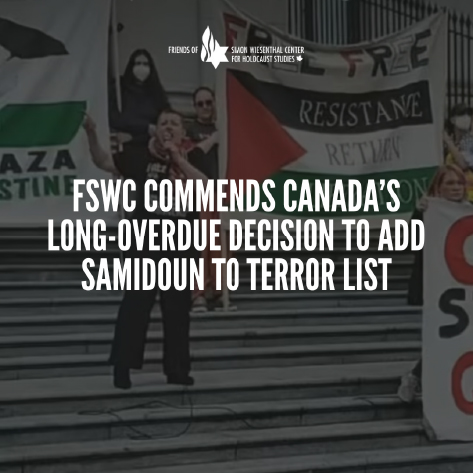
As part of FSWC’s intensified efforts to combat violent extremism, we advocate for official designation of multiple organizations in Canada as terrorist entities. These initiatives ensure that groups promoting antisemitism, inciting violence and threatening global security are formally recognized and sanctioned. FSWC played a pivotal role in the federal government’s designation of Ansar Allah (Houthis), Samidoun and Iran’s Islamic Revolutionary Guard Corps (IRGC) as terrorist entities. These decisions marked significant victories against extremism, reinforcing Canada’s commitment to countering hate and protecting public safety.
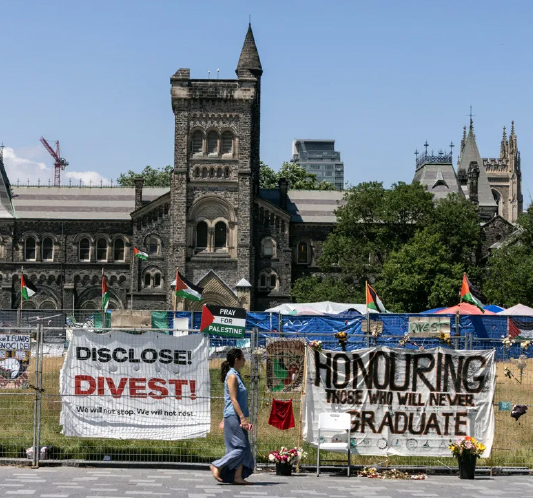
FSWC took a decisive stand against an unauthorized anti-Israel encampment at the University of Toronto’s King’s College Circle. It not only disrupted campus life but created a hostile and intimidating environment for Jewish students, faculty and community members. Recognizing the serious threat posed by this unlawful weeks-long demonstration – marked by antisemitic rhetoric and exclusionary conduct – we took action to ensure Jewish voices were heard and protected.
FSWC sought and was granted intervenor status in the university’s legal injunction to remove the encampment, a crucial step in showing that antisemitism can’t be tolerated in any space, especially within academic institutions that are meant to be inclusive and respectful of all communities. We collaborated with other Jewish community groups to highlight the encampment’s hateful nature, calling for its dismantling and advocating for stronger institutional measures to prevent similar incidents in the future.
Following sustained legal and advocacy efforts, the Ontario Superior Court of Justice ruled in favour of the injunction, paving the way for the encampment’s removal. This victory not only reaffirmed the university’s responsibility to uphold campus safety but also showed the effectiveness of swift, coordinated action against antisemitism.
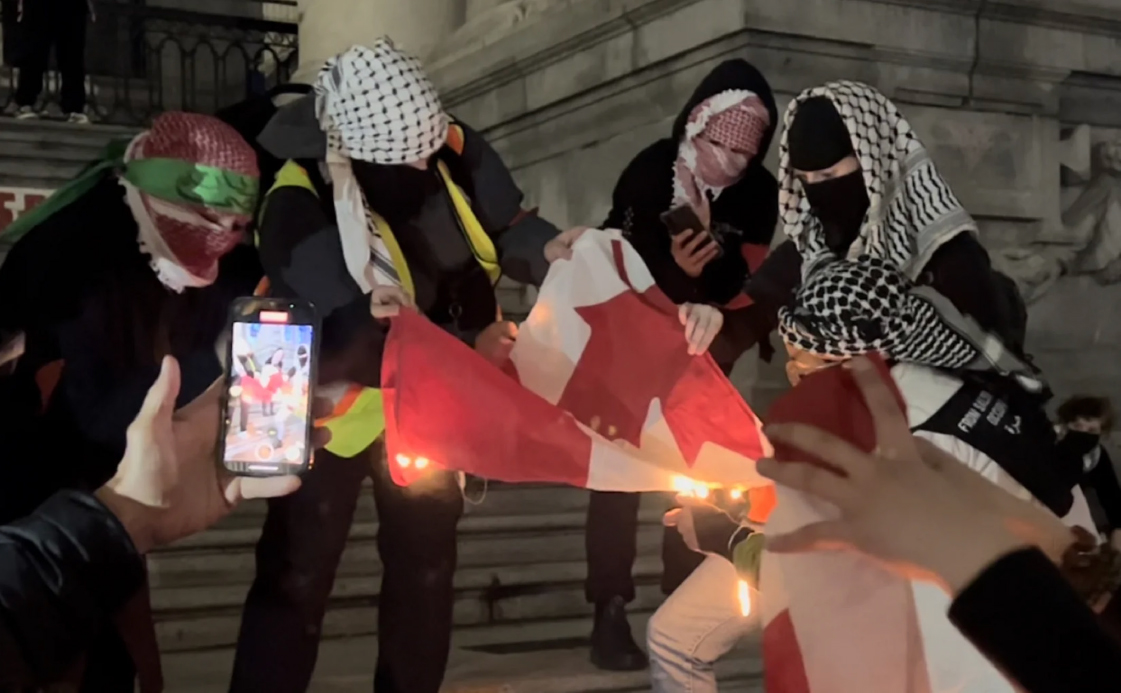
Following pro-Hamas and pro-Hezbollah rallies in cities across Canada, where participants displayed terrorist flags and images of terrorist leaders, FSWC filed reports with local police services and called for charges to be laid. Recognizing gaps in existing legislation, we urged the federal government to criminalize the glorification of terrorism and prohibit the public display of flags and symbols of listed terrorist entities to ensure accountability for those promoting violence. Through persistent engagement with policymakers, public awareness campaigns and strategic advocacy, FSWC continues to push for stronger measures to combat hate-fueled violence and terrorism.
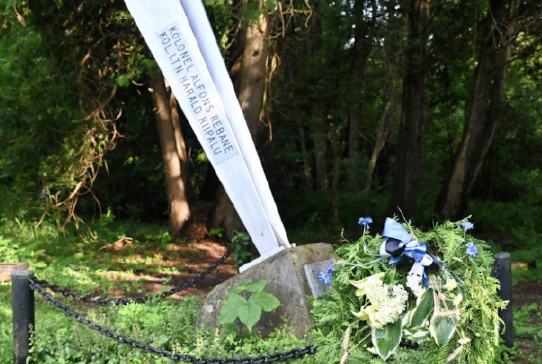
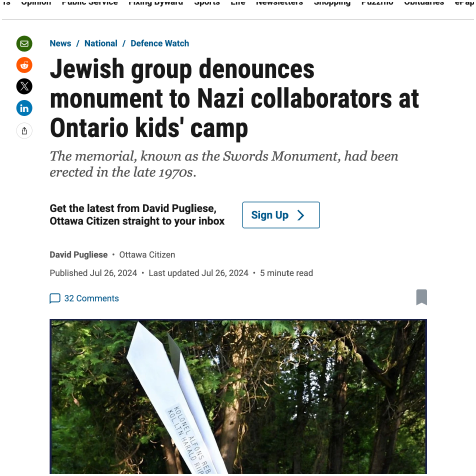
FSWC continues to lead efforts to expose and remove Nazi glorification in Canada. In June, we received an anonymous tip about a Nazi monument at Seedrioru, an Estonian summer camp in Elora, Ontario. Our investigation confirmed the monument honoured four high-ranking Estonian Nazis from World War II. Further research revealed at least 15 people connected to the camp had been veterans of the Waffen-SS. FSWC publicly exposed these findings, leading to local and national media coverage. In response to the backlash, the camp removed the names and insignia from the monument – without any apology or acknowledgment of its existence.
In March, following years of FSWC advocacy on this matter, FSWC welcomed the removal of a monument at St. Volodymyr Ukrainian Cemetery in Oakville, Ontario that honoured soldiers of the 14th Waffen Grenadier Division of the SS, a Nazi military unit. This followed years of FSWC advocacy on the issue.
FSWC is committed to exposing and challenging all attempts to whitewash Nazi history and normalize Nazi symbols and ideologies in Canada. We continue to push back against those who seek to distort history and erode the lessons of the Holocaust.
Following pro-Hamas and pro-Hezbollah rallies in cities across Canada, where participants displayed terrorist flags and images of terrorist leaders, FSWC filed reports with local police services and called for charges to be laid. Recognizing gaps in existing legislation, we urged the federal government to criminalize the glorification of terrorism and prohibit the public display of flags and symbols of listed terrorist entities to ensure accountability for those promoting violence. Through persistent engagement with policymakers, public awareness campaigns and strategic advocacy, FSWC continues to push for stronger measures to combat hate-fueled violence and terrorism.
FSWC took a decisive stand against an unauthorized anti-Israel encampment at the University of Toronto’s King’s College Circle. It not only disrupted campus life but created a hostile and intimidating environment for Jewish students, faculty and community members. Recognizing the serious threat posed by this unlawful weeks-long demonstration – marked by antisemitic rhetoric and exclusionary conduct – we took action to ensure Jewish voices were heard and protected.
FSWC sought and was granted intervenor status in the university’s legal injunction to remove the encampment, a crucial step in showing that antisemitism can’t be tolerated in any space, especially within academic institutions that are meant to be inclusive and respectful of all communities. We collaborated with other Jewish community groups to highlight the encampment’s hateful nature, calling for its dismantling and advocating for stronger institutional measures to prevent similar incidents in the future.
Following sustained legal and advocacy efforts, the Ontario Superior Court of Justice ruled in favour of the injunction, paving the way for the encampment’s removal. This victory not only reaffirmed the university’s responsibility to uphold campus safety but also showed the effectiveness of swift, coordinated action against antisemitism.
FSWC continues to lead efforts to expose and remove Nazi glorification in Canada. In June, we received an anonymous tip about a Nazi monument at Seedrioru, an Estonian summer camp in Elora, Ontario. Our investigation confirmed the monument honoured four high-ranking Estonian Nazis from World War II. Further research revealed at least 15 people connected to the camp had been veterans of the Waffen-SS. FSWC publicly exposed these findings, leading to local and national media coverage. In response to the backlash, the camp removed the names and insignia from the monument – without any apology or acknowledgment of its existence.
In March, following years of FSWC advocacy on this matter, FSWC welcomed the removal of a monument at St. Volodymyr Ukrainian Cemetery in Oakville, Ontario that honoured soldiers of the 14th Waffen Grenadier Division of the SS, a Nazi military unit. This followed years of FSWC advocacy on the issue.
FSWC is committed to exposing and challenging all attempts to whitewash Nazi history and normalize Nazi symbols and ideologies in Canada. We continue to push back against those who seek to distort history and erode the lessons of the Holocaust.
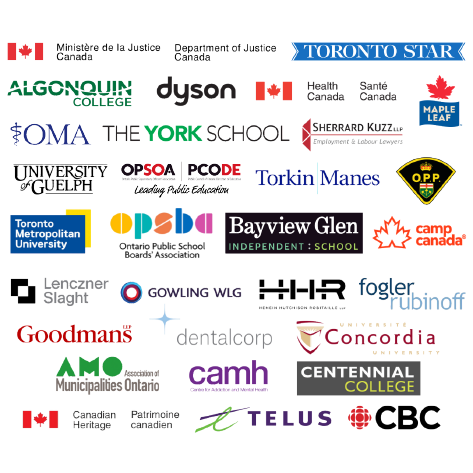
To further FSWC’s reach, we established the role of Director of Stakeholder Relations and Partnerships. In this capacity, Johanna Herman has engaged with a wide variety of organizations across sectors, (see below), strengthening relationships and exploring new collaborations. The main focus has been on advancing antisemitism education, integrating Jewish identity in workplaces and enhancing our partnerships.
Connecting with our community and far beyond with relevant, engaging events in person and online that broaden appeal and credibility of FSWC
Over the past year, FSWC struck a chord with a captivating mix of original programming and compelling outreach that address current affairs from our perspective on human rights, antisemitism and other forms of hate. Featuring a wide range of fascinating speakers, these events, whether in person or online, spotlight the importance of learning the danger of racism and the lessons of the Holocaust, while underscoring our commitment to combat hate wherever and whenever it rears its ugly head. An added benefit from these initiatives: they also attract new supporters of our organization.
Collectively, our events send a strong message to our adherents that FSWC is in the vanguard standing up, speaking out, raising awareness and taking action against intolerance, antisemitism, racism and xenophobia and working for positive change in Canadian society.
FSWC events are an engaging mix of original programming and compelling outreach that addresses current reality from our perspective.

FSWC and Ontario Solicitor General, MPP Michael Kerzner hosted an event commemorating Yom Hashoah at Queen’s Park, attended by more than 100 politicians and FSWC lay leadership. Holocaust survivor Pinchas Gutter gave a poignant testimony of his difficult experiences during World War II. A short video of The Legacy Portrait Project was shown, featuring Holocaust survivors speaking about their experiences with their grandchildren, followed by remarks from Ontario Premier Doug Ford, Toronto Mayor Olivia Chow and leaders of Ontario political parties: Bonnie Crombie (Liberals), Marit Stiles (NDP) and Mike Schreiner (Green Party).
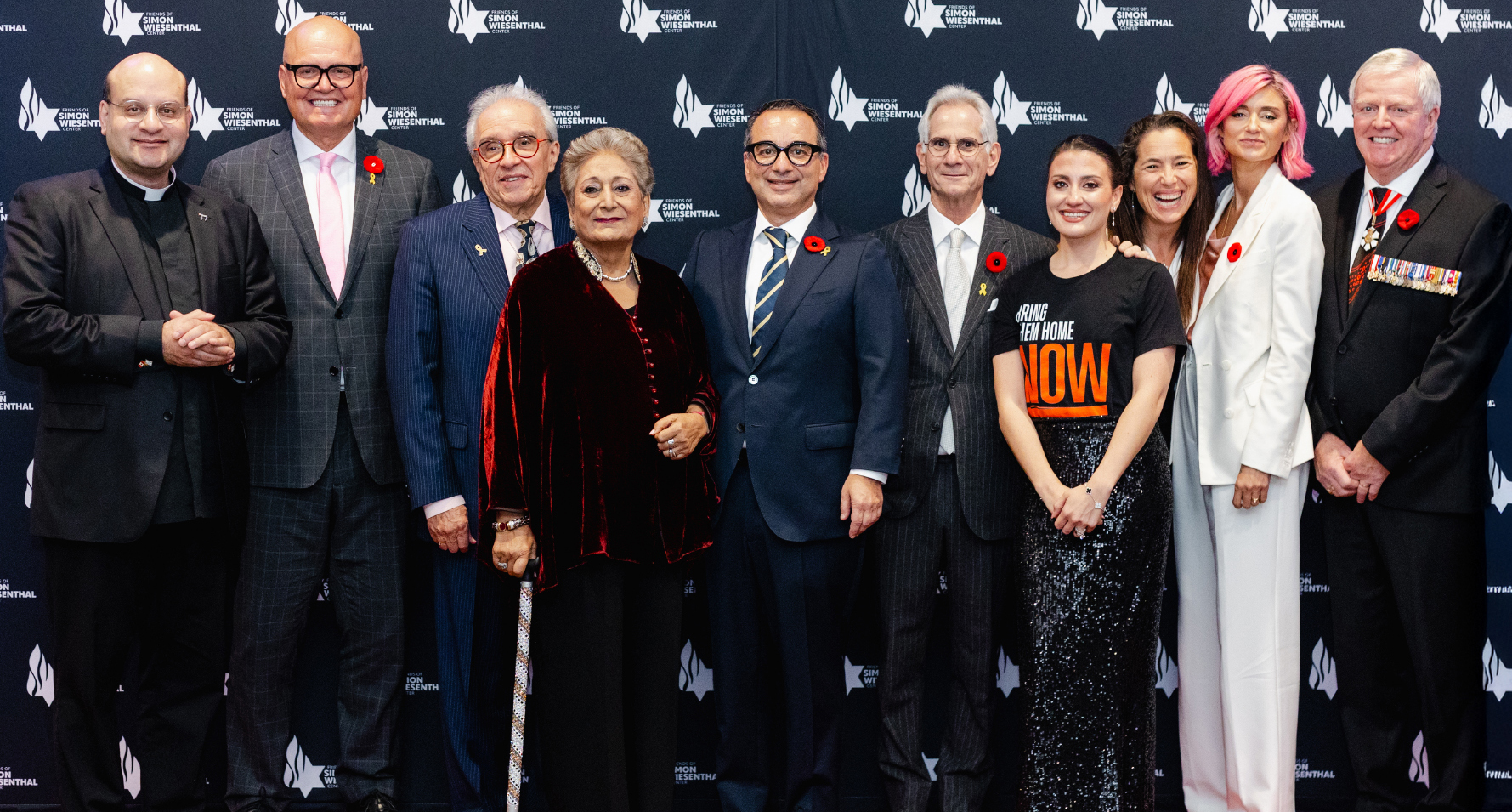
In the fall, FSWC hosted its annual marquee event at the Beanfield Centre in Toronto. It featured keynote speaker, TV personality and ally to the Jewish people, Dr. Phil McGraw, who was interviewed by film director/producer Barry Avrich. We honoured eight outstanding allies to the Jewish community – Caroline D’Amore, Rick Hillier, Harry LaForme, Jon Love, Victoria Mancinelli, Raheel Raza, Rocco Rossi and Father Raymond de Souza – all of whom have used their platforms to speak out against antisemitism since Oct. 7.
Michal Ohana, who survived the Hamas atrocities at the Nova music festival in southern Israel on Oct. 7, shared her heart-wrenching testimony of what she endured. The 1,600 people in attendance included politicians, foreign diplomats, Holocaust survivors, Jewish community members, non-Jewish allies and police.
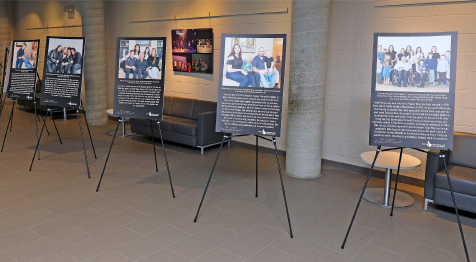
The Legacy Portrait Project, a physical, mobile exhibit showcasing photographs and descriptions of Holocaust survivors and their grandchildren, was displayed at Toronto’s Baycrest Centre for the month of May; at a Holocaust-related event in Collingwood, Ontario in early June; and at Crescent School in Toronto in late October.
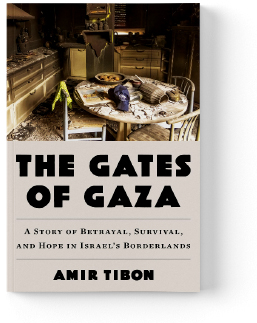
FSWC co-hosted an event with Toronto’s Beth Sholom Synagogue featuring Israeli journalist Amir Tibon and his new book, The Gates of Gaza. Tibon, who works at the Haaretz newspaper, lives with his family on Kibbutz Nahal Oz, in southern Israel which was brutally attacked by Hamas terrorists on Oct. 7. He told the audience about his life there and how he, thanks in part to his heroic father, his wife and young children miraculously survived the darkest day in Israel’s history when many of his neighbours didn’t. Approximately 350 people attended the event.
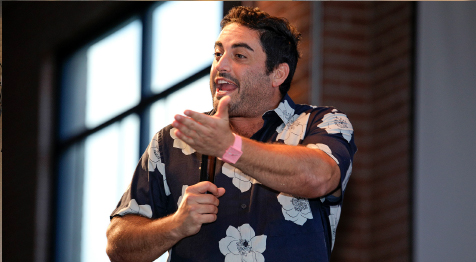
As part of its generationNOW program, FSWC organized an event in Toronto for its younger segment of supporters to further foster a feeling of community and positivity. The evening, which Alexa Tepperman and Aja Zylberberg of Duet Events hosted with FSWC, featured US comedian Jared Freid. More than 300 people came out to show their support for the work of our organization. They toured the Tour for Humanity special mobile education centre in the parking lot, enjoyed drinks and small bites...
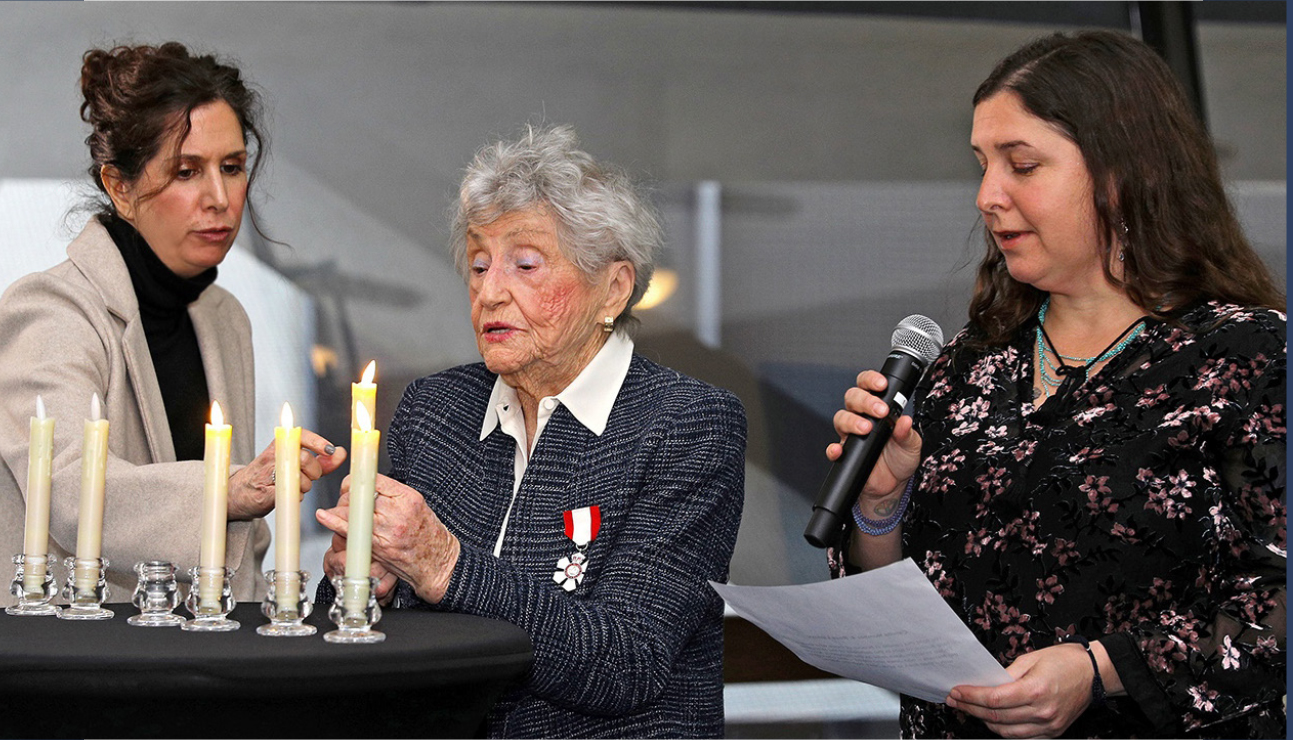
Numerous city councillors joined members of the local Jewish community to commemorate International Holocaust Remembrance Day in a ceremony hosted by FSWC and Councillor James Pasternak. Remarks were given by Mayor Olivia Chow, Canada’s Special Envoy on Preserving Holocaust Remembrance and Combatting Antisemitism Deborah Lyons and Holocaust survivor Rose Lipszyc. The event was widely covered in the media, especially in TV news reports.
In the holiday spirit, FSWC hosted a Chanukah party for 40 Jewish memebers of the Toronto Police Service at Adath Israel Synagogue. The next day, we co-hosted a Chanukah party with the Toronto District School Board for Jewish students and staff at Beth Tzedec synagogue, with more than 100 people in attendance.
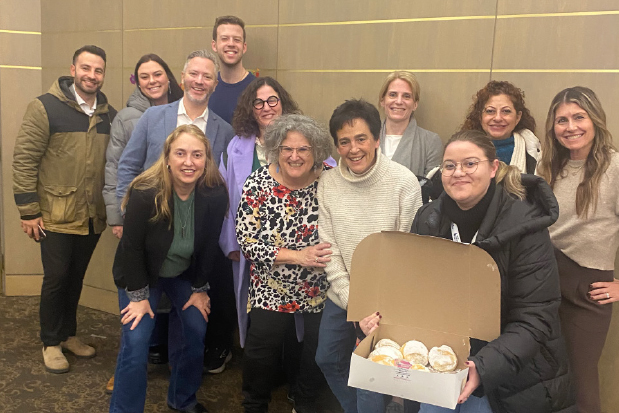
Numerous city councillors joined members of the local Jewish community to commemorate International Holocaust Remembrance Day in a ceremony hosted by FSWC and Councillor James Pasternak. Remarks were given by Mayor Olivia Chow, Canada’s Special Envoy on Preserving Holocaust Remembrance and Combatting Antisemitism Deborah Lyons and Holocaust survivor Rose Lipszyc. The event was widely covered in the media, especially in TV news reports.
At our annual Voices of Change event in Toronto, former Senator Linda Frum conducted an engaging Q&A with Hillel Neuer, Executive Director of UN Watch, before an audience of 650 people at Holy Blossom Temple. Their discussion focused on the shameful record of the United Nations vis-à-vis Israel as reflected in its endemic and longstanding obsession with and animus toward the world’s only Jewish state. The discussion was followed by a dessert reception.
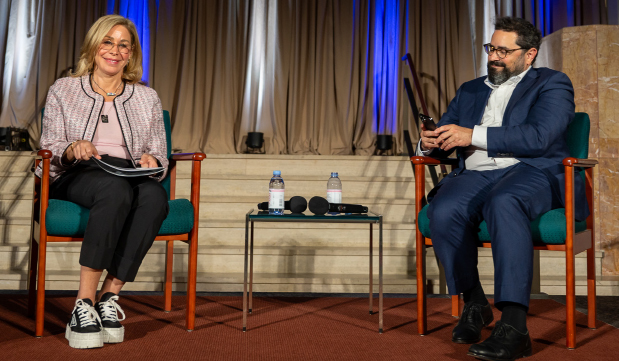
The ‘In Conversation with a Survivor’ series features interviews with survivors of the Holocaust and other genocides who discuss their life experiences with FSWC’s Senior Educator, Elena Kingsbury. In total, we hosted 10 segments in the series, with the following guests: Holocaust survivors Jozef Cipin, Yolanda Engel, Ana Marie Gordon, Joe Gottdenker, Peter Hajnal and Maxwell Smart; Dori Ekstein, daughter of Holocaust survivors; Guido Smit, whose mother was a Holocaust survivor and whose father was in the Dutch resistance that rescued Jewish youth; Dr. Eugène Nshimiyimana, who survived the genocide against the Tutsi in Rwanda; Marina Nemat, who survived the 1979 Iranian Revolution.
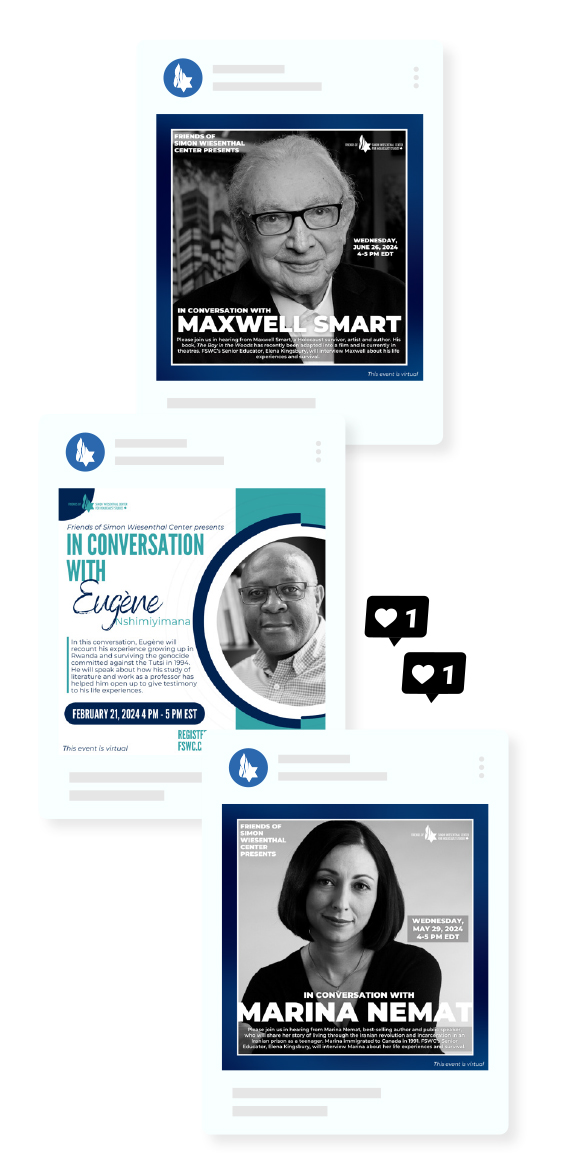

In 2024, FSWC launched the ‘Book Talk’ online series which spotlights new or recent books whose subject matter connects in some way to the work of our organization, particularly the Holocaust. In each edition, FSWC Senior Writer and Editor Robert Sarner interviews the author about the featured book and related issues. Here are the writers and their respective books, listed in the order in which they appeared on Book Talk: Robert Rotenberg and his novel: What We Buried; Michael Hirsh and his memoir: Animation Nation; Mother and son Karmela and Joel Waldman, on Joel’s memoir: Surviving the Survivor: A brutally honest conversation about life (and death) with my mom: a Holocaust survivor, therapist and my podcast co-host; John Lorinc on his memoir: No Jews Live Here.
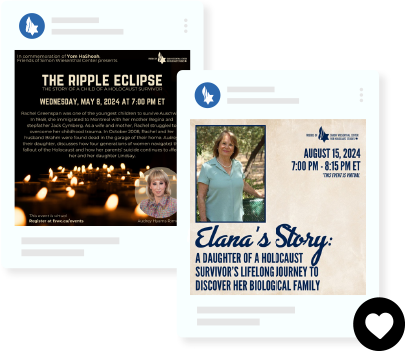
In addition to the two above-mentioned ongoing series, FSWC also hosted several other online events. They featured registered social worker Jenna Quint, focusing on intergenerational trauma connected to the Holocaust; Audrey Hyams Romoff shared her story growing up as the child of a Holocaust survivor and her parents’ tragic death by suspected suicide in 2008; and Elana Milman’s story as a Holocaust survivor who discovered she was adopted and later reunited with her biological mother and half-siblings.
The opening of FSWC’s first office outside Ontario augments organization’s national impact
In the fall, FSWC expanded its on-the-ground presence in Canada with the opening of its first-ever west coast office in Vancouver. Since then, Michael Sachs, Director of Western Canada, has focused on critical collaboration, engagement, reporting, training opportunities, stakeholder outreach and media efforts to address antisemitism and enhance community relations.
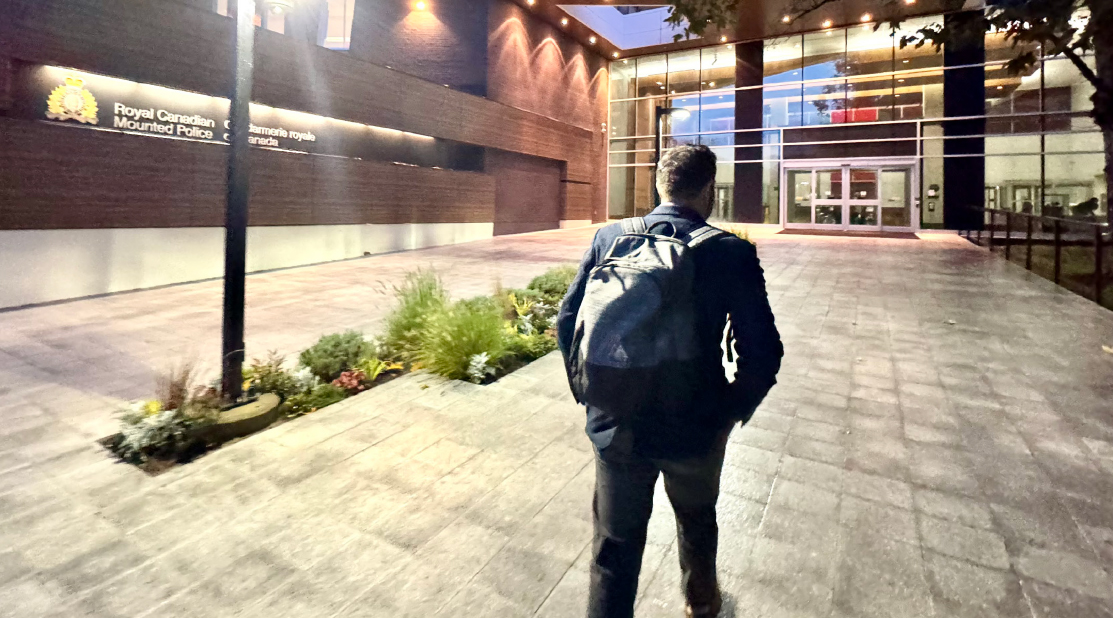
In the first few months of operation, our Vancouver office was active on many fronts. It issued joint statements with CIJA and Federation partners on a major violent incident against a Jewish community member; led efforts to bring together a coalition of organizations to address a specific incident and ongoing antisemitism at University of British Columbia; addressed antisemitic artwork at the Esker Gallery in Calgary; engaged with the Delta School District, south of Vancouver, after an event made Jewish students and parents feel unsafe; and met with the Richmond School District to address rising antisemitism and ensure FSWC consultation on the development of their antisemitism policy.
FSWC’s Vancouver office met with the RCMP’s Hate Crimes Unit, the Vancouver Police Department Criminal Intelligence Unit, Victoria Police Major Crimes Unit and the Edmonton Police Major Crimes Unit to report and track multiple dangerous individuals. We were also invited to join Vancouver Shield, a partnership between the public and private sector to strengthen Vancouver against terrorism, violent extremism and related threats.
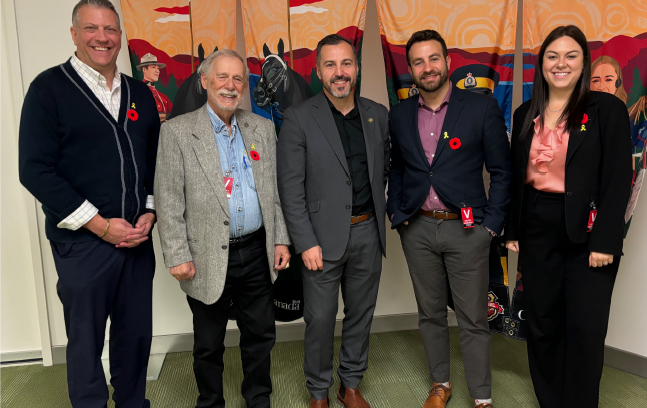
We delivered training sessions across diverse west coast sectors, including the BC RCMP, Vancouver Police Department, Association of Mineral Exploration and Vancouver’s Langara College DEI department. Building on this, we also initiated outreach to all BC political caucuses to introduce FSWC and promote antisemitism training for them in the future.
FSWC expands education work equipping professionals across industries and other diverse groups with the knowledge and tools to recognize and confront antisemitism in all its forms
Responding to an increased demand, FSWC has broadened its education program on antisemitism training for adults working in a wide range of professional environments and other settings. The specialized training we do across Canada is part of our ongoing commitment to work alongside partners in all sectors in the fight against hate, in particular combatting antisemitism given its prevalence.
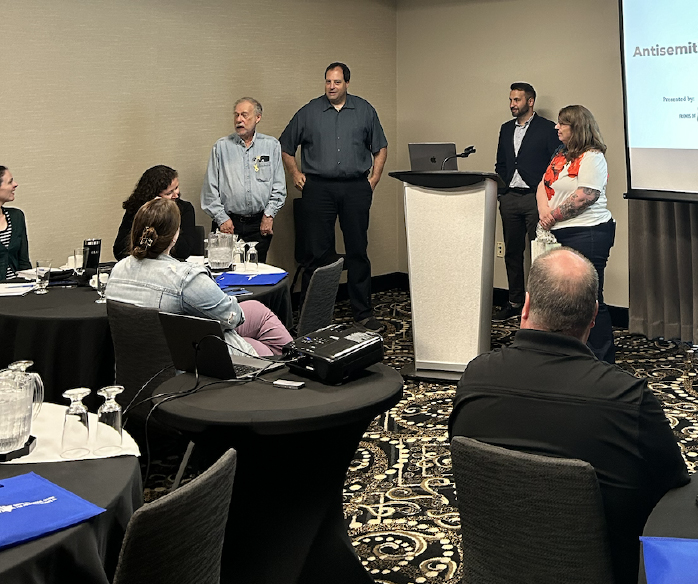
As part of a new approach to antisemitism education in the professional space, FSWC introduced modular training designed specifically for corporate and institutional clients. Given that traditional in-person workshops aren’t always feasible – either due to large staff numbers or teams spread across multiple time zones – we developed online modules as an accessible, flexible and effective alternative. These modules provide professionals with critical knowledge on how to identify antisemitism, the historical context shaping its modern manifestations, its impact on Jewish communities and practical ways to be an ally. In making antisemitism education more adaptable and scalable, we equip organizations with the tools needed to foster more inclusive and informed workplaces. As part of this initiative, we launched the first-ever modular antisemitism training program for the Toronto Police Service, now a mandatory component of its cadet training program. So far, 6,000 Toronto police officers have completed the training, improving their ability to recognize and respond to antisemitism in their work. In addition, we developed tailored modular programs for institutional clients such as TD Bank and the Canadian School of Public Service, so professionals in diverse sectors have access to essential education on combatting antisemitism.
In response to the growing challenge of antisemitism in workplaces, schools and communities, FSWC launched a new training program, Confronting Antisemitism: Building Bridges Through Constructive Conversations. This workshop was created to empower Jewish professionals and community members with the knowledge, skills and confidence to engage in meaningful dialogue about antisemitism and its impact on our society. Many Jews today struggle to find the right words and strategies to address antisemitism in their daily lives – whether at work, in their neighbourhoods or among friends. This program equips participants with essential tools to navigate these difficult conversations, fostering greater understanding and allyship. The workshop provides an in-depth exploration of both historical and contemporary antisemitism, including its evolving forms in Canada. Through interactive discussions and practical exercises, participants learn how to articulate their experiences, respond to antisemitic rhetoric, and advocate for inclusive practices that promote respect and diversity. By providing Jewish professionals with a strong foundation in the history and modern realities of antisemitism, this program strengthens their ability to challenge misconceptions, counter prejudice and engage others in constructive, solution-driven conversations.
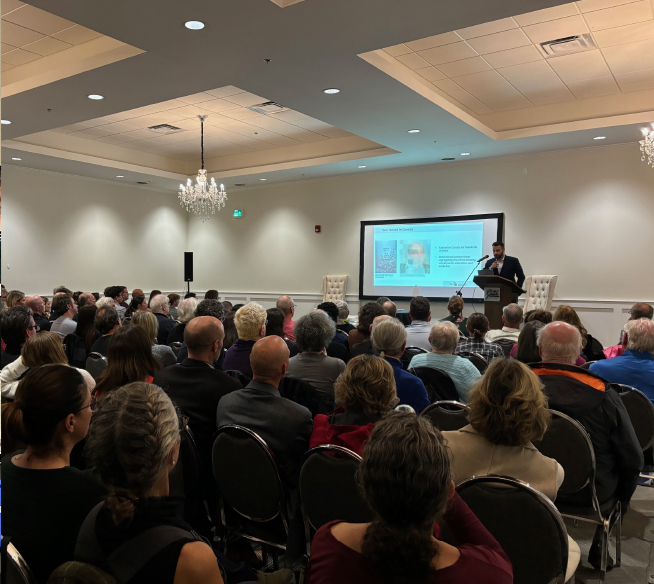
FSWC expanded its law enforcement training programs with the launch of Policing with Understanding, a specialized workshop that equips officers with the knowledge and strategies to better serve and protect Jewish communities. This program provides a deeper understanding of Jewish culture and the unique vulnerabilities faced by the community. Officers receive a thorough analysis of the critical moments when Jewish individuals and institutions are at the highest risk, allowing them to strategically deploy resources and enhance safety measures during these key times. By examining local hate crime statistics and assessing ongoing threats, participants gain valuable insight that informs proactive policing efforts.
Beyond addressing security concerns, Policing with Understanding fosters stronger relationships between law enforcement and the Jewish community. Officers learn how to act as effective allies and work collaboratively to ensure the safety and well-being of Jewish individuals and institutions. Since its launch, the program has already been delivered to several police services, including the BC RCMP, Owen Sound Police Service and Brantford Police Service, reflecting the growing commitment of law enforcement agencies to enhance their understanding of the Jewish community and strengthen efforts to combat antisemitism.
In significantly expanding the reach of our flagship workshop, Antisemitism: Then and Now, we welcomed 40 new corporate and institutional clients, training more than 5,000 professionals across Canada. These included Telus, Rogers, Concordia University, the University Health Network Foundation and the senior administration of the Toronto District School Board. This interactive session empowers participants to understand the lived experiences of Jewish Canadians, integrate these perspectives into their workplace culture and take meaningful action to challenge bias. By fostering critical conversations and encouraging proactive allyship, we help to ensure that antisemitism has no place in the workplaces, institutions and communities that shape our society.
FSWC keeps people informed and engaged through lively content in our multi-channel approach to communication and outreach
In today’s “content-is-king” world, the impact of an organization or business is linked to the quality of material it produces and shares with its intended audience. In 2024, FSWC produced timely, relevant content that both kept people abreast of its activities in the field and informed them about pertinent news stories. In the process, it enhanced the perception and credibility of our brand while strengthening trust with supporters.
We do this on multiple platforms with diverse forms of content. From our regular posts on Facebook, Twitter, LinkedIn and Instagram to short videos on TikTok, to media statements to regular op-ed columns in Canada’s largest circulation newspaper (Toronto Star) and eblasts, we tell our “stories” and get our message across in an engaging way. In providing accurate, reliable information while speaking out on important issues, we reinforce FSWC’s relationship with existing supporters and followers and attract new ones. Here are some highlights from our communication and outreach efforts in 2024.
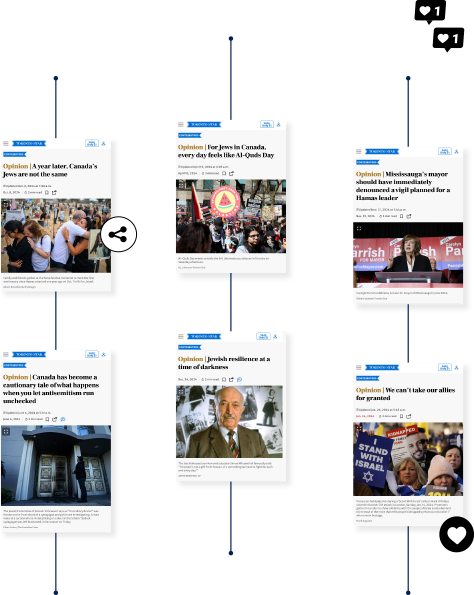
Michael Levitt, FSWC’s President and CEO, writes regularly for the Toronto Star, in which his columns appear in both the online and printed editions. These op-eds, focusing on timely, relevant issues of concern to our community and beyond, enhance FSWC’s visibility and credibility. To ensure maximum reach, we also post the columns on our social media platforms and website and in eblasts.
Here are some of the columns from the past year:
Such is the nature and relevance of our work and the stature we enjoy in the community that journalists frequently turn to FSWC for our viewpoint on a particular issue or our response to an event or development that touches on our expertise.
Here’s a selection of media coverage in 2024 in which FSWC was cited.
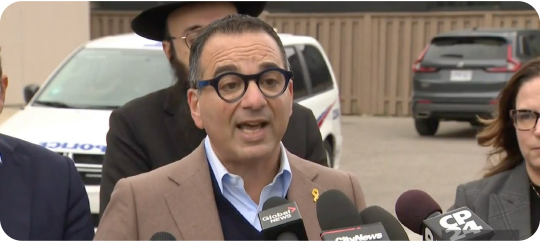
As part of FSWC’s strong presence in the media, we did many TV and radio interviews, and also spoke at press events that figured prominently in journalistic coverage. Here are two examples: The first involves an interview for a CBC Radio piece, (left), about Nazi war criminals in Canada, the second, (top), includes a TV report on the shooting attack on a Jewish school in Toronto in which FSWC President and CEO Michael Levitt speaks to the press.
As antisemitic incidents unfortunately occurred with greater frequency in 2024, FSWC’s advocacy and education work was widely covered in the media. This included our workshops on the Tour for Humanity, denunciation of targeted attacks against Jewish institutions and businesses, and exposure of an Ontario summer camp glorifying former Nazis.
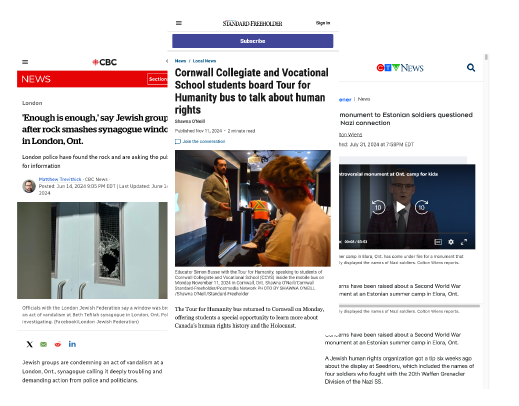
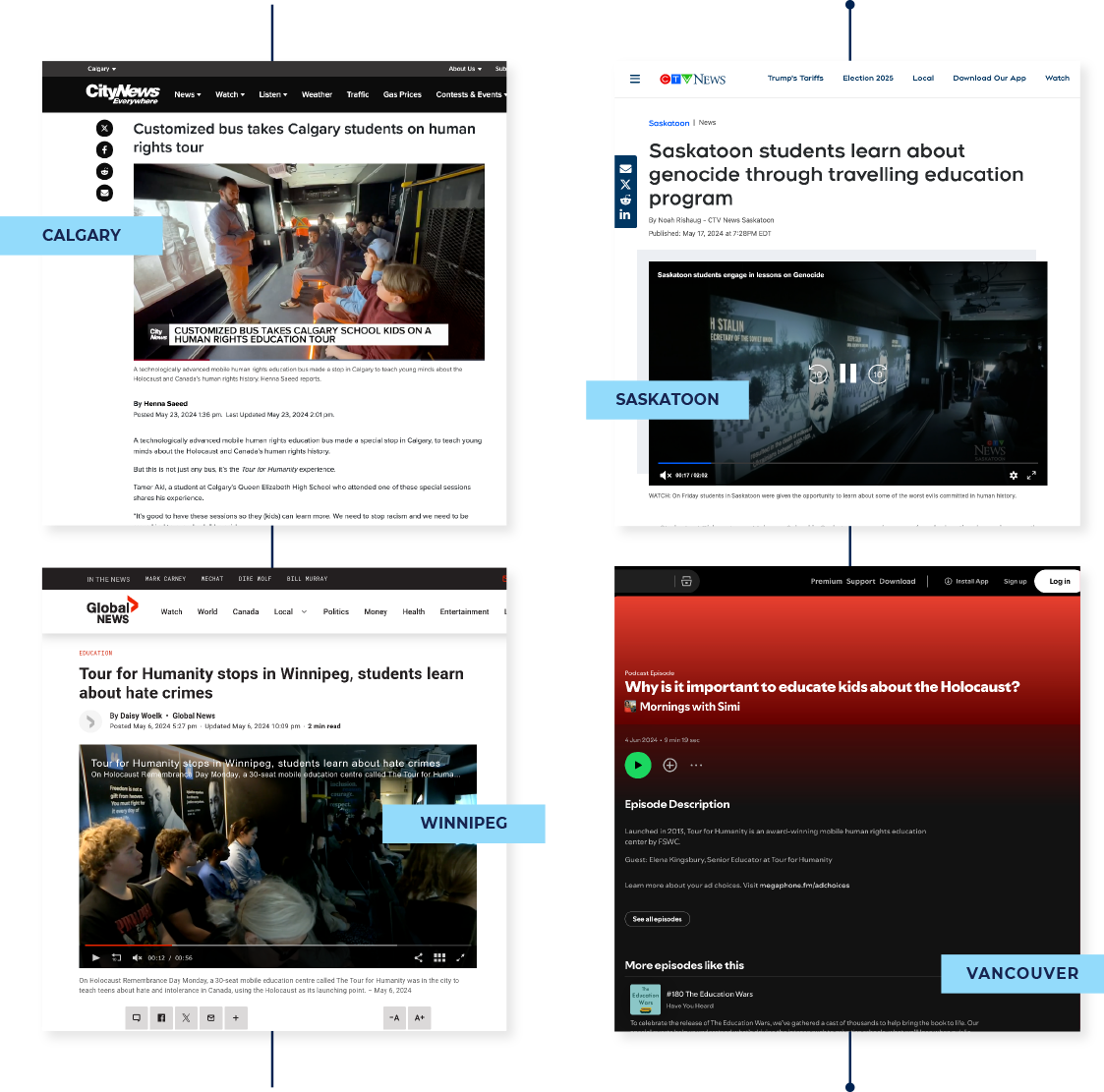
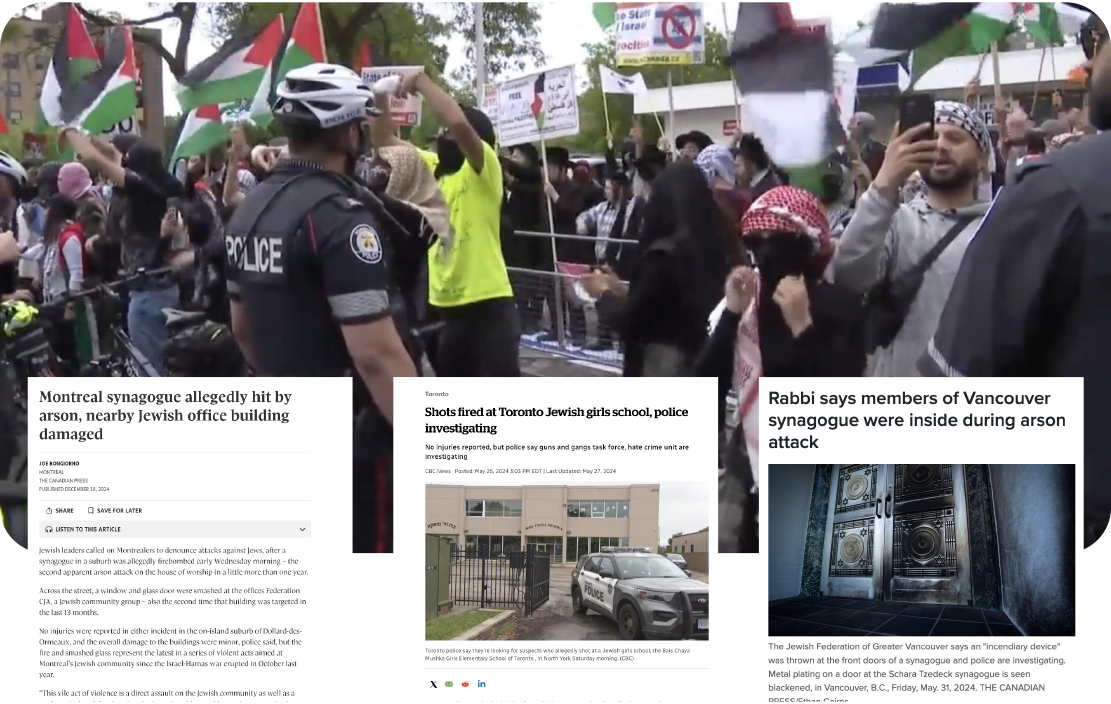
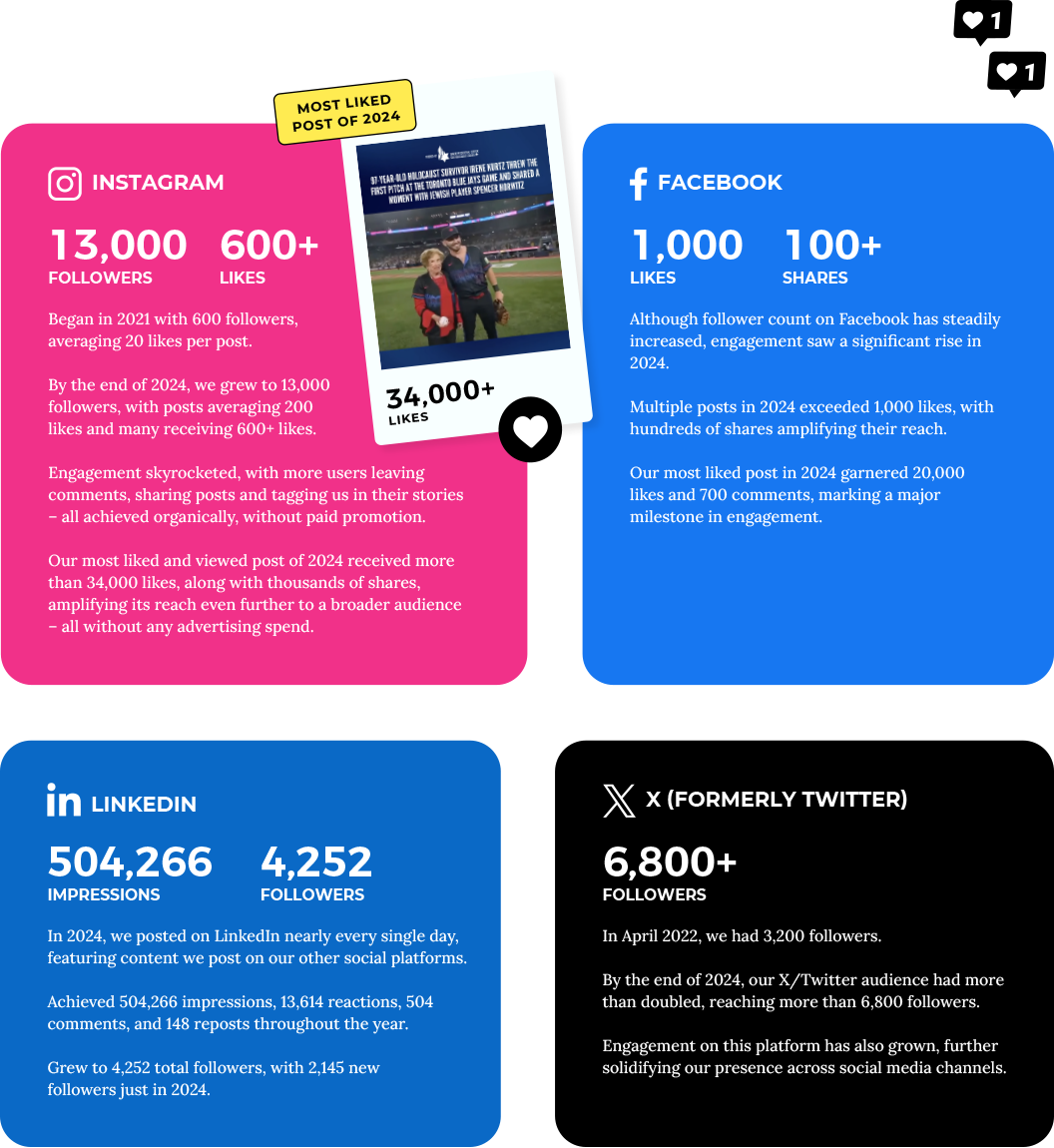
Central to FSWC’s communication and outreach efforts is the content we share daily on our social media platforms. Our audience continues to grow in response to our posts. Here are the analytics for 2024, all generated organically without paid promotion.
President & CEO
Michael Levitt
Honorary Chairman
Gerald Schwartz, OC
Chair of Board of Directors
Fred Waks
Executive Fundraising Committee Members
Ron Baruch
Michael Bregman
David Cynamon
Jeremy Freedman
and Judith Finer-Freedman
Matthew Gottlieb
Jill Reitman
Fred Waks
Eddie Weisz
Honorary Board
Members
Samuel Belzberg z”l
Paul Bronfman z”l
Rabbi Marvin Hier
Rabbi Meyer May
Honey Sherman z”l
Cecil Yolles z”l
genNOW Co-Chairs
Lexi Alter
Ashley Rosenberg
Jordana Teperman
Ambassador Circle
Brad Ashley
Gary Bensky
Renette Berman
Judy Betel
Allan Brown
Mel Brown
Milton Davis
Merrick Falkenstein
Alan Farber
David Glick
Eddie Glick
Susan Glick
Michelle Glied-Goldstein
Stuart Golvin
Matt Gottlieb
Allen Grinberg
Carole Gruson
Allen Karp
Stephen Karr
Allan Kates
Helene Korn
Evelyn Krakauer
Jonathan Latsky
Dan Malamet
Israel Mida
Faye Minuk
Pablo Reich
Bob Rubinoff
Richard Sacks
Jack Steckel
Arthur Stern
Richard Wachsberg
Alan Wainer
Board of Directors
Ron Baruch
Jim Berk
Lawrence Bloomberg,
C.M., O.Ont
Michael Bregman
Jonathan Bronfman
David Cynamon
Gordon R. Diamond,
O.C., O.B.C.
Joel Feldberg
Jeremy Freedman
Ron Frisch
Alan Greenberg
Vladislav Khaykin
Sam Mizrahi
Philip Reichmann
Jill Reitman
Gloria Salomon
Molly S. Shoichet,
O.C., O.Ont.
Ashley Steinhauer Otto
Eddie Weisz
Eric Weisz


Copyright © FSWC. All Rights Reserved.


