

Toronto resident Denise Fikman Hans, who survived the Holocaust as a hidden child in Nazi-occupied France, helps Wiesenthal Canada teach Canadians the lessons of this dark chapter of history.
Wiesenthal Canada remains steadfast, both on the frontlines and behind the scenes, in fighting antisemitism and other forms of hate in Canada
As everyone in our community knows only too well, the challenges of the post-October 7 world show little sign of abating for Canadian Jews. Indeed, the dramatic spike in antisemitism unleashed in the fall of 2023 persists well into 2026, after feeling increasingly normalized in 2025.
At Wiesenthal Canada, we see and feel this dangerous scourge first-hand as we address it continuously, especially in our extensive advocacy work. While it’s rewarding to know what we do is now timelier and more relevant than ever, we of course wish the current reality wasn’t so fraught for the Jewish community and that the need for Holocaust education and anti-antisemitism efforts wasn’t so acute.
In the face of increased challenges for Canadian Jews, Wiesenthal Canada continues to expand its work in all areas, as reflected in the following pages. It’s part of our leading role in confronting rising hate in Canada as we demand swifter government action, stronger law enforcement responses and meaningful policy measures to combat antisemitism. As part of our mandate, we work to ensure that hate crimes targeting the Jewish community are met with zero tolerance; we vigorously push for increased security funding, enhanced police protection and stronger legal consequences for perpetrators.
In keeping with our multifaceted approach, we mobilize public awareness campaigns, engage political leaders at all levels and work closely with law enforcement agencies to ensure that antisemitic incidents aren’t ignored or downplayed. We take pride in the fact that our advocacy contributes to concrete results – from arrests and convictions in key cases, heightened police presence at Jewish sites and increased pressure on authorities to treat antisemitic hate crimes with the gravity they deserve.
While our high-profile advocacy work and community engagement are what usually earns public attention for Wiesenthal Canada, no less important in the achievements of our organization is what we do every day far from the spotlight. To be sure, our educational programs in classrooms across Canada involving lessons of the Holocaust are central to the impact of Wiesenthal Canada and key to the better tomorrow to which we strive to contribute for all Canadians.
At Wiesenthal Canada, we are meeting the current challenges with urgency and resolve. We continue to expand our programs and develop new initiatives to reach broader audiences – students, educators, law enforcement and professionals across all sectors – ensuring that Canadians understand both the universal lessons of the Holocaust, including what happens when hate goes unchecked, and the surge of toxic antisemitism today.
As the threats to the Jewish community escalate, Wiesenthal Canada remains unwavering in its mission to expose and confront antisemitism in all its forms. We never lose hope. We know the importance for our community of perseverance, tenacity and overcoming hardship. We refuse to let hate rule our lives or to yield ground to those who seek to harm us. We will not be cowed.
We also know we’re not alone, that good people of moral fortitude, horrified by rampant Jew-hatred, stand with us in solidarity. Such allies provide much-appreciated comfort and reinforce our determination to defeat the haters. To that end, Wiesenthal Canada is engaged on the front lines and behind the scenes, making a positive impact where it matters.
As always, we are deeply grateful for the generous support that Wiesenthal Canada receives from our incredible community and beyond that’s so critical to our work toward a better future for all.
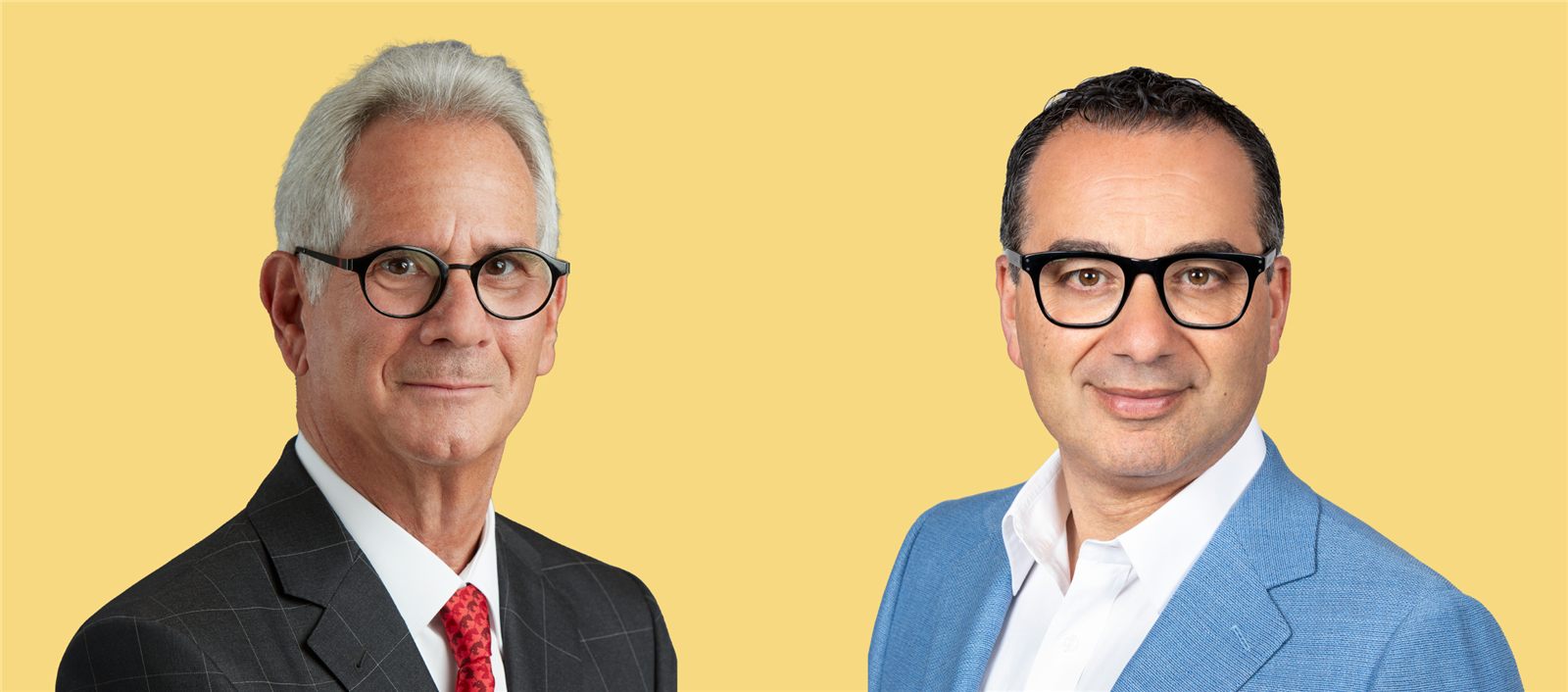
 Fred WaksChairman, Board of Directors
 Michael LevittPresident and CEO
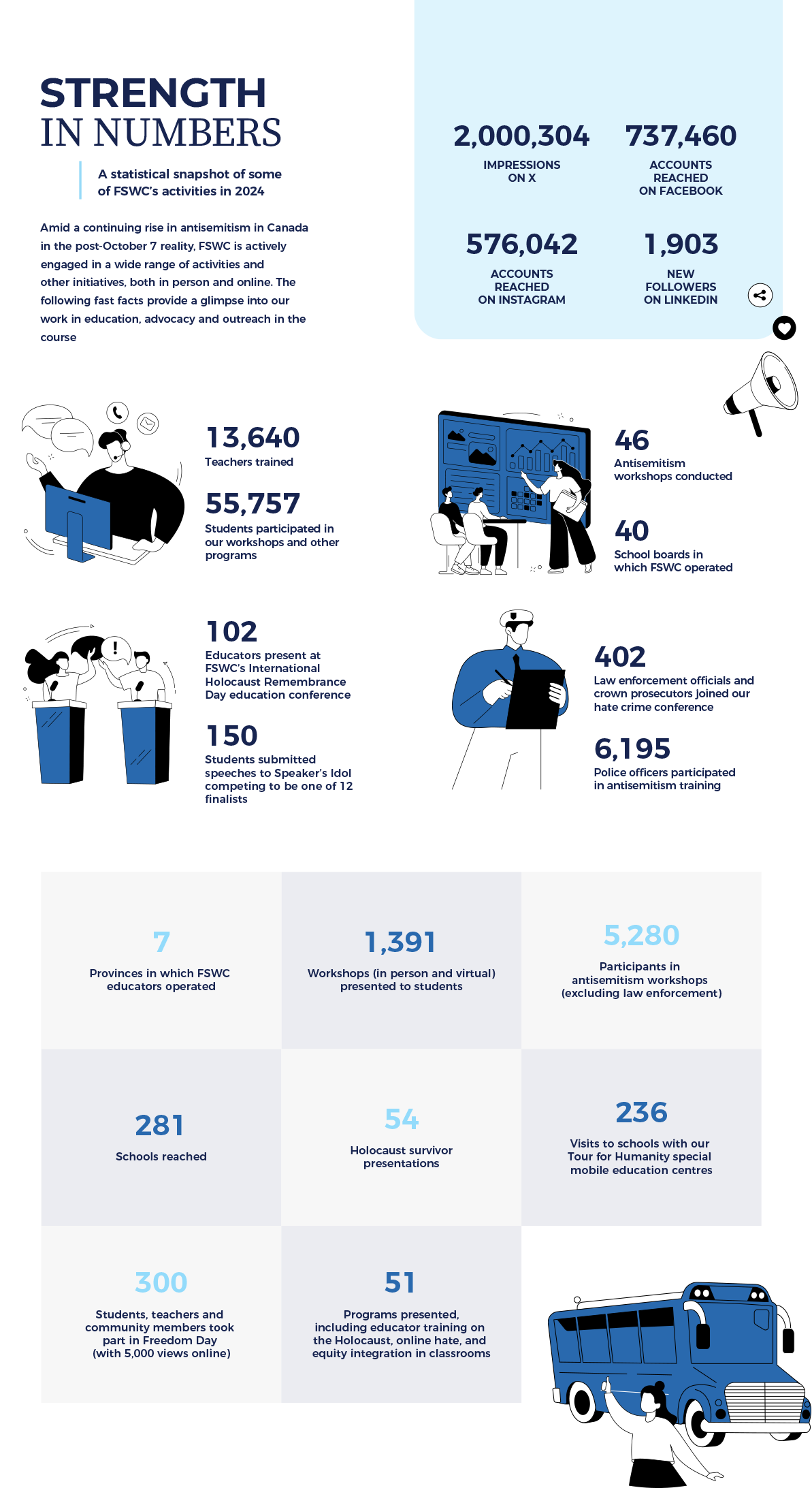
A statistical snapshot of some of Wiesenthal Canada’s activities over the course of a year
Wiesenthal Canada’s extensive activities and other initiatives, both in person and online, cover a lot of ground. The current reality demands nothing less. The following fast facts provide a glimpse into our work in education, advocacy and outreach during 2025.
In person and online, Wiesenthal Canada educators teach important lessons of the Holocaust and other historical chapters in a way that engages Canadian youth
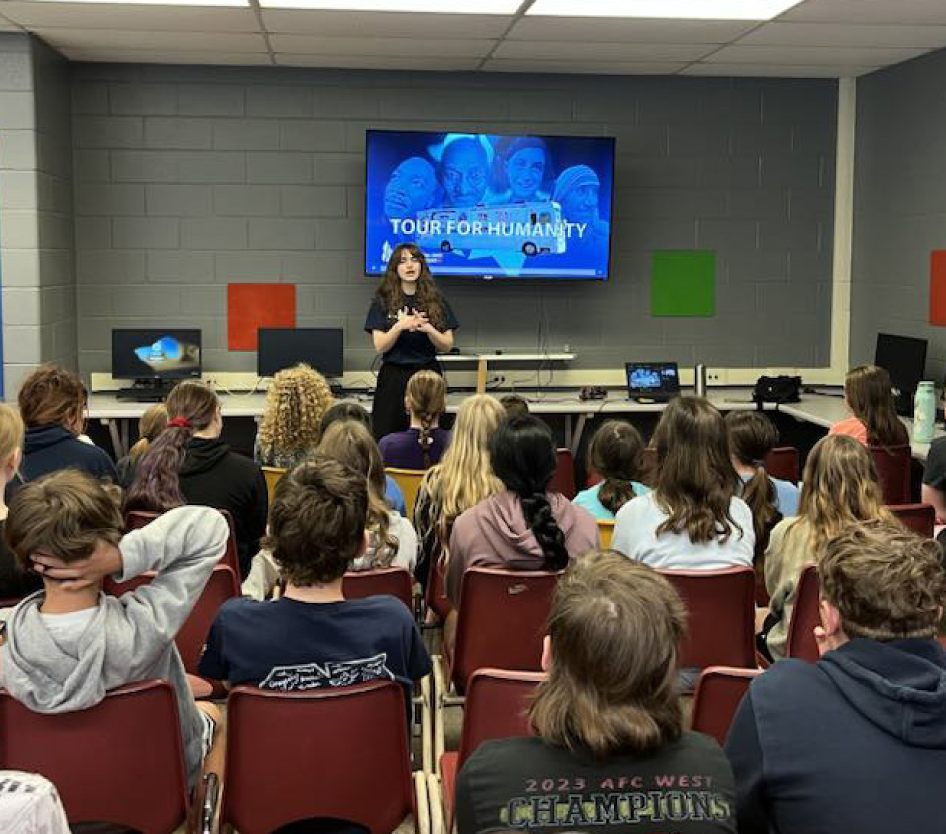
As one of the main pillars of Wiesenthal Canada, our education programs are central to the organization’s mission. Over the past year, schools – both public and private – booked hundreds of sessions conducted by members of our team. At the same time, government agencies and private corporations increased their requests for Wiesenthal Canada educators to provide diversity and inclusion-related workshops and other programs, some with live testimony from Holocaust survivors.
The main focus of our workshops, lesson plans and other activities is on tying past atrocities to current events with the aim of influencing people to advocate for protecting human rights and a more equitable future for all. In presenting lessons on the Holocaust, antisemitism, and other forms of racism and discrimination in Canada, Wiesenthal Canada educators also lead conversations about how to change the cycle of hate and intolerance through the power of standing up and speaking out.
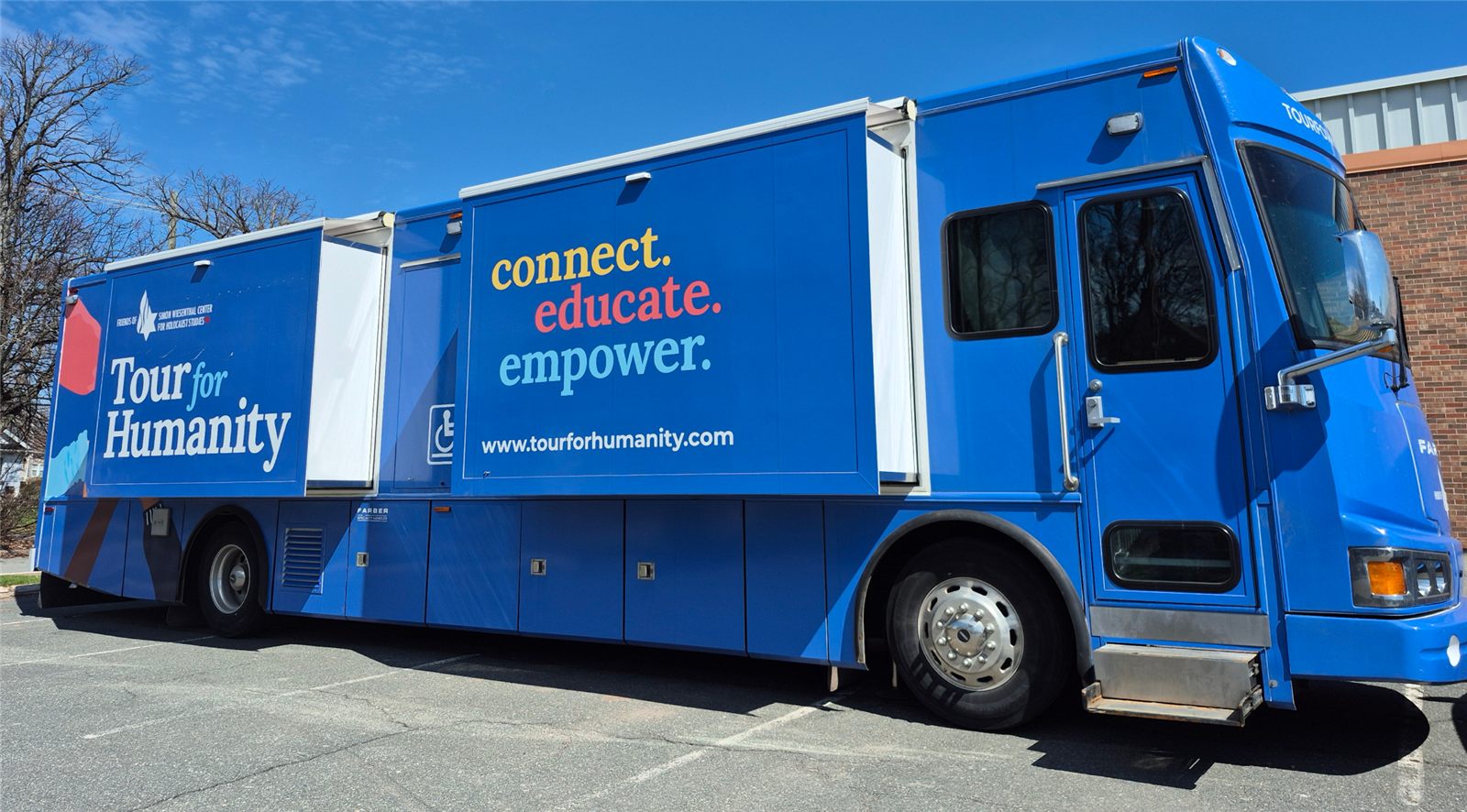
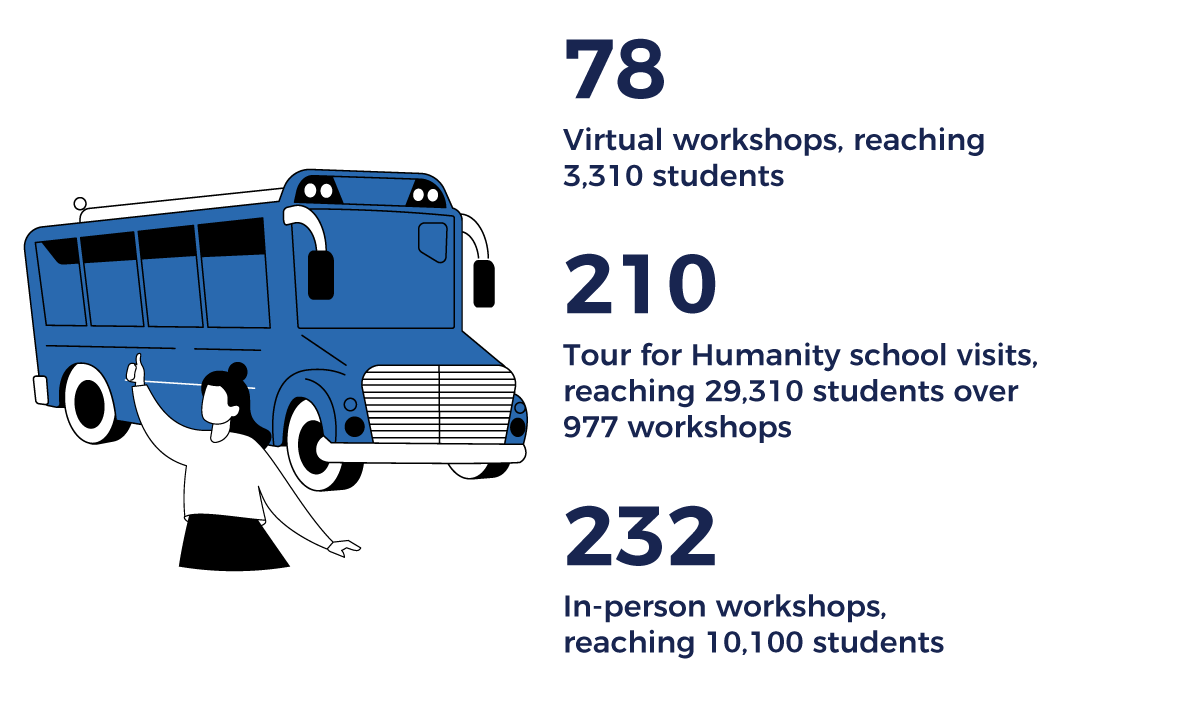
To meet the growing demand for our programming, we launched our third T4H mobile education centre last fall, increasing our capacity to reach remote communities across Canada. The new vehicle replaced the original one, which, since its debut in 2013, had traveled to more than 1,000 schools and communities in several provinces, reaching more than 150,000 students.
In early 2026, T4H spent considerable time in Ontario’s Waterloo Region (Waterloo, Kitchener, Cambridge) and Halton Region (Milton, Burlington, Oakville). It was part of ongoing partnerships with Catholic School Boards in both areas. Each board has committed to having 20-25 schools participate in T4H workshops during the school year. Additionally, T4H was in high demand at schools across Barrie, Richmond Hill, North York, Oshawa, Alliston and Vaughan. That was followed by our second-ever west coast trip in April and May.
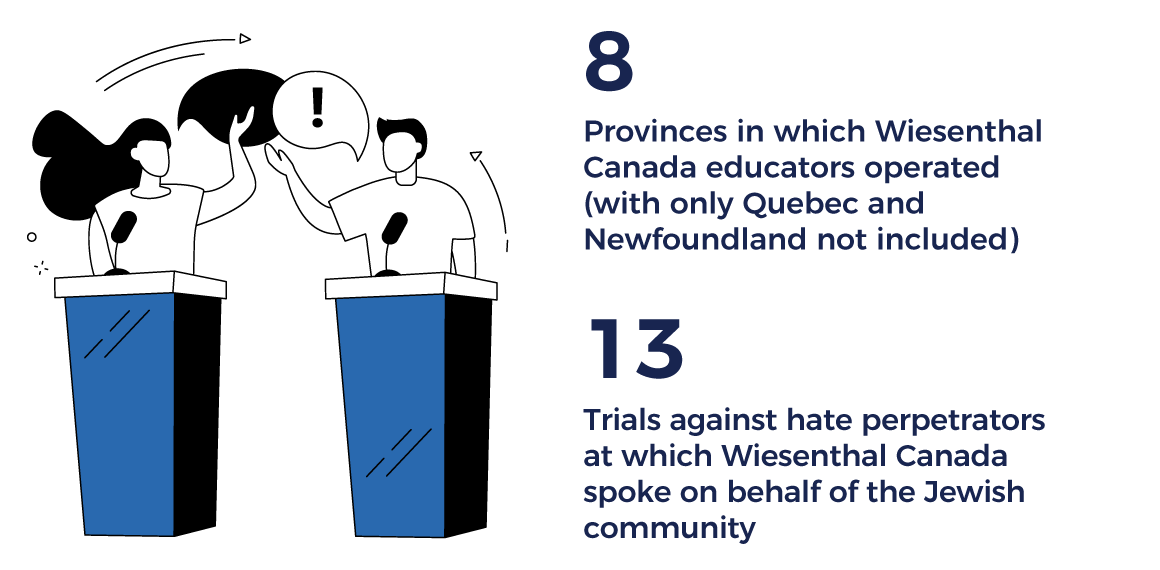
The five-week multi-province trip included new destinations like Regina, SK, and Victoria, BC while making return visits to Calgary and Vancouver. In 2025, T4H returned to Atlantic Canada for a multi-week trip in New Brunswick and Nova Scotia and visited Prince Edward Island for the first time, marking the ninth province in which T4H has operated.
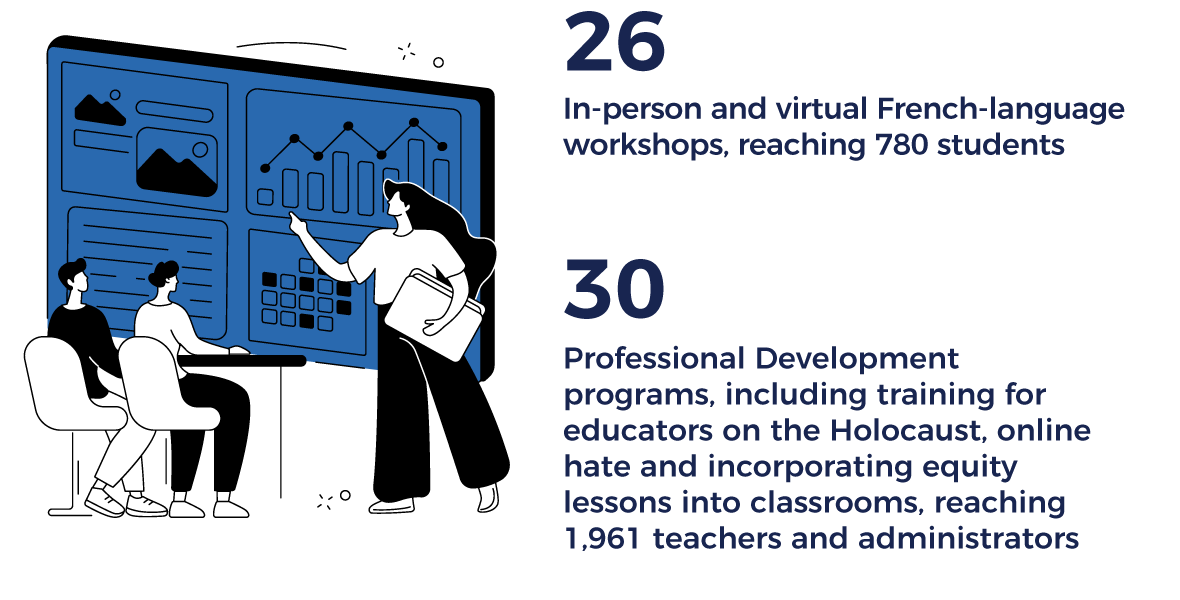
In our work with educators, we not only provide historical knowledge about the Holocaust, we also shape the way teachers approach one of the most difficult and morally urgent subjects they will ever bring into their classrooms. To that end, over the past year or so, we’ve led professional development sessions with educators from more than 50 independent and public schools. They participated in programs such as Teaching the Holocaust Through Heroism; Best Practices in Holocaust Education; Exploring Auschwitz, and Teaching the Holocaust Through Literary Memoir: Elie Wiesel’s Night.
Beyond working with educators, we also created programming to support Jewish students in independent schools who feel increasingly isolated or targeted in today’s climate. One such session, Challenging Conversations: Confronting Antisemitism, helps students better understand the roots and evolution of antisemitism while providing practical strategies for responding when they encounter it. The program examines and debunks long-standing antisemitic tropes and explores the ways antisemitism manifests today – online and in everyday life. Just as importantly, it introduces students to a “brain-first” approach to communication: helping them learn how to regulate emotions, set boundaries, recognize when to engage in difficult conversations, and when it’s healthy to step away.
The Erdman Leadership Fellows Program is a new leadership and educational initiative to equip high school students at independent schools with knowledge about the Holocaust and antisemitism and empower them to engage with these topics beyond Wiesenthal Canada-led sessions. This year, our inaugural cohort consists of 17 students from eight independent schools across Ontario and Manitoba. The comprehensive pilot program includes monthly sessions – both online and in-person conferences. Participants complete a culminating project designed to bring Holocaust and antisemitism education into their respective school communities. The goal is not only to provide these students a deeper understanding of Holocaust history and contemporary antisemitism but to empower them to become thoughtful and courageous leaders who carry these lessons forward.
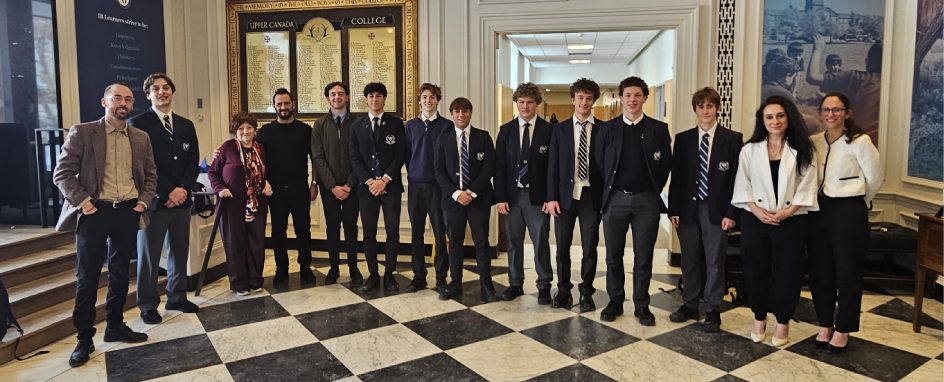
Over the past year, Wiesenthal Canada was active at independent schools, both in person and online, supporting educators grapple with Canada’s antisemitism crisis. We did this by way of professional development programs, such as Teaching the Holocaust Through Heroism; Best Practices in Holocaust Education; Exploring Auschwitz; and Teaching the Holocaust Through Literary Memoir: Elie Wiesel’s Night. Through our workshop Antisemitism: Then and Now, we helped educators understand both the deep historical roots of antisemitism and the ways it manifests in contemporary society. We delivered the program in person at multiple independent schools in Toronto, including The York School, Upper Canada College, Branksome Hall, Crestwood, Greenwood College and The Rosedale Day School.
We also created programming designed specifically to support Jewish students in independent schools who have felt increasingly isolated or targeted in today’s climate. One such session, Challenging Conversations: Confronting Antisemitism, helps students better understand the roots and evolution of antisemitism while providing practical strategies for responding when they encounter it.
In August, Wiesenthal Canada hosted its inaugural Empowering Change: Holocaust Education for a New Generation conference. Generously supported by the Department of Canadian Heritage, we brought 28 teachers from seven provinces to Toronto for a comprehensive three-day conference on Holocaust education. Teachers participated in workshops hosted by senior Wiesenthal Canada education staff and visited the Royal Ontario Museum for its Auschwitz exhibition.
The Alex and Alice Davis Scholarship was recently established by the family to honour their legacy and celebrate their wonderful lives. The scholarship recognizes a grade 12 student entering a post-secondary institution who demonstrates leadership qualities and experience in advocating for human rights or standing up for others. The recipient of the first award will be announced in mid-2026 after a review of all applications submitted.
Each edition of our monthly digital education newsletter, Classroom Connection, continues to enjoy high open rates among teachers across the country. Filled with curriculum tips, interesting articles and lesson ideas written by Wiesenthal Canada educators, the publication has proven a useful resource for teachers, further enhancing the perception of our organization in schools.
In March, the education team launched Testimony for Tomorrow: The Survivor Memory Project. Generously funded by Ontario’s Education Ministry, the microsite offers human-centered lessons on the history of the Holocaust. Much to our satisfaction, Testimony for Tomorrow has been added to the official Ministry list of resources supporting these new curriculum updates.
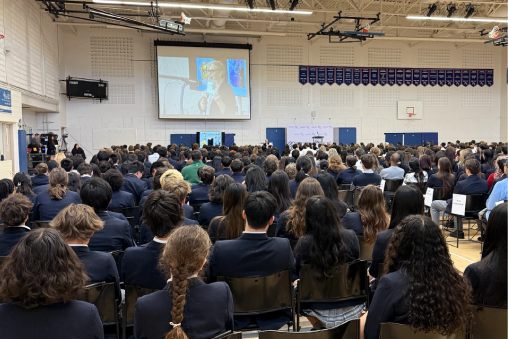
In January, Wiesenthal Canada hosted Witnesses of Today, the first hybrid, bilingual Holocaust survivor program. In partnership with the Toronto French School, the event saw more than 500 students at the school and an additional 400 virtually from across Canada hear first-hand accounts of the Holocaust from survivors Denise Hans (in French) and Gershon Willinger (in English). This program was possible due, in part, to Wiesenthal Canada’s new French-language programing.

In recent months, Wiesenthal Canada delivered professional development programs for educators across Canada. We partnered with Brock University in St. Catharines, Ontario to deliver a 2½-hour session for teacher candidates preparing to enter their first teaching positions. At the same time, several independent and public schools also participated in Wiesenthal Canada’s sessions Teaching the Holocaust through Heroism; and Best Practices in Holocaust Education. These programs equip educators with practical strategies and pedagogical frameworks to teach the Holocaust responsibly and sensitively, while providing clear guidelines for navigating this complex and emotionally significant subject. At the Greater Edmonton Teachers Convention, our team delivered a 2½-hour Antisemitism: Then and Now session to more than 60 teachers.
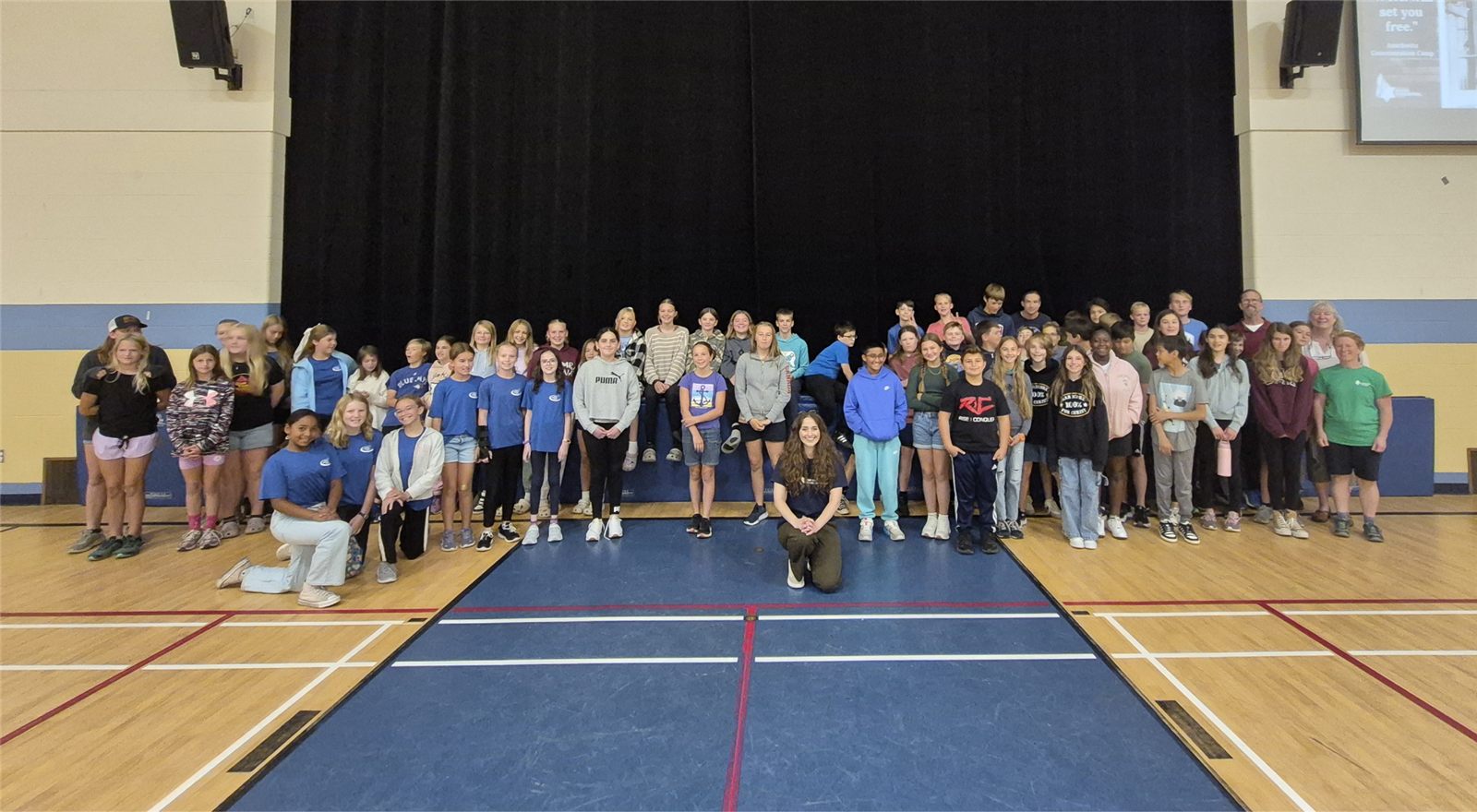
Increasingly, Ontario’s Education Ministry is turning to Wiesenthal Canada for guidance on updating its Holocaust education curriculum, a role that began many years ago in connection with the Grade 6 Holocaust Education Curriculum. Most recently, the Ministry engaged us to serve as an integral resource for the expanded Grade 10 Canadian and World Studies Curriculum. Scheduled for rollout in Sept. 2026, it offers students enhanced learning on extreme political and social ideologies, the Holocaust and antisemitism. We are also thankful to the Ministry for its ongoing trust in our organization to create and deliver quality curriculum-linked content. Our current grant project, The Rescue and Response Package, will be available for teachers and administrators this year. Designed as a comprehensive restorative resource, this package will prove helpful as an immediate response to antisemitic hate incidents in schools and classrooms.

Schools across the Greater Toronto Area continue to request in-person educational workshops from Wiesenthal Canada, particularly when it involves a Holocaust survivor speaker, which allows students to hear poignant, first-hand testimony and interact with a survivor. In 2025, 38 schools in the GTA requested from Wiesenthal Canada a survivor to speak in their classrooms, reaching more than 2,000 students.
In recent months in Ontario, schools in Ottawa, Barrie, Alliston and Toronto booked multiple days of programming. Increasingly, schools are taking a multi-pronged approach to Wiesenthal Canada’s workshops by having us come in several times to work with different grades as well as do Professional Development for teachers. At a local Toronto school, we facilitated 25 workshops for students in grades 3-8 and two teacher PD sessions.
In January, we presented our Lessons and Legacies of the Holocaust workshop to high school students in Alliston. Of note, a grade 11 student did the initial outreach and organized our visit for the school. Though not Jewish, she had learned about the Holocaust in history class and felt the rest of her school should also have the background knowledge to understand the dangers of antisemitism and how students can be allies.
Thanks, in part, to an Ontario Education Ministry Grant for 2026-2027, Wiesenthal Canada’s Director of Curriculum and Learning and Senior Director of Education oversaw the creation and implementation of The Shapeshifting Monster: Learning about Antisemitism for Junior Grades. This workshop introduces elementary students to the concept of antisemitism, a shape-shifting form of hate that’s had a major impact on Jewish experiences, history and identity since ancient times.
This introductory program explores the ‘monster’ of anti-Jewish hate by unpacking key definitions and age-appropriate historical examples. It also helps students answer a fundamental underlying question, “What does it mean to be Jewish?” Accompanied by a short video, the program helps participants better understand how antisemitism in Canada today has a negative impact on Jewish students and Canadians of all ages, and how to respond to antisemitic words and actions to become better allies and upstanders against antisemitism and other forms of hate.
Complementing our in-person teaching, virtual sessions are continuing at a steady pace for schools in Ontario and across Canada, including some in various provinces which have added our online workshops to their annual curriculum. The virtual option has allowed us to extend our reach to the Northwest Territories, delivering content to a high school in Yellowknife. In December, an elementary school in Cornwall, Ontario hosted a series of sessions for our educators to work with their grade 3-8 students, with particular attention given to the grade 6 classes due to the new Holocaust curriculum.
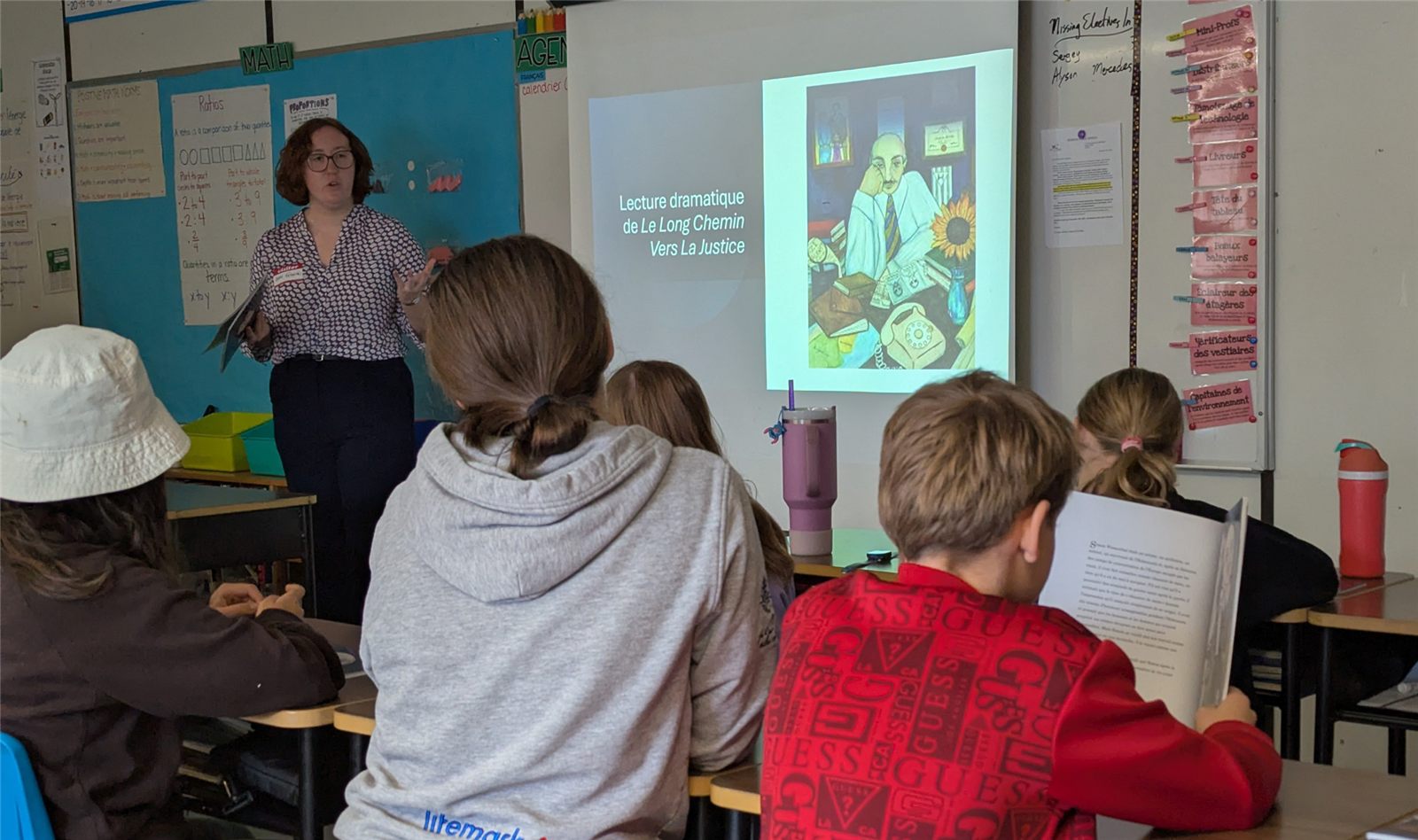
Hiring a French-language specialist allowed Wiesenthal Canada to extend the reach of our educational initiatives. After announcing the creation of our new French-language workshops – two for students and two for teacher training – schools immediately requested these programs, which we inaugurated in schools in Ottawa, Montreal and Toronto last fall. In February, Wiesenthal Canada undertook our first French programming visit to British Columbia, including stops in Prince Rupert, Comox, Vancouver and Whistler. That was followed by 22 more francophone workshops, including in New Brunswick. In addition, our French Educator developed a new workshop for students in grades 6-12 to be launched soon. Choosing Courage: Stories of Resistance and Rescue during the Holocaust will introduce students to inspiring individuals like Irena Sendler and Marcel Marceau who bravely chose to help others in the face of Nazi persecution and the constant threat of death.
Wiesenthal Canada’s advocacy efforts and community engagement loom large in the face of continuing rise in reported hate crimes in Canada, especially those targeting Jews
In keeping with Wiesenthal Canada’s mandate, we act affirmatively to confront antisemitism through public advocacy, legal intervention, education and community leadership. Our organization plays a central role in strengthening accountability, amplifying Jewish voices, and advancing concrete actions to protect communities, uphold democratic values, and ensure that antisemitism is addressed with the seriousness it demands.
In 2025, Wiesenthal Canada led two Tools for Tolerance leadership training programs in Los Angeles for senior law enforcement leaders from across Canada, including Chiefs, Deputy Chiefs and Commissioners. The immersive, two-and-a-half-day program combined Holocaust education and survivor testimony with practical sessions on leadership, change management, and the Spectrum of Tolerance. Participants deepened their understanding of bias, hate and the role leadership plays in shaping inclusive and resilient communities. By strengthening leadership capacity at the highest levels of policing, this initiative supports more informed decision-making and more effective responses to hate and discrimination across Canada.
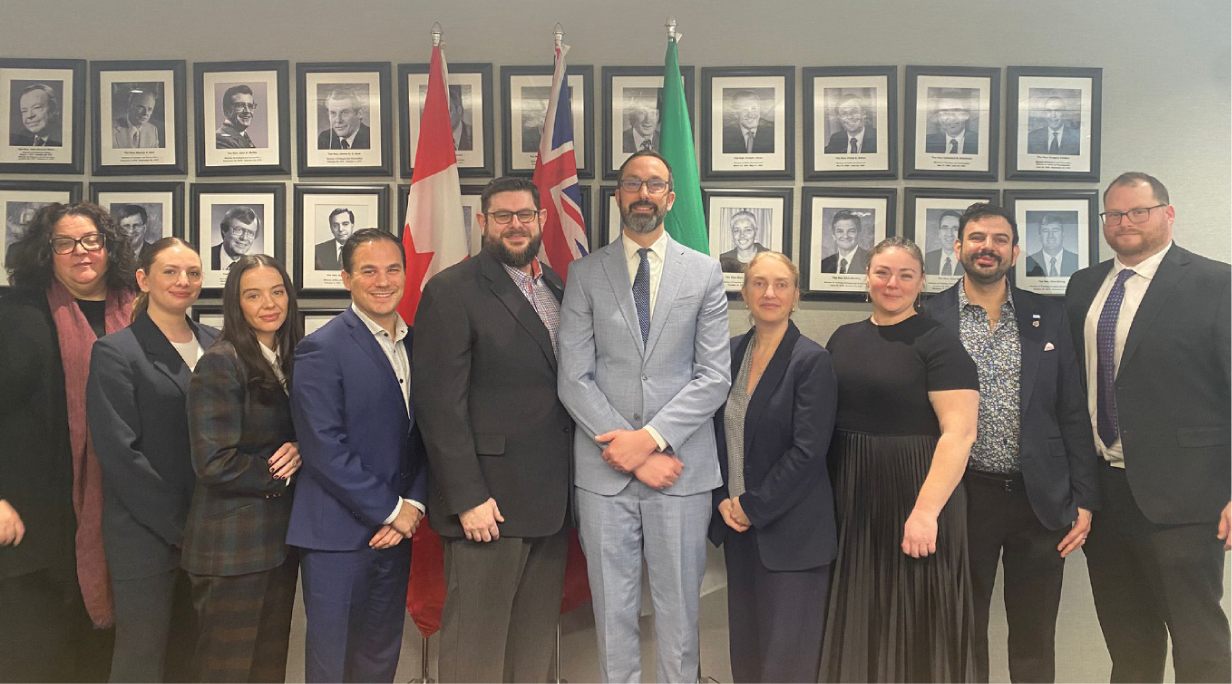
Wiesenthal Canada convened The Missing Conversation: Reimagining Inclusion in Canadian DEI conference in Toronto, bringing together more than 120 DEI leaders, educators, and changemakers for a full day of learning and dialogue, with support from the Government of Canada. The conference addressed a critical gap in many DEI frameworks – the omission of antisemitism – and explored the impact of this exclusion on Jewish communities. A clear message emerged: there’s a strong desire across sectors to build more inclusive and effective approaches. By elevating this issue, Wiesenthal Canada is helping to ensure that inclusion efforts more fully reflect the realities of all communities. The conference reinforced a core principle: inclusion that excludes the Jewish community is not inclusive.
In May 2025, Wiesenthal Canada delivered antisemitism training to more than 600 Crown prosecutors at the Ontario Ministry of the Attorney General’s Annual Crown Conference. The session focused on strengthening understanding of antisemitism and equipping prosecutors with practical approaches to engage with the Jewish community and effectively convey the impact of hate crimes in court. This work continued through two additional virtual sessions in the fall, reaching a further 200 prosecutors across Ontario. Together, these efforts are helping to equip Crown prosecutors with the tools and knowledge needed to more effectively prosecute antisemitic hate crimes, strengthening the justice system’s response and better supporting affected communities.
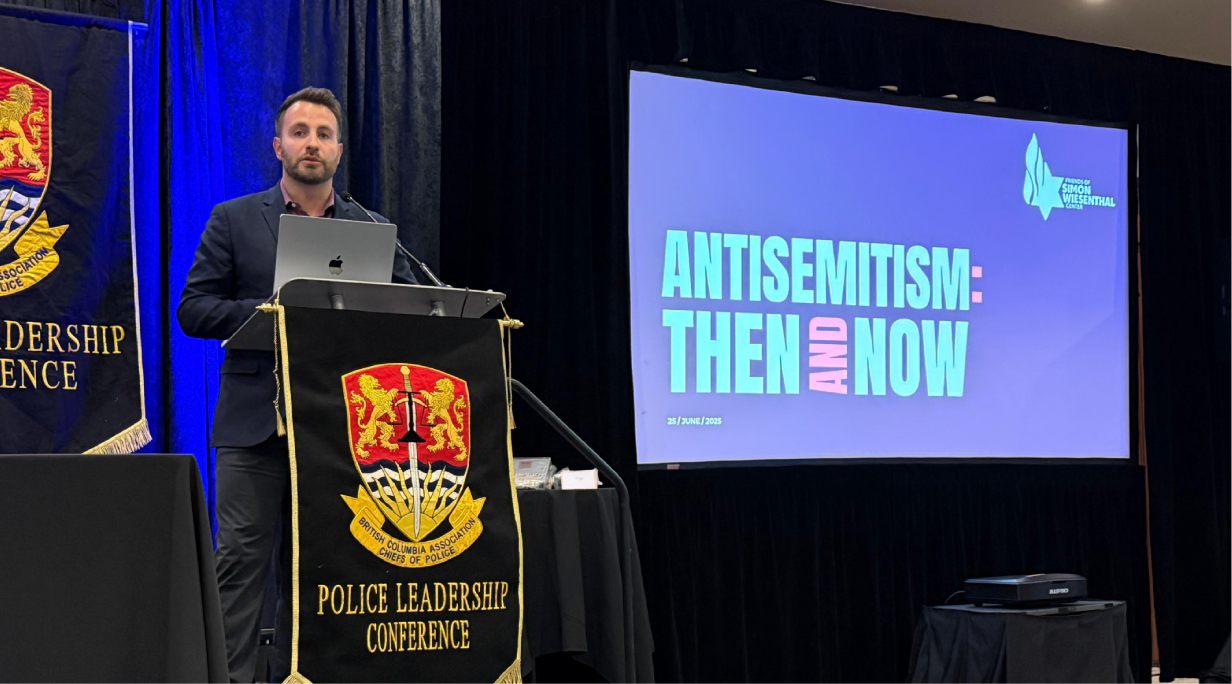
In June 2025, Wiesenthal Canada further expanded its law enforcement training efforts in British Columbia by delivering its flagship Antisemitism: Then and Now workshop at the British Columbia Association of Chiefs of Police Annual Leadership Conference in Penticton, BC, reaching more than 150 senior police leaders and government officials. The session offered a practical overview of the historical roots and modern manifestations of antisemitism, equipping participants with a deeper understanding of how hate impacts communities today and supporting the integration of this knowledge into policing strategies across the province. Building on this momentum, in November, Wiesenthal Canada provided specialized antisemitism training to the West Vancouver Police Department, engaging senior leadership and members of its hate crime unit. This continued collaboration reflects Wiesenthal Canada’s growing presence in BC and the strength of its partnerships with police services, while equipping officers with practical tools to better recognize, respond to, and help prevent antisemitic incidents - ultimately contributing to safer, more inclusive communities.
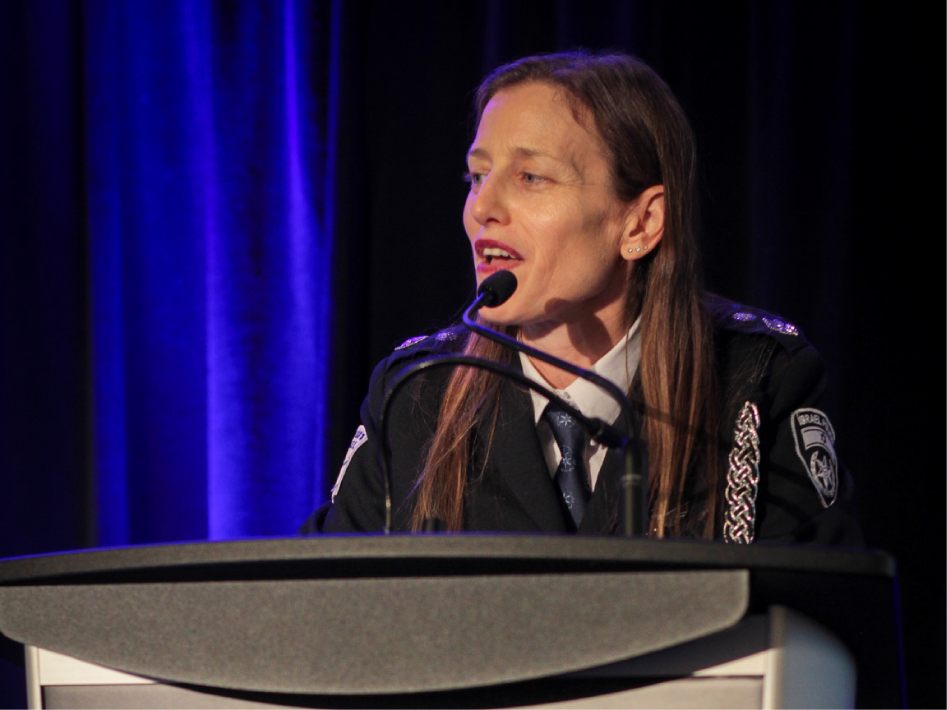
Wiesenthal Canada a national leader in ensuring that antisemitic crimes are treated with the gravity they warrant. Across multiple high-profile cases involving Holocaust denial, neo-Nazi propaganda, public incitement of hatred, threats of mass violence, vandalism of Holocaust memorials and violent antisemitic assaults, we submitted and delivered 13 community impact statements in court.
Delivered by Senior Director of Policy and Advocacy Jaime Kirzner-Roberts, these statements conveyed the fear, trauma and lasting harm experienced by Jewish communities while underscoring the broader societal consequences of hate-motivated crimes. Through this work, Wiesenthal Canada ensured that courts heard directly how the impact of antisemitism extends beyond individual victims and undermines public safety.

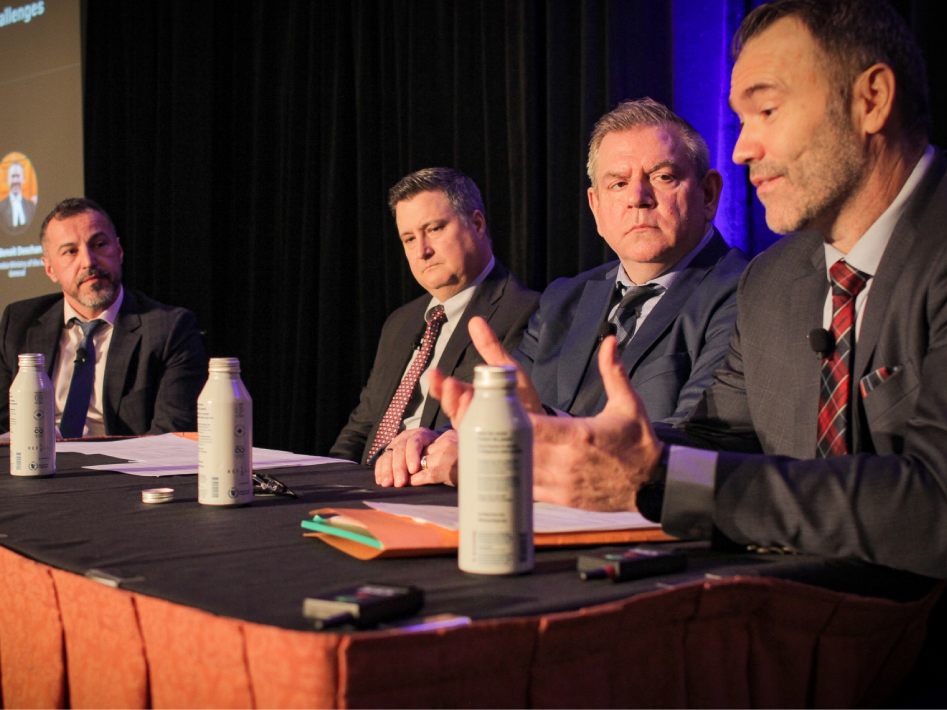
In early February, Wiesenthal Canada hosted its sixth annual Building a Case Against Hate (BACAH) conference, holding it in Vancouver for the first time, in partnership with the Vancouver Police Department. Building on the success of our 2025 conference in Toronto with the Toronto Police Service, the program continues to expand its national reach and impact. Widely recognized as a leading national forum on hate crime enforcement, the two-day conference brought together more than 400 senior law enforcement officials and Crown prosecutors from across Canada to strengthen the identification, investigation and prosecution of hate crimes, including antisemitic incidents. Through practical, solutions-focused sessions, participants gained tools to address investigative challenges, navigate evidentiary considerations and better understand the real-world impact of hate on affected communities. By equipping frontline leaders with these skills and insights, BACAH is helping to strengthen Canada’s response to hate-motivated crimes and improve outcomes for impacted communities.
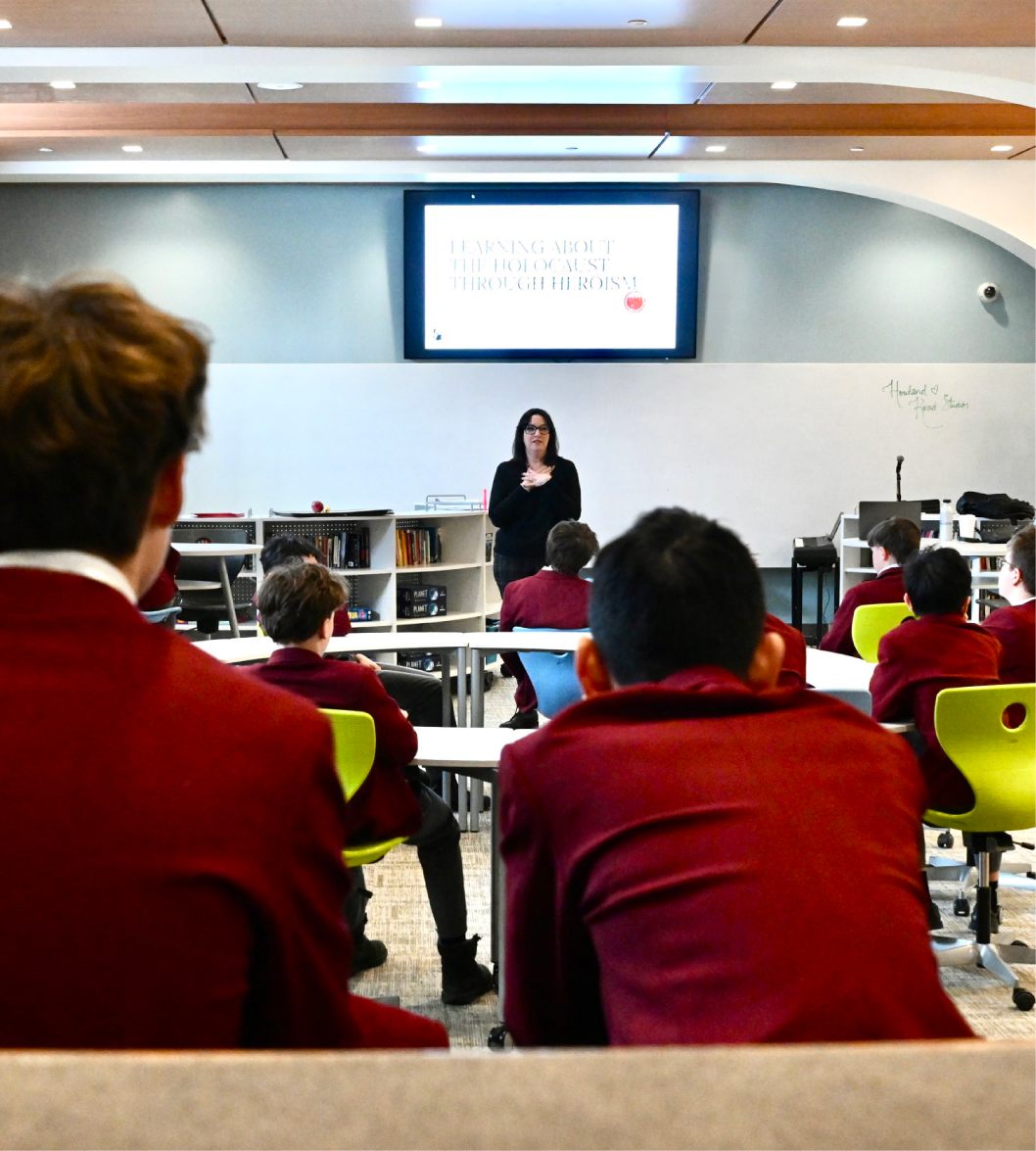
Wiesenthal Canada publicly welcomed the Government of Manitoba’s decision to mandate Holocaust education in Grades 6, 9, and 11, recognizing the policy as a critical step in combating antisemitism through education. We emphasized that sustained government leadership in Holocaust education is essential to ensure that future generations understand the consequences of hatred left unchecked and the enduring lessons of the Holocaust.
Last September, Wiesenthal Canada welcomed the 10-year prison sentence issued to Patrick Gordon MacDonald for terror-related offences tied to propaganda promoting a neo-Nazi organization and inciting hatred against Jews. The sentence sent a clear, unequivocal message that violent extremist ideologies and hate-fuelled actions have no place in Canada. At the same time, Wiesenthal Canada consistently challenged a troubling pattern of lenient sentencing in other antisemitism-related cases, warning that minimal penalties weaken deterrence and fail to reflect the seriousness of hate-fuelled incitement.

In early March 2026, Wiesenthal Canada delivered a community impact statement at the sentencing hearing for Leslie Bory, who was convicted of advocating genocide, willful promotion of hatred and uttering threats. He had posted videos glorifying Nazi dictator Adolf Hitler, denying the Holocaust and inciting violence against Jews. Wiesenthal Canada called for a sentence commensurate with the gravity of these crimes. Following the court’s decision to impose only a minimal penalty, we publicly criticized the outcome as a failure to uphold meaningful accountability for hate-fuelled incitement.
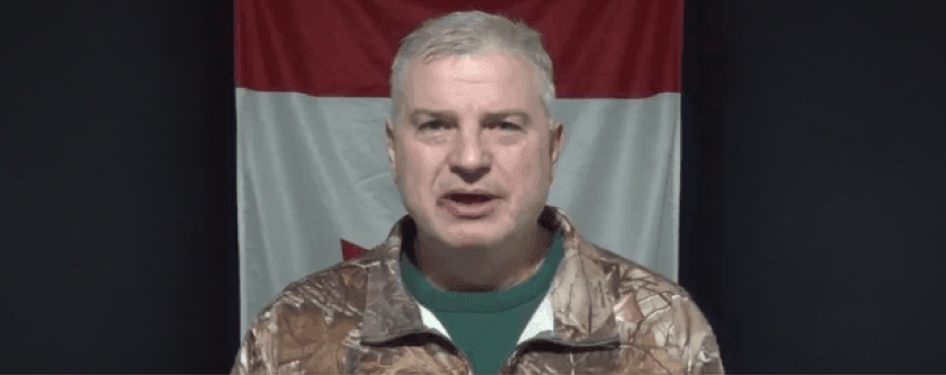
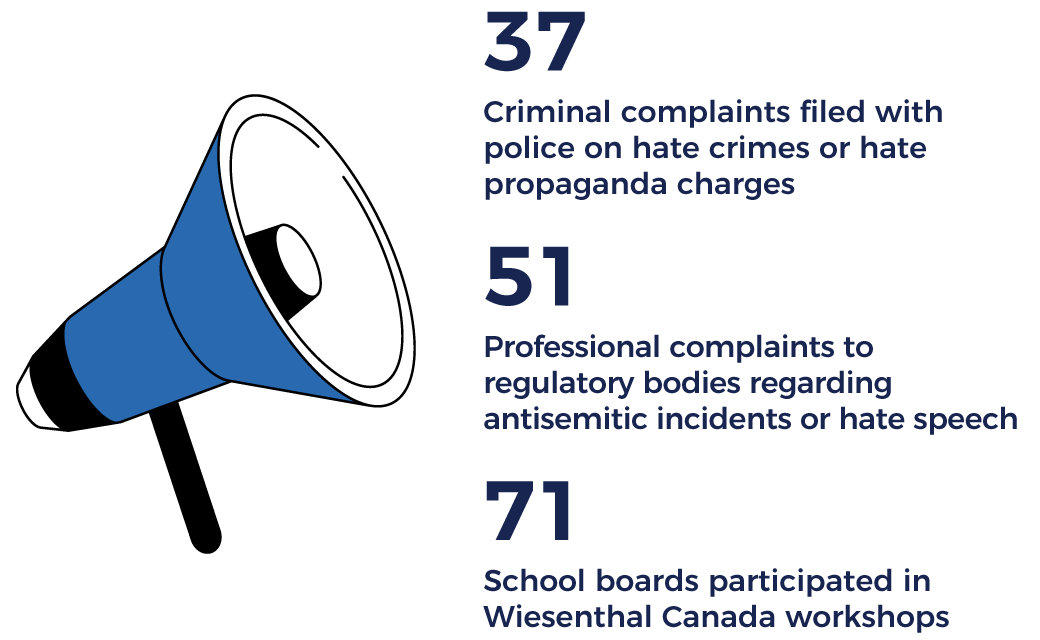
Wiesenthal Canada welcomed the April 2026 sentencing of Nicholas Amor, 30, of LaSalle, Ontario, for inciting hatred against the Jewish community and weapons-related offences. Wiesenthal Canada filed a criminal complaint about Amor with the LaSalle Police Service near Windsor, Ontario in October 2025, following its own in-depth investigation into Amor’s extensive campaign of online hatred against the Jewish community. This prompted a police investigation and charges against Amor. The court sentenced him to two years less a day in prison – the maximum provincial sentence for his crimes – and three years probation. Amor is barred from accessing social media, attending protests or approaching Jewish community institutions for three years following his release from prison. He’s also prohibited from possessing firearms for 10 years. This was a landmark case and...
In a landmark case, a North Bay, Ontario man, Kenneth Paulin, received nine months in jail and two years of probation following the first-ever Canadian conviction for Holocaust denial. Wiesenthal Canada submitted a community impact statement highlighting the real-world harm caused by antisemitic content that dehumanizes Jews and normalizes extremist ideology. The precedent-setting sentence reinforced that antisemitism and Holocaust denial are criminal acts in Canada.
In keeping with our mandate, Wiesenthal Canada responded swiftly and consistently to antisemitic vandalism and violence across the country, including physical attacks on synagogues, assaults on Jewish individuals, violent disruptions of Jewish student events, and the desecration of Holocaust memorials. In each instance, we publicly condemned the incident, engaged strongly with law enforcement and government leaders, and pressed for thorough investigations and decisive action.
In Halifax, two synagogues and a Chabad Lubavitch building were defaced with antisemitic graffiti. Wiesenthal Canada immediately engaged law enforcement and publicly urged authorities to identify and apprehend those responsible. Police subsequently arrested and charged two suspects. Wiesenthal Canada is preparing a community impact statement to ensure the broader harm inflicted on Halifax’s Jewish community is fully recognized in court.
When Canada’s National Holocaust Monument in Ottawa was desecrated during the summer, Wiesenthal Canada responded with urgency to ensure the national significance of the incident was fully acknowledged. In early September, we submitted a detailed community impact statement outlining the profound harm caused to Holocaust survivors, the Jewish community and Canadians nationwide. On Dec. 1, Jaime Kirzner-Roberts delivered the statement in court, reinforcing the importance of safeguarding Holocaust remembrance sites and calling for meaningful consequences for those who target symbols of memory and education.
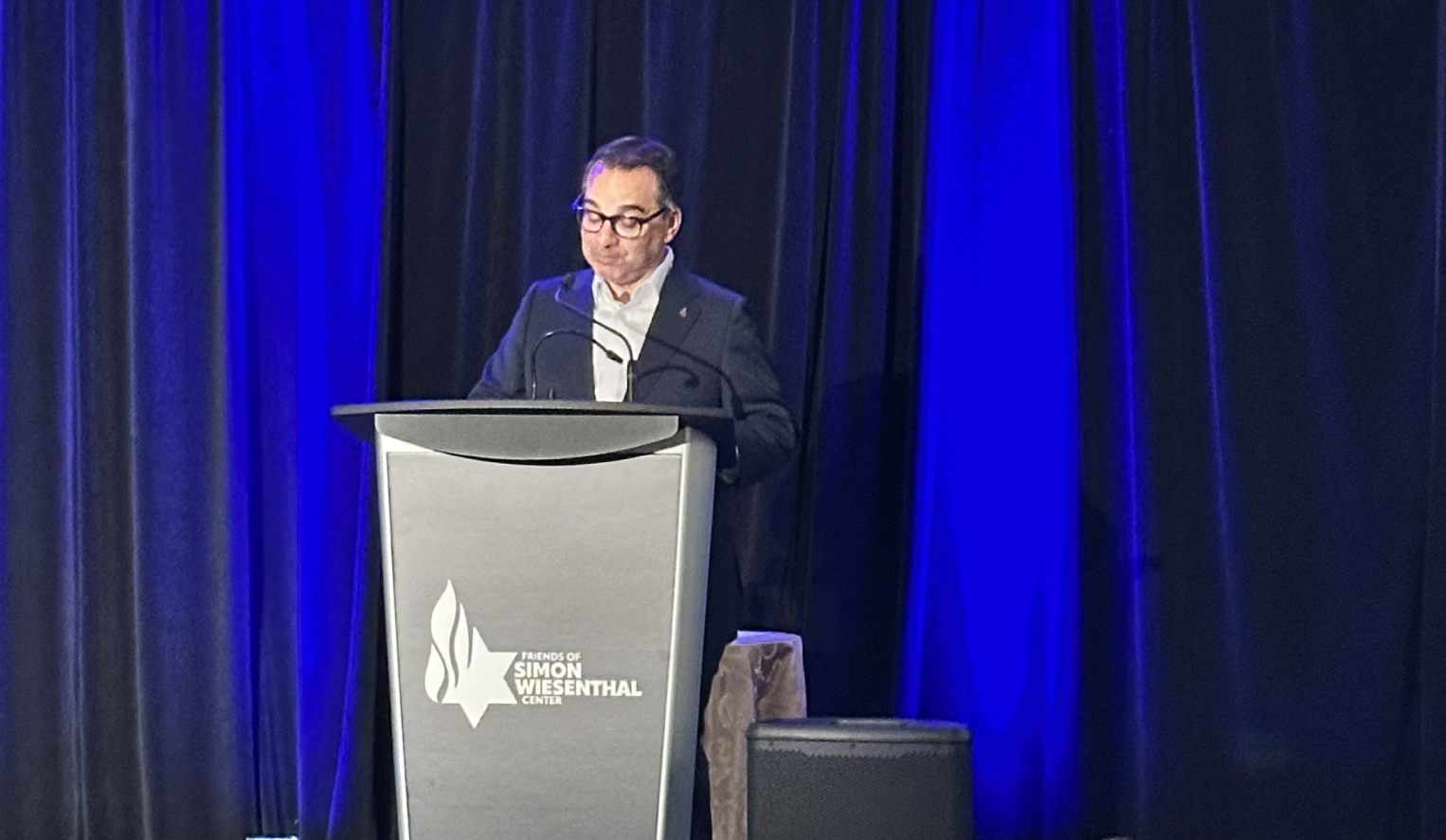
Beyond individual cases, Wiesenthal Canada advanced sustained national advocacy to strengthen Canada’s response to antisemitism and hate-motivated violence. As incidents of intimidation, threats and harassment targeting Jewish Canadians escalated, our organization repeatedly emphasized that protecting communities requires both strong legislation and consistently rigorous enforcement.
Wiesenthal Canada actively engaged in advocacy related to Bill C-9, welcoming the bill’s intent to enhance public safety through amendments to the Canadian Criminal Code and supporting its core provisions. These include new offences addressing intimidation and obstruction near schools, places of worship and community centres; the creation of a standalone hate-crime offence; the removal of barriers to prosecuting police-laid hate-crime charges; and strengthened measures addressing hate propaganda.
Wiesenthal Canada also called for targeted amendments to strengthen the legislation and encourage broad consensus, including measures to better address the willful promotion of terrorism and the growing intersection of extremist ideology, hate propaganda and violence. Throughout the parliamentary process, Wiesenthal Canada underscored that while freedom of religion remains protected under the Charter, incitement to violence against Canadians must be addressed decisively. We continue to urge Parliamentarians to act with urgency and equip law enforcement and prosecutors with stronger tools to keep communities safe.

In August, Wiesenthal Canada took immediate action following an investigation by The Forward newspaper revealing that streets in Edmonton and London, Ontario, honour individuals that had direct ties to Germany’s Nazi regime. In Edmonton, Savaryn Drive is named after Peter Savaryn, who served in the 14th Waffen Grenadier Division of the SS, while in London, Max Brose Drive commemorates Max Brose, a Nazi Party member and supporter of the Nazi war effort.
Wiesenthal Canada formally asked Edmonton Mayor Amarjeet Sohi and London Mayor Josh Morgan to initiate the renaming of both streets, emphasizing that honouring Nazi-affiliated individuals in public spaces constitutes Holocaust distortion and is incompatible with Canada’s commitment to remembrance, accountability and democratic values. We continue to monitor each city’s process and advocate for corrective action.
Antisemitism education is a central pillar of Wiesenthal Canada’s work and a core driver of its impact. To that end, Wiesenthal Canada expanded and deepened its education and professional training initiatives, delivering sustained, high-impact programming across institutional, professional, and community settings. This work reflects Wiesenthal Canada’s belief that antisemitism cannot be confronted through reactive measures alone but requires proactive education that equips institutions and leaders with the necessary knowledge to prevent, identify and respond to hate.
Wiesenthal Canada delivered more than 40 educational sessions nationwide, engaging participants across the education, healthcare, corporate, government and community sectors. Programming was strategically designed to address the environments in which antisemitism most frequently manifests itself, including workplaces, campuses and public institutions, and to move beyond awareness toward concrete, actionable response. Training sessions examined contemporary antisemitism in its current and evolving forms. Participants were guided through real-world case studies and practical strategies for prevention, intervention and allyship.
Sustained engagement with institutions, including repeat bookings and multi-session programs, underscored the trust placed in Wiesenthal Canada’s expertise and the growing demand for its educational leadership. Expanded training within healthcare systems, municipal bodies and professional sectors highlighted the increasing recognition that antisemitism poses risks not only to Jewish communities, but to workplace safety, public trust and democratic norms.
Through its education and training initiatives, Wiesenthal Canada confronted antisemitism at its roots - strengthening institutional accountability, building professional capacity, and empowering individuals and organizations to respond with clarity, confidence and resolve.
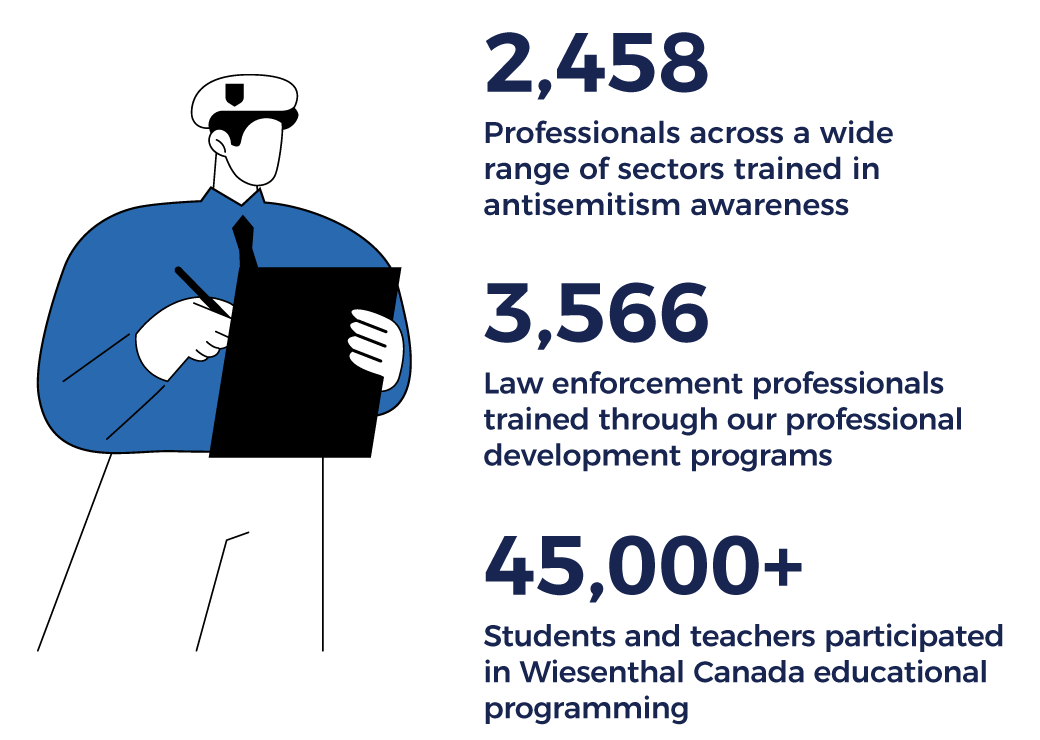
Strengthening law enforcement capacity to identify, investigate and respond to antisemitism has become a central priority for Wiesenthal Canada. In 2025, we trained more than 3,500 police officers through a wide range of initiatives, including hate crime conferences, specialized workshops and agency-specific training programs. Antisemitism education was delivered to officers across many law enforcement and justice agencies, equipping participants with a deeper understanding of contemporary antisemitism, its indicators and its impact on victims and in Ontario public safety.
Significant progress was made in strengthening trusted partnerships with law enforcement institutions. Through these collaborations, Wiesenthal Canada delivered antisemitism training to police cadets as part of their broader professional education, helping ensure this content is introduced early in their careers. In addition, Wiesenthal Canada contributed instruction to hate crime courses led by police training bodies in multiple regions throughout the year. This growing engagement reflects increased awareness within law enforcement that addressing antisemitism is an essential component of effective policing, community trust and the integrity of the justice system.

Wiesenthal Canada strengthened its leadership in law enforcement education by hosting our fifth annual Building a Case Against Hate conference in partnership with the Toronto Police Service. The conference convened more than 400 law enforcement professionals from across Canada and examined hate-motivated crime through both global and domestic lenses, equipping participants with practical investigative tools and opportunities for cross-jurisdictional collaboration.
On campus, Wiesenthal Canada’s partnership with Hillel Ontario continued to expand. Through this collaboration, we delivered antisemitism education and training sessions at universities and colleges across Ontario. The programs focused on identifying contemporary manifestations of antisemitism, understanding its impact on Jewish students, and equipping participants with practical strategies to respond to incidents, support affected students, and strengthen campus accountability and inclusion.

In further strengthening Wiesenthal Canada’s presence out west, especially in British Columbia where we opened our office in Vancouver in 2024, Jaime Stein, Director of Western Canada, has been active on multiple fronts, meeting in person with a wide range of stakeholders. Our extensive outreach – from government relations (federal, provincial and municipal) to cross-community and inter-faith engagement and involvement in Holocaust-related events and educational programs – has resulted in Wiesenthal Canada now being increasingly recognized as a leading local partner in helping fight antisemitism and other forms of hate and in teaching the lessons of the Holocaust.
Donors show their confidence in Wiesenthal Canada, with a formidable response to our fundraising efforts, enabling us to further broaden our multi-faceted work
Given the evolving challenges that Canada’s Jewish community and other minorities are facing due to rising antisemitism and other forms of hate, the need for Wiesenthal Canada’s advocacy and educational programs is greater than ever. So are the financial resources required to conduct our expanding work.
Thankfully, we are fortunate to receive generous support from our community – from individual donors and family foundations to corporate sponsors and government bodies – all of whom recognize the importance of Wiesenthal Canada’s mission.
Our fundraising work is critical to our future. Equally meaningful, the symbolic impact of so many donors, big and small, supporting Wiesenthal Canada is a source of added motivation for our entire team. In addition to our ongoing donor stewardship of existing supporters, we also take a range of initiatives that generate funds to make our actions possible, attract new supporters and increase our impact.

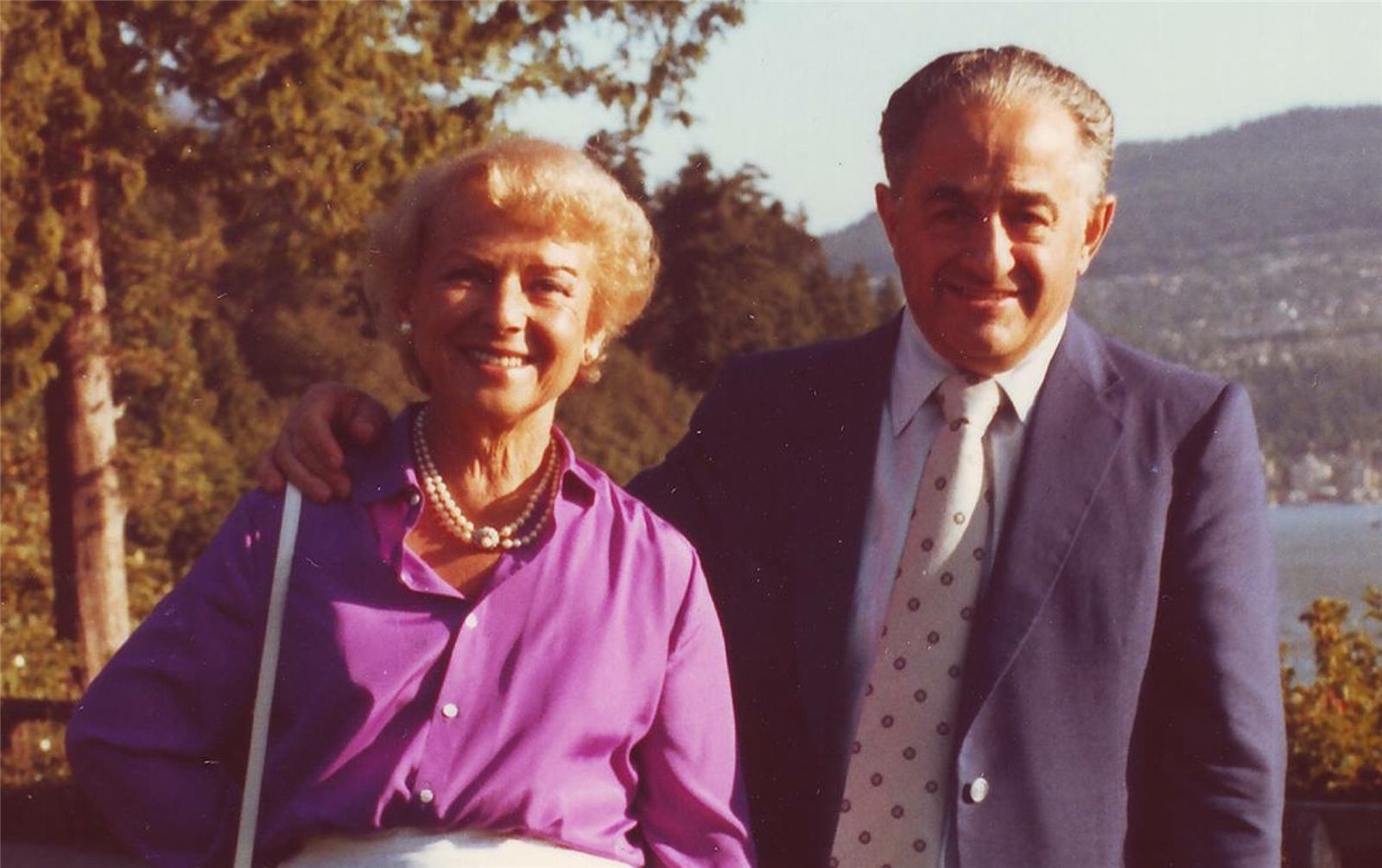
In collaboration with one of our donors, Milton Davis, Wiesenthal Canada was thrilled to initiate the Alex and Alice Davis Scholarship, which was founded to honour the legacy of Milton’s parents. During the Holocaust, both Alex and Alice survived unimaginable horrors. Later, after moving to Canada, they built a family, a business and a legacy defined not only by what they endured, but by what they achieved in freedom, including their unwavering dedication to education. For Wiesenthal Canada’s Education Department, it’s an honour to help choose a high school student who embodies the values we foster through our programs.
Thanks to the Greenberg Family and Minto Foundation Inc., Wiesenthal Canada was able to launch our third Tour for Humanity vehicle in late 2025, after which it quickly hit the road. In its first school year, the mobile classroom travelled many thousands of kilometres across central and western Canada, bringing our programs to 150 schools and communities in Ontario, Saskatchewan, Alberta and British Columbia. Amid rising antisemitism and other forms of hate, it enabled us to educate more than 18,000 students and increase our impact across the country.
The inaugural cohort of the Erdman Leadership Fellows program has had a profoundly meaningful, transformative experience, bringing together a passionate group of young leaders committed to Holocaust education and combating antisemitism in their school communities. Due to the extraordinary generosity of the Erdman family, who made this fully funded experience possible, fellows were able to engage with experts, survivors, and educators in ways that left a lasting impact. Throughout the program, participants also designed and implemented independent projects within their schools, creating fulfilling opportunities to educate peers and community members about the Holocaust, antisemitism, and the importance of standing up against hate in all its forms.
Connecting with our community and far beyond with relevant, engaging events in person and online that broaden appeal and credibility of Wiesenthal Canada
Over the past year, Wiesenthal Canada struck a chord with a captivating mix of original programming and compelling outreach that address current affairs from our perspective on human rights, antisemitism and other forms of hate. Featuring a wide range of fascinating speakers, these events, whether in person or online, spotlight the importance of learning the danger of racism and the lessons of the Holocaust, while underscoring our commitment to combat hate wherever and whenever it rears its ugly head. An added benefit from these initiatives: they also attract new supporters of our organization.
Collectively, our events send a strong message to our adherents that Wiesenthal Canada is in the vanguard standing up, speaking out, raising awareness and taking action against intolerance, antisemitism, racism and xenophobia and working for positive change in Canadian society.
Wiesenthal Canada engages audiences across Canada and beyond through virtual and in-person programs that advance Holocaust education, human rights dialogue and action against antisemitism. In 2025 alone, we hosted 17 online events, which attracted more than 4,200 registrants, welcomed 270 new people added to our database, and generated 3,780 views on Wiesenthal Canada’s YouTube page, reflecting the broad reach and resonance of our educational initiatives and community engagement. Across all platforms, our programs combine testimony, storytelling and dialogue to educate, inspire and mobilize audiences against intolerance, furthering the organization’s commitment to confronting hate and promoting human rights in an ever-changing world.
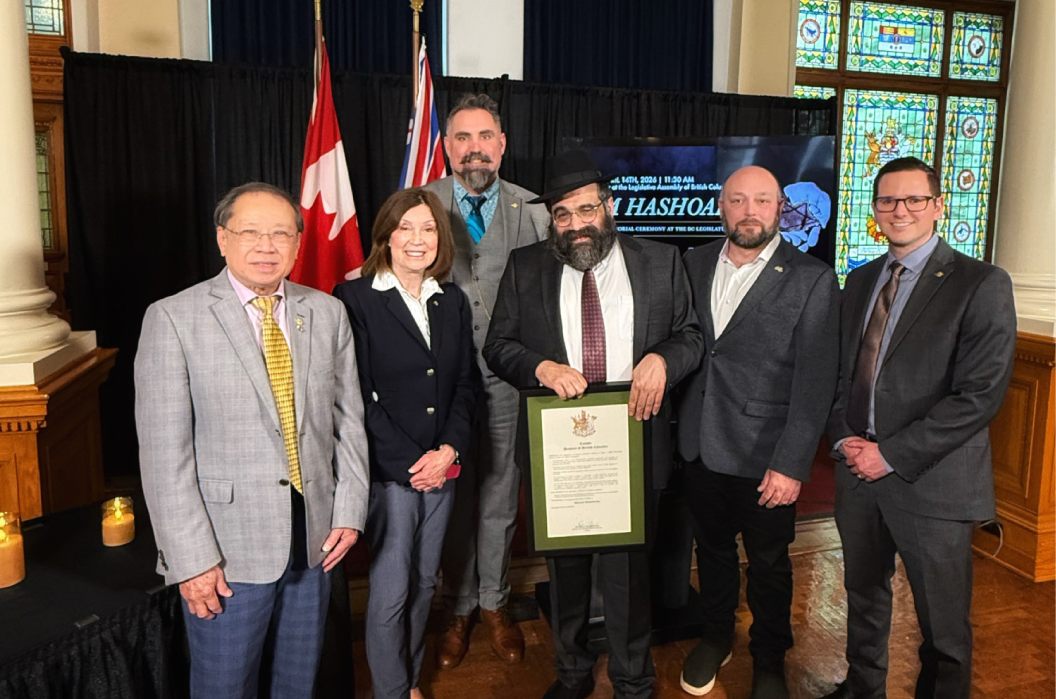
In April, Wiesenthal Canada convened a special Yom HaShoah (Holocaust Remembrance Day) commemoration at Queen’s Park in Toronto, in partnership with Ontario Solicitor General Michael Kerzner and MPP Michelle Cooper. Leaders from all four elected parties, including Premier Doug Ford, attended and shared remarks, demonstrating a unified commitment to honouring Holocaust victims and confronting rising antisemitism.
The program featured testimony from Holocaust survivor Renate Krakauer and a screening of the The Legacy Portrait Project, Part 2, reinforcing the importance of preserving survivor stories. The event fostered remembrance, education and cross-partisan solidarity, underscoring the critical role of leadership in standing up against hate.



In-person community events brought Holocaust education directly to local audiences. The Legacy Portrait Project Exhibition at Toronto’s Baycrest Hospital engaged patients, visitors and more than 200 students in intergenerational dialogue about survivor experiences.
On August 28, more than 250 people gathered at Toronto’s Congregation Habonim for an evening with NHL star Zach Hyman, moderated by sports journalist Elliotte Friedman, where he reflected on his Jewish identity, family Holocaust history, and the rise of antisemitism, inspiring discussion on resilience and standing up against hate. Wiesenthal Canada also hosted the One in Six Million book launch, celebrating Amy Fish’s true story of a Holocaust survivor’s identity lost – and found.
In February, Wiesenthal Canada launched the GenerationNOW Shabbat Box Project through targeted digital campaigns, engaging Jews and allies under 45 to host Shabbat dinners focused on reflection, education and action. Led by GenerationNOW chairs, the initiative equips young adults to foster meaningful dialogue, strengthen community connections and build leadership capacity in addressing antisemitism and anti-Israel bias.
In early May, more than 600 people attended Wiesenthal Canada’s annual Voices of Change event in Toronto, highlighted by a timely panel discussion. Before a sold-out audience at Beth Emeth Synagogue, one of Israel’s top geopolitical analysts, Haviv Rettig Gur, and highly-respected American writer and podcast host Coleman Hughes, addressed topical matters in an insightful conversation with The Free Press’s Maya Sulkin. They shared their astute, well-informed perspectives on issues ranging from the current antisemitism crisis and the war with Iran, to Black-Jewish relations and the troubled state of higher education. The evening began with powerful remarks from Christie Love Thomas, a Toronto business executive who spoke about her journey to allyship with the Jewish community in Canada.
The quality of the program was consistent with the previous Voices of Change last spring when 2,300 community members and allies gathered at Beth Tzedec Congregation in Toronto for a deeply moving evening featuring Rachel Goldberg-Polin and Jon Polin. Their late son, Hersh, was kidnapped at the Nova music festival in southern Israel by Hamas terrorists on Oct. 7, 2023 and was later brutally murdered in a Gaza tunnel along with five other hostages.


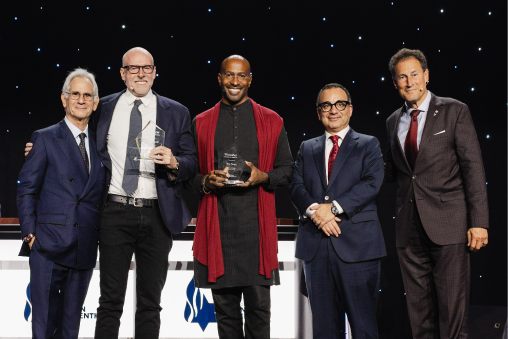
On November 6, more than 1,600 community members and allies gathered at Toronto’s Beanfield Centre for Wiesenthal Canada’s annual Spirit of Hope marquee event, celebrating solidarity and moral courage in the face of rising antisemitism. Keynote speakers CNN’s Van Jones and NYU’s Scott Galloway, both of whom received the 2025 Wiesenthal Award of Honour, shared insights on global and domestic issues affecting Jewish communities and Israel during an engaging discussion moderated by Canadian journalist Steve Paikin.
In the presence of nine Holocaust survivors, seven Canadian allies – Father Deacon Andrew Bennett, Cathy Ciccolini, Victor Dodig, Dr. Everton Gooden, Deborah Lyons, Mark Mulroney, and Karen Restoule – were honoured for their leadership against antisemitism. Political leaders, including Ontario Premier Doug Ford and Vaughan Mayor Steven Del Duca, reaffirmed their commitment to the safety of the Jewish community.

Wiesenthal Canada special virtual events address timely issues in Holocaust education and human rights. As part of the annual Holocaust Education Week, From Memory to Misinformation: Confronting Holocaust Denial in the Digital Age explored the rise of Holocaust denial and antisemitism online, examining how conspiracy theories fuel historical atrocities and how digital misinformation continues to spread hate.
Other special virtual programs included Visas for Life with Akira Kitade, highlighting diplomats who rescued Jewish refugees during World War II, and the Two Roses Project, an arts-based storytelling initiative bringing survivor Rose Lipszyc’s story to life through a graphic narrative and interactive discussion.
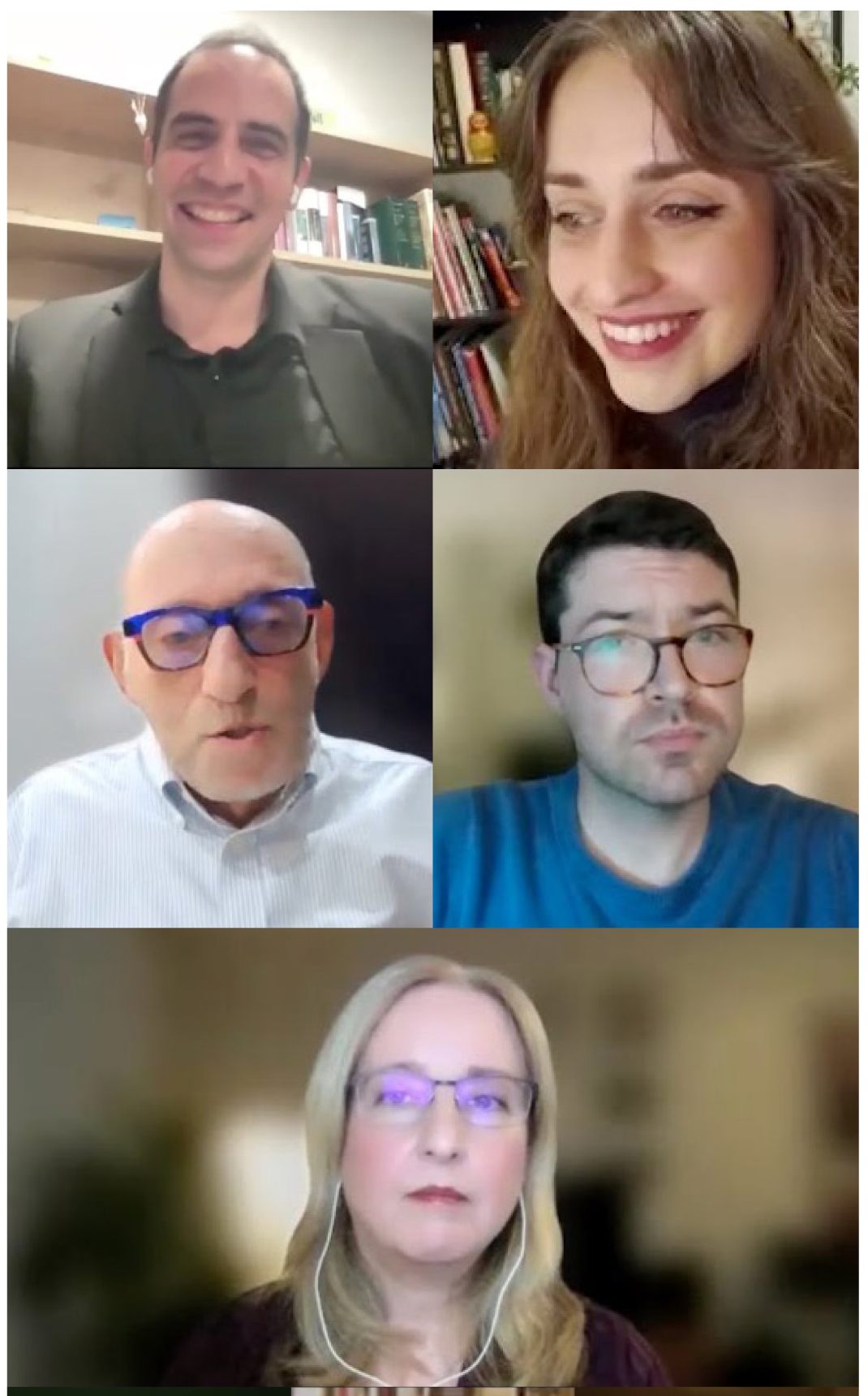
Hosted by Wiesenthal Canada’s Senior Writer and Editor Robert Sarner, the Book Talk series showcases recent books related to our organization’s core mission of Holocaust education, defending human rights and combating antisemitism, racism and other forms of hate.
In the period since early 2025, it has featured a wide range of fiction and non-fiction authors, including Shelly Sanders (The Night Sparrow); Keith Morgan (Ruta’s Closet); Richard Lowy (Kalman and Leopold: Surviving Mengele’s Auschwitz); Todd Diamond (Pass the Trauma, Please); Shannon Seban (French, Jewish and So What?); Jack Fairweather (The Prosecutor); Jan Grabowski (On Duty: The Role of the Polish Blue and Criminal Police in the Holocaust); Richard Hurowitz (In the Garden of the Righteous); Matthew Goodman (Paris Undercover); Elizabeth Hyman (The Girl Bandits of the Warsaw Ghetto); Peter Hayes (Profits and Prosecution); Warren Kinsella (The Hidden Hand); and Uri Kaufman (American Intifada). Each session engaged audiences through a lively Q&A discussion and questions from the attendees, and many included book giveaways (courtesy of the respective publishers) to encourage further exploration of subjects examined by the featured authors. In addition Book Talk is recorded and posted on Wiesenthal Canada’s YouTube channel.
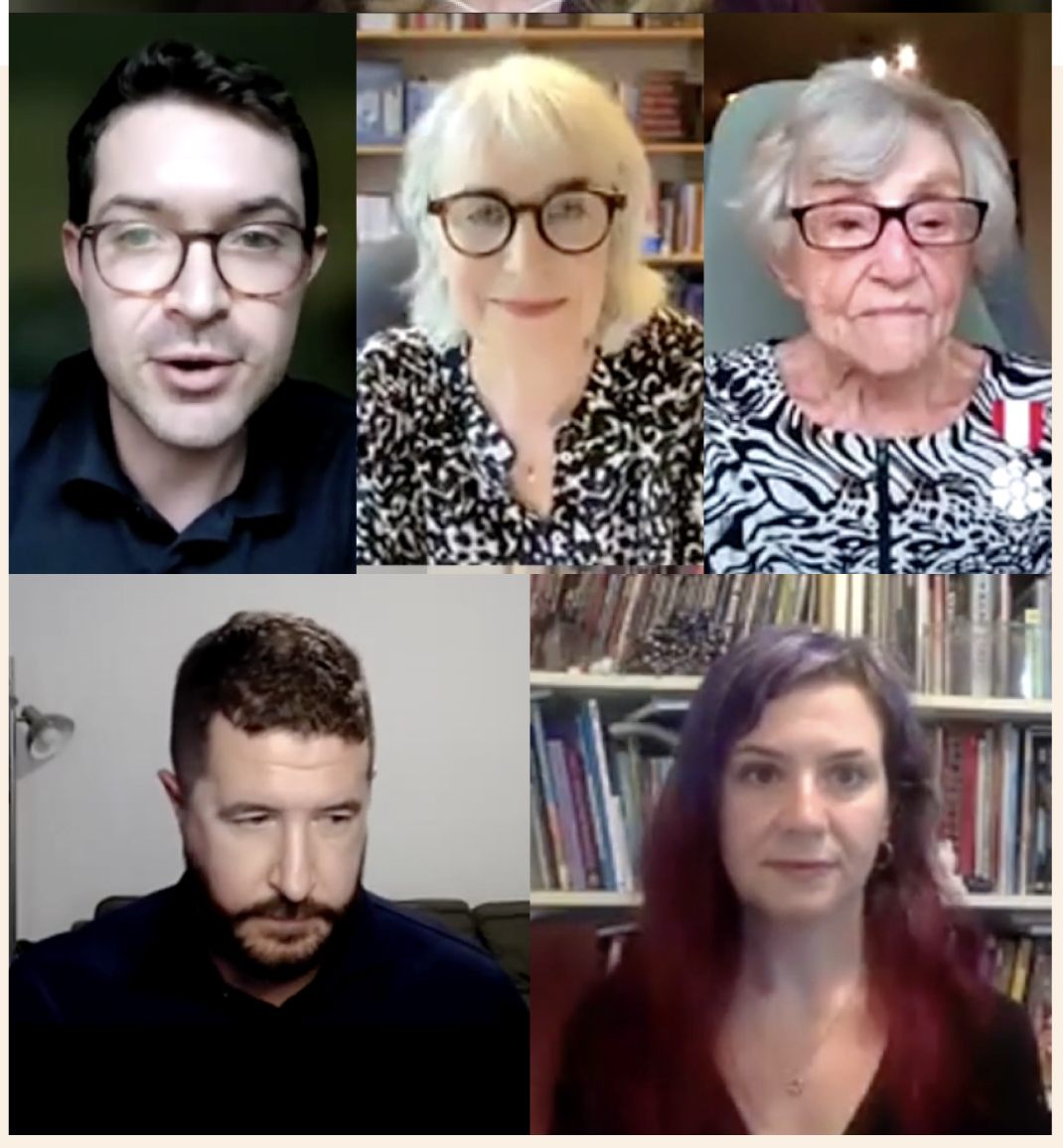
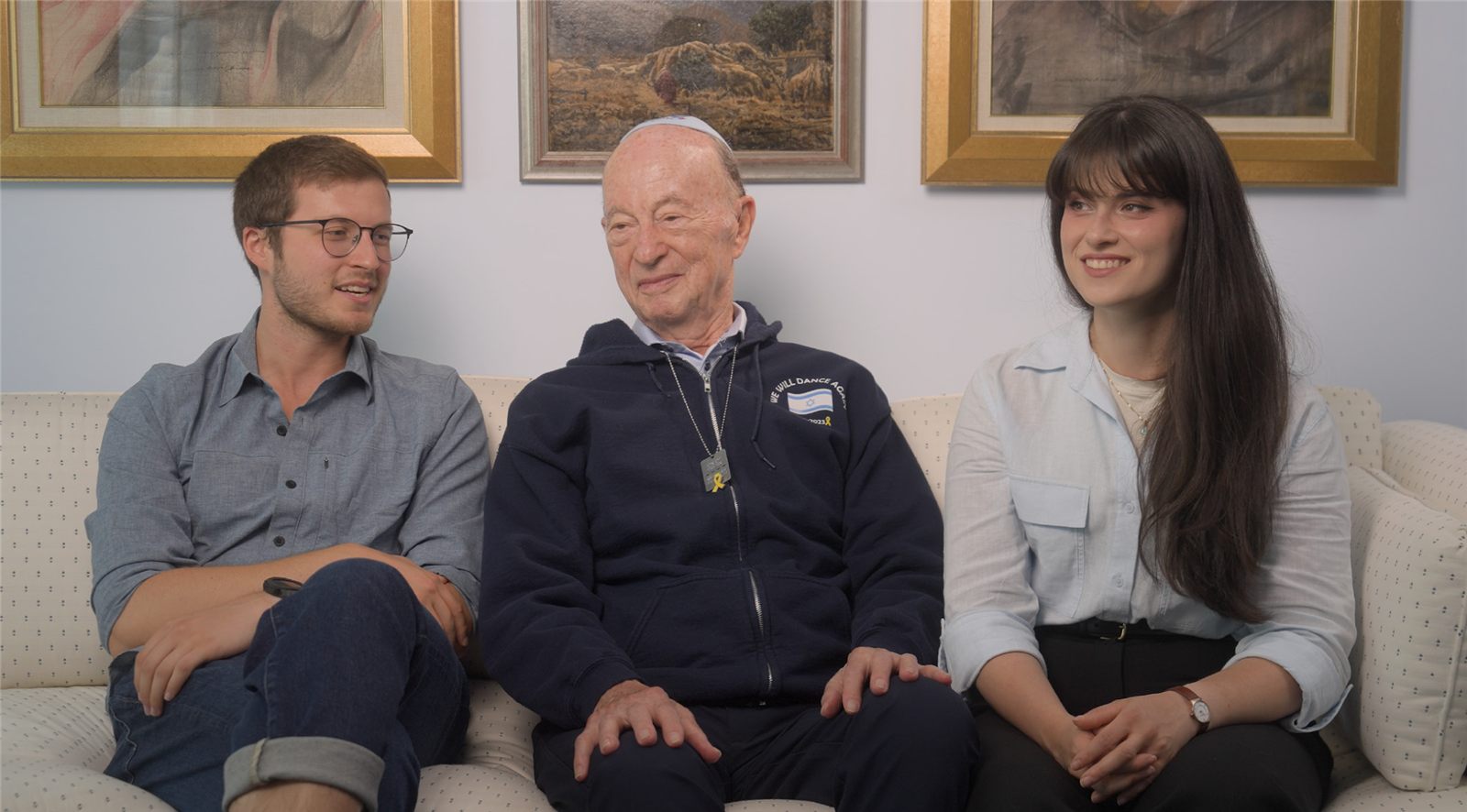
Held in observance of International Holocaust Remembrance Day on Jan. 27, 2026, Remembering Together: A Survivor’s Story and Legacy explored how Holocaust memory is passed between generations and its continued relevance. The virtual program opened with a screening of The Legacy Portrait Project, Part Two, highlighting the bond between survivors and their grandchildren. A live intergenerational discussion followed with survivor Sol Nayman and his grandchildren, moderated by Wiesenthal Canada’s Director of Holocaust Curriculum and Learning, Elena Kingsbury.

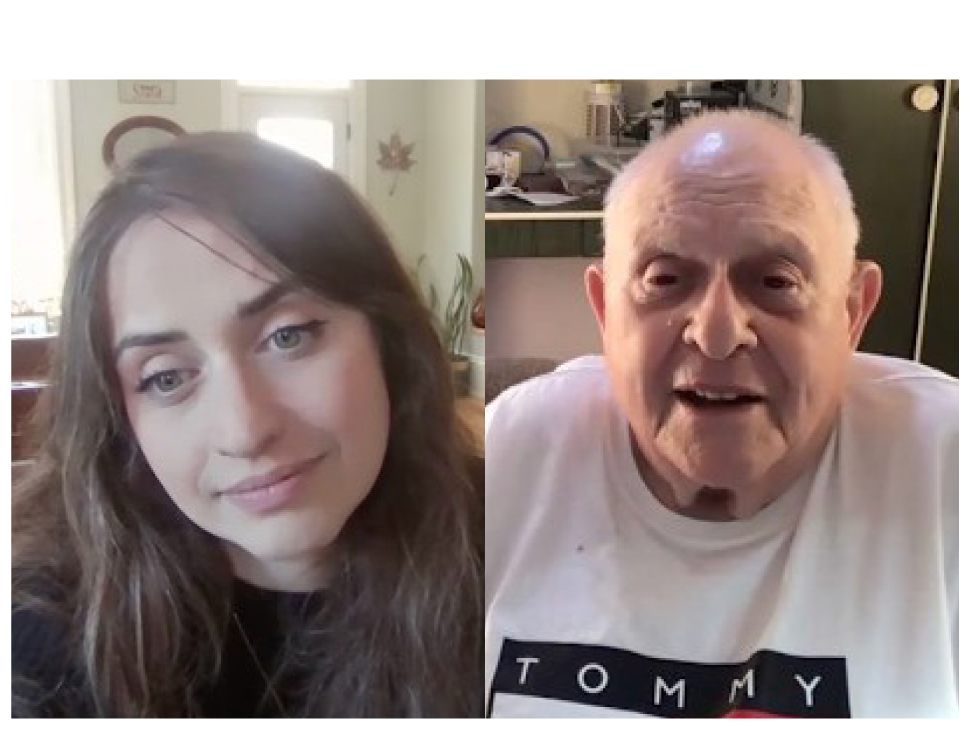
This series features first-hand testimony from survivors of the Holocaust and other genocides, fostering empathy and understanding. Cambodian genocide survivor Saron Khut, Holocaust survivors Alicia Rand, Michel Jeruchim, Eva Kuper, and Denise Hans, and Rwandan genocide survivor Emery Rutagonya shared their experiences of survival, trauma and resilience. In addition, Jack Stern, a second-generation survivor, reflected on his father’s story, connecting audiences with intergenerational memory and moral courage.
Wiesenthal Canada keeps people informed and engaged through lively content in our multi-channel approach to communicatoin and outreach
On a daily basis, Wiesenthal Canada produces timely, relevant content that keeps people abreast of its activities in the field and informs them about pertinent news stories. In the process, it enhances the perception and credibility of our organization while strengthening trust with supporters.
We do this on multiple platforms with diverse forms of content. From our regular posts on Facebook, Twitter, LinkedIn and Instagram to short videos on TikTok, to media statements to regular op-ed columns in Canada’s largest circulation newspaper (Toronto Star) and eblasts, we tell our “stories” and get our message across in an engaging way. In providing accurate, reliable information while speaking out on important issues, we reinforce Wiesenthal Canada’s relationship with existing supporters and followers and attract new ones. Here are some highlights from our communication and outreach efforts over the past year.
Michael Levitt, Wiesenthal Canada’s President and CEO, writes regularly for the Toronto Star, in which his columns appear in both the online and printed editions. These op-eds, focusing on timely, relevant issues of concern to our community and beyond, enhance Wiesenthal Canada’s visibility and credibility. To ensure maximum reach, we also post the columns on our social media platforms and website and in eblasts. Here are some of the columns:
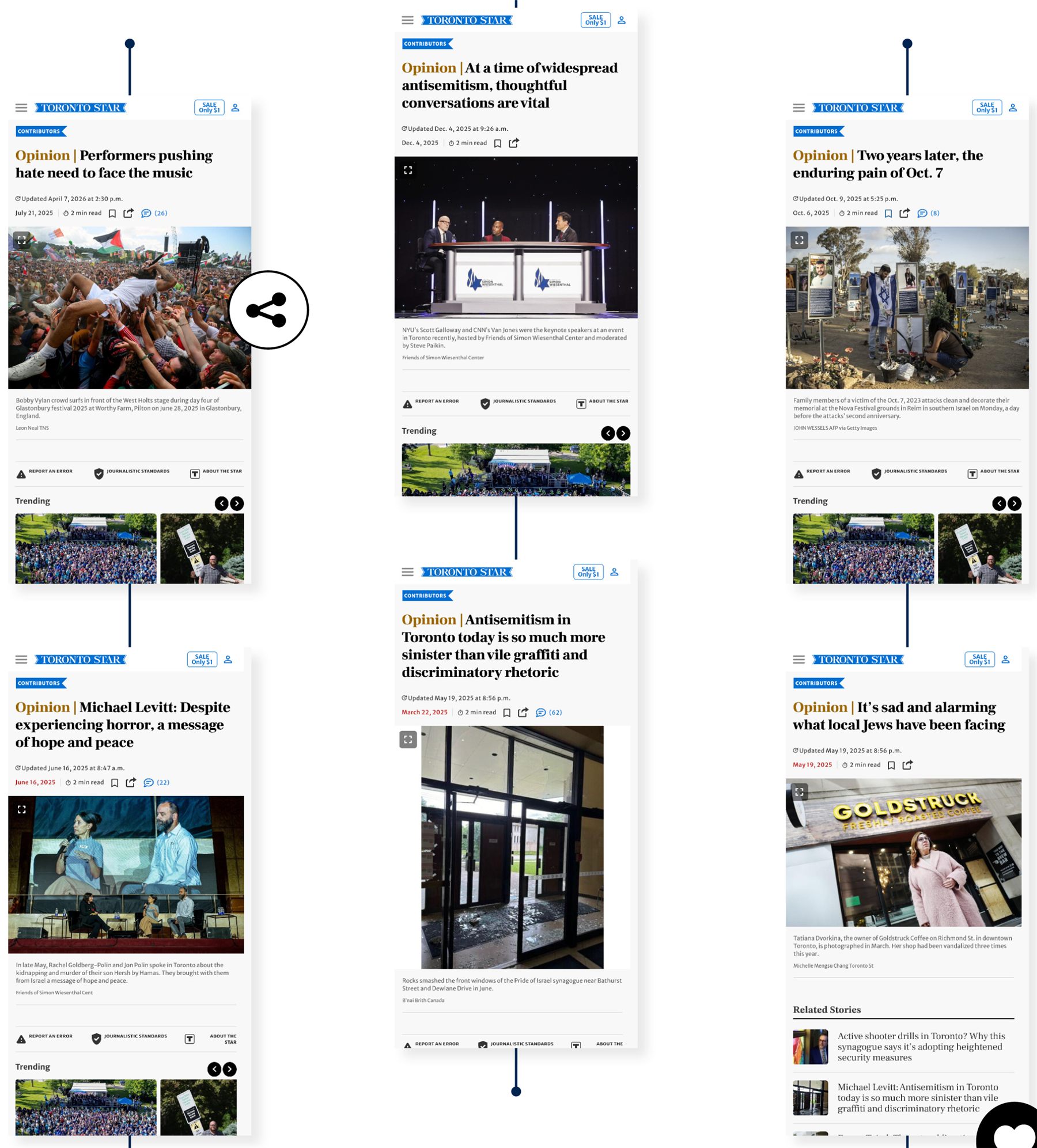
Such is the nature and relevance of our work and the credibility we enjoy in the community that journalists frequently turn to Wiesenthal Canada for our viewpoint on a particular issue or our response to an event or development that touches on our expertise. As antisemitic incidents unfortunately continue to occur in Canada on a disturbingly regular basis, Wiesenthal Canada’s advocacy and education work is widely covered in the media. This includes our position on hate crime legislation, workshops on our Tour for Humanity, mobile classroom targeted attacks against Jewish institutions and businesses and our work on criminal cases of individuals convicted of hate crimes against Jewish targets, and other issues. Here’s a selection of media coverage over the past year or so in which Wiesenthal Canada was cited:





Central to Wiesenthal Canada’s communication and outreach efforts is the content we share daily on our social media platforms. Our audience continues to grow in response to our posts. Here are the analytics all generated organically without paid promotion.

Michael Levitt
Gerald Schwartz, OC
Fred Waks
Ron Baruch
Jim Berk
Michael Bregman
Jonathan Bronfman
David Cynamon
Gordon R. Diamond, O.C., O.B.C.
Joel Feldberg
Jeremy Freedman
Ron Frisch
Vladislav Khaykin
Lauren Levy
Sam Mizrahi
Philip Reichmann
Jill Reitman
Gloria Salomon
Molly S. Shoichet, O.C., O.Ont.
Ashley Steinhauer Otto
Eddie Weisz
Eric Weisz
Ron Baruch
Michael Bregman
David Cynamon
Judith Finer-Freedman
Matthew Gottlieb
Jill Reitman
Fred Waks
Eddie Weisz
Samuel Belzberg z”l
Paul Bronfman z”l
Rabbi Marvin Hier
Rabbi Meyer May
Honey Sherman z”l
Cecil Yolles z”l
Brad Ashley
Gary Bensky
Renette Berman
Judy Betel
Allan Brown
Mel Brown
Milton Davis
Merrick Falkenstein
Alan Farber
David Glick
Eddie Glick
Susan Glick
Michelle Glied-Goldstein
Stuart Golvin
Matt Gottlieb
Allen Grinberg
Carole Gruson
Allen Karp
Stephen Karr
Allan Kates
Helene Korn
Evelyn Krakauer
Jonathan Latsky
Dan Malamet
Israel Mida
Faye Minuk
Pablo Reich
Bob Rubinoff
Richard Sacks
Jack Steckel
Arthur Stern
John Tory
Richard Wachsberg
Alan Wainer


Copyright © FSWC. All Rights Reserved.