


The lessons of the Holocaust figure prominently in FSWC’s education programs that promote the principles of inclusion, social justice and democratic values. In addition to the important historical facts behind Nazi Germany’s murder of six million Jews, we bring this dark chapter to life through the Holocaust survivor testimonies of those who, against all odds, survived the genocide.
Since the inception of FSWC, Holocaust survivors have discussed the horrors of concentration camps at our educational workshops and events. We are deeply grateful for their participation and for their strength in sharing their difficult personal journeys with young people, with the hope it will help prevent such a horrific tragedy in the future.
We are honoured to introduce you to some of the incredible men and women who have given so much of their time to contribute greatly to Holocaust education in Canada. The short summaries below and accompanying videos offer only a brief glimpse into the lived experience of antisemitism and trauma each of these people endured in their younger years duirng Holocaust.
Sadly, with the number of survivors constantly diminishing, the day is fast approaching when there won’t be anyone left who can give first-hand testimony of the excruciating reality Jews faced under the Nazis. All the more reason it is imperative to forever preserve and revisit these stories as part of the legacy of survivors.
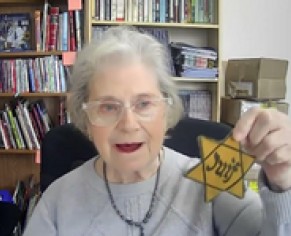
In 1939, France had a Jewish population of about 330,000 including around 40,000 refugees from Nazi Germany and Austria. About 200,000 lived in Paris. In June 1940, following the German invasion, the country was divided into the Nazi‑occupied north and the Vichy regime in the south; while the Vichy government was ostensibly independent, it actively collaborated with Nazi Germany. French Jews were subject to discriminatory laws including wearing the yellow star, but were not ghettoised. Refugees and other Jews without French citizenship were arrested and interned in camps across France.
Beginning in 1942, Jews were deported from these transit camps to the concentration and extermination camps, predominantly Auschwitz. Many of these arrests and deportations were carried out by the French police, such as the infamous Vel D’Hiver roundup of July 1942, when 13,000 Jews were held in inhumane conditions at a cycling stadium for several days before their deportation. In total, over 75,000 Jews were deported from France from 1942 to 1944, with only 2,500 surviving deportation. Around 75% of French Jews survived the Holocaust, predominantly through going into hiding or using false papers acquired with the help of resistance networks. It wasn’t until 1995 that President Jacques Chirac acknowledged the role played by the French state in the Holocaust.
Denise was born on June 21st, 1938, so was not yet two years old when the invasion of France occurred in 1940. Denise’s parents Michel and Perla were both immigrants from Poland, who had moved to Paris in the 1920s. They had six children; Denise was the fourth. The family lived in an apartment in the Le Marais district of Paris, a vibrant area home to many immigrant families. Though her parents had been living in France for many years, they did not have French citizenship. While her family was poor, they were happy and close‑knit, making Denise’s childhood home busy and warm. Denise’s family were not particularly religiously observant, but rather liberal.
May 14, 1941: After receiving a billet vert (green ticket) demanding they report to the police station for a “document check”, Denise’s father is arrested and interned at Pithiviers camp.
November 13, 1941: Denise’s baby sister Monique is born in Paris; Denise’s father is allowed a pass to leave the camp for the birth.
Winter 1941: After extending his pass several times, Denise’s father is told to return to the camp; he ignores the notice and instead goes into hiding in a small attic room.
July 16/17 1942: The Vel D’Hiver roundup; 13,000 Jews are arrested and held at a cycling stadium for several days before being deported. Denise’s neighbours, the Brenners, are among those arrested, as are her Uncle Simre and Aunt Helene and two cousins, Adele and Felix. Her Aunt Esther, Uncle Nathan, and two cousins Isabelle and Cecile come to live with Denise’s family in their apartment, as does Denise’s father.
September 13, 1942: French police come to the home to arrest Uncle Nathan, Aunt Esther and cousin Cecile; finding the latter not at home, they arrest Denise’s father in her place. He is sent first to an internment camp and then to Auschwitz.
Early 1943: Denise, her siblings and cousins are sent into hiding; the family apartment is emptied by the Nazis.
September 1943: After a brief return to Paris, Denise, her siblings and cousins return to hiding in the countryside, this time in separate locations.
May 1944: Denise is baptised by the family hiding her.
June 1944: Denise, her siblings and cousins return to Paris and are sent back into hiding with an order of nuns.
January 21, 1945: Denise’s father dies on a forced march out of Auschwitz.
1. How did Denise’s childhood experiences shape her sense of identity and family as she grew up?
2. Denise’s mother was left to protect and care for eight children during the war. How didshe respond to these difficult circumstances? What decisions did she make and why?
3. Denise describes being baptized to survive and later loving the Catholic faith while at the convent. What role did religion play in Denise’s experiences during the war?
4. How did non-Jewish people behave towards Denise and her family during the war? What motivated these different responses?
5. Later in her life, Denise became a Holocaust educator, sharing her testimony with audiences across Canada. Why do you think Denise feels it is important to share her testimony? What did you learn from hearing it?
1. Mapping Denise’s testimony
- Provide students with a map of Europe. Ask them to identify and label the map with key locations from Denise’s life (e.g. Paris, Pithiviers internment camp, Saint‑Omer)
- For each location, write a short description of what happened there
- Reflect as a class on the themes of the journey (e.g. immigration, deportation, hiding, liberation)
2. Creative writing
- Choose a moment from Denise’s story (e.g. her baptism, her return to Paris)
- Write a diary entry or a short letter from her perspective, explaining her experiences and her feelings about them
- Reflect as a class on Denise’s experiences and feelings at different moments during her wartime life
- Discuss the role of personal narratives in helping us to understand the history of the Holocaust


Copyright © FSWC. All Rights Reserved.


