


The lessons of the Holocaust figure prominently in FSWC’s education programs that promote the principles of inclusion, social justice and democratic values. In addition to the important historical facts behind Nazi Germany’s murder of six million Jews, we bring this dark chapter to life through the Holocaust survivor testimonies of those who, against all odds, survived the genocide.
Since the inception of FSWC, Holocaust survivors have discussed the horrors of concentration camps at our educational workshops and events. We are deeply grateful for their participation and for their strength in sharing their difficult personal journeys with young people, with the hope it will help prevent such a horrific tragedy in the future.
We are honoured to introduce you to some of the incredible men and women who have given so much of their time to contribute greatly to Holocaust education in Canada. The short summaries below and accompanying videos offer only a brief glimpse into the lived experience of antisemitism and trauma each of these people endured in their younger years duirng Holocaust.
Sadly, with the number of survivors constantly diminishing, the day is fast approaching when there won’t be anyone left who can give first-hand testimony of the excruciating reality Jews faced under the Nazis. All the more reason it is imperative to forever preserve and revisit these stories as part of the legacy of survivors.
In 1939, around 3.3 million Jews lived in Poland, making it home to Europe’s largest Jewish community. In 1939, Nazi Germany invaded Poland, and the country was split between Germany and the USSR, which occupied its eastern half. Ghettos were established in cities across Poland, including Lodz and Warsaw. Ghettos were closed areas in which Jews were required to live; conditions in the ghettos were deliberately brutal, with overcrowding and malnutrition common. Thousands died of disease, starvation or mistreatment in the ghettos. After the Nazi invasion of the USSR in 1941, the entire country came under Nazi control, and would become the epicenter of the Final Solution.
In 1942, the Nazis began deporting Jews from the ghettos to concentration camps and killing centers including Auschwitz and Treblinka. Most deportees were gassed on arrival, while others were used as forced labour in the Nazi concentration camp system. In 1943, the surviving inhabitants of the Warsaw Ghetto rose up against the Nazis; though brutally suppressed, the uprising — and others like it across Poland — stands as a powerful symbol of Jewish resistance during the Holocaust. Ultimately, about 90% of Poland’s prewar Jewish population were murdered during the Holocaust, and most of the survivors never returned to their prewar homes.
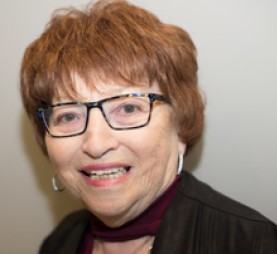
Esther’s parents lived in Zbarz, Poland and operated a slaughterhouse. Her mother, who was originally from the nearby town of Tarnopol, had seven brothers and a sister, while
her father had four brothers and two sisters. She had one sister who was five years her
senior. Esther was born in 1941, two years after the war had already started. As she was separated from her parents at two months old, Esther had no memories of her parents and did not even know her exact date of birth or birth name; her current name was given to her by her aunt and for her birthday, she uses the anniversary of the date she reunited with her aunt after the war.
1941: Esther is born in the Tarnopol Ghetto in Nazi-occupied Poland.
1941: At two months old, Esther is hidden by nuns in a local church, while her older sister hides with a family on a nearby farm.
1942/1943: The Nazis murder Esther’s parents during the seizure of their butcher’s shop.
August 1946: Esther’s aunt and uncle arrive at the church to adopt her. Esther, weakened after years of hunger, is hospitalised.
1946: Esther and her adoptive parents move to Germany, where they live in a Displaced Persons camp for three years.
1949: Esther and her adoptive parents immigrate to Canada.
1. The nuns who took in Esther took a huge risk by letting a Jewish child hide with them. How do you think they felt? What could have happened to them if they had been caught?
2. Which part of Esther’s story stood out to you the most? What did you learn from hearing her testimony?
3. Esther and her sister survived because their parents put them in hiding. Why do you think they made that decision? How do you think they felt about placing their children in hiding? What factors influenced their decision?
4. Esther grew up without her parents after the war. What do you think that was like for her? How do you think Esther felt after finding out later in life what happened to her parents?
5. What challenges did Esther and other survivors face in rebuilding their lives after the Holocaust?
Orphaned Children
- Individually or in groups, research the orphans of the Holocaust. How many were there? What happened to these children? Where did they go? Which organizations helped them?
-(Optional) select an individual like Esther who was orphaned during the Holocaust. Write a summary of their lives during and after the war. Present your summary to the class, and compare and contrast the orphans’ experiences
Righteous Among the Nations
- Ask students to research an individual or organization who helped Jewish people like Esther to hide during the Holocaust.
- As a class or in small groups, discuss these helpers. How did they aid Jewish people who were being persecuted? What factors influenced their decision to help? What were the risks they took when trying to assist others?


Copyright © FSWC. All Rights Reserved.


