


The lessons of the Holocaust figure prominently in FSWC’s education programs that promote the principles of inclusion, social justice and democratic values. In addition to the important historical facts behind Nazi Germany’s murder of six million Jews, we bring this dark chapter to life through the Holocaust survivor testimonies of those who, against all odds, survived the genocide.
Since the inception of FSWC, Holocaust survivors have discussed the horrors of concentration camps at our educational workshops and events. We are deeply grateful for their participation and for their strength in sharing their difficult personal journeys with young people, with the hope it will help prevent such a horrific tragedy in the future.
We are honoured to introduce you to some of the incredible men and women who have given so much of their time to contribute greatly to Holocaust education in Canada. The short summaries below and accompanying videos offer only a brief glimpse into the lived experience of antisemitism and trauma each of these people endured in their younger years duirng Holocaust.
Sadly, with the number of survivors constantly diminishing, the day is fast approaching when there won’t be anyone left who can give first-hand testimony of the excruciating reality Jews faced under the Nazis. All the more reason it is imperative to forever preserve and revisit these stories as part of the legacy of survivors.
While historically a legally emancipated and largely assimilated population, particularly in urban areas, Hungary’s 450,000 Jews faced increasing legal discrimination in the 1930s due to the policies of Miklós Horthy, a right-wing authoritarian ruler who had led the country since 1920. Horthy’s government maintained friendly diplomatic relations with Nazi Germany and implemented antisemitic policies, including 1938 racial laws based on the Nuremberg laws. Backed by the Nazis, Hungary annexed nearby territories from Czechoslovakia, Romania, and Yugoslavia in 1939 and 1940. The invasion of these areas, combined with the arrival of Jewish refugees from other, bought the country’s Jewish population to over 800,000 by 1944. From 1939 to 1944, Jews in Hungary, though the target of state-sponsored antisemitism, were not ghettoized or deported to concentration camps or killing centers.
This relative safety ended abruptly in March 1944 when, after the breakdown of the alliance between Horthy’s government and the Nazis, Hungary was invaded by Germany and a puppet government installed. Within just a few months, between May and July 1944, over 440,000 Hungarian Jews were deported to Auschwitz-Birkenau, where most were murdered upon arrival. This operation was orchestrated by SS Officer Adolf Eichmann with the active cooperation of Hungarian authorities, including police and civil servants. While most Hungarian Jews were murdered at Auschwitz, tens of thousands were killed in Budapest by members of the fascist Arrow Cross party, which ruled Hungary from October 1944. This included around 10,000 who were shot on the banks of the Danube. By the end of the war, approximately 550,000 Hungarian Jews had been murdered in the Holocaust, leaving around 250,000 survivors.
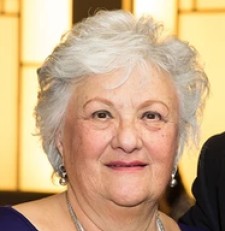
Eva Meisels had a happy childhood with loving parents. Her parents, who married in August 1938, both grew up in large Orthodox Jewish families. Eva’s childhood home was similarly religiously observant. Though her family life was loving and close-knit, Eva noted that her family nonetheless experienced antisemitism even before the Nazi invasion of Hungary.
July 1939: Eva Meisels is born in Budapest, Hungary
1942: Eva’s father loses his job as a result of Hungarian antisemitic laws
1942: Eva’s father is taken to a forced labour camp
March 19th, 1944: Nazi Germany invades Hungary
Spring/Summer 1944: Eva’s mother’s family are deported to Auschwitz, where they are murdered.
November 1944: Eva and her mother are forced to live in the Budapest ghetto
Late 1944: Eva and her mother are able to obtain false Swedish passports from Raoul Wallenberg which protect them.
January 1945: Eva and her mother are liberated by the Soviet Army
August 1945: Eva’s father finally returns to Budapest and reunites with his family
December 1956: The family escapes to Austria after the Hungarian Revolution
January 1957: Eva and her family arrive in Canada
1. As a child in Budapest, Eva was forced to wear a Yellow Star badge. Why did the Nazis force Jews to wear this badge? How do you think wearing the badge made Eva feel?
2. Eva was a young child during the Holocaust. How do you think this influences her experience of survival, compared to how an adult might describe their experiences?
3. Eva and her family decided to stay in Hungary after the events of World War II. What do you think life was like after the Holocaust? What hardships do you think they faced?
4. When Eva speaks of her experience, she emphasized the need to take action if one witnesses injustice and discrimination. What examples of such actions can you think of?
5. Eva has quoted the philosopher George Santayana in the past who said, “Those who cannot remember the past are condemned to repeat it.” What does this mean to you? What are ways we can remember the past in a meaningful way?
1. Rebuilding
- Using Eva’s testimony, make a timeline of her life after the Holocaust.
- Individually or in groups, research how Holocaust survivors rebuilt their lives after 1945. Where did Holocaust survivors live after the end of the war? Where did they go? How did they find out what happened to their families?
- (Optional) using another video in this series, compare and contrast Eva’s postwar life to the life of another survivor.
2. Righteous Among the Nations
- Individually or in small groups, research the Righteous Among the Nations
- Why did individuals like Raoul Wallenberg choose to help Jewish people like Eva during the Holocaust? What motivated them to make this decision? What risks did they face?
- (Optional) research other examples of Righteous Among the Nations awardees and write a profile explaining who they were and what they did to help Jews during the Holocaust. Present your research to the class.


Copyright © FSWC. All Rights Reserved.


