


The lessons of the Holocaust figure prominently in FSWC’s education programs that promote the principles of inclusion, social justice and democratic values. In addition to the important historical facts behind Nazi Germany’s murder of six million Jews, we bring this dark chapter to life through the Holocaust survivor testimonies of those who, against all odds, survived the genocide.
Since the inception of FSWC, Holocaust survivors have discussed the horrors of concentration camps at our educational workshops and events. We are deeply grateful for their participation and for their strength in sharing their difficult personal journeys with young people, with the hope it will help prevent such a horrific tragedy in the future.
We are honoured to introduce you to some of the incredible men and women who have given so much of their time to contribute greatly to Holocaust education in Canada. The short summaries below and accompanying videos offer only a brief glimpse into the lived experience of antisemitism and trauma each of these people endured in their younger years duirng Holocaust.
Sadly, with the number of survivors constantly diminishing, the day is fast approaching when there won’t be anyone left who can give first-hand testimony of the excruciating reality Jews faced under the Nazis. All the more reason it is imperative to forever preserve and revisit these stories as part of the legacy of survivors.
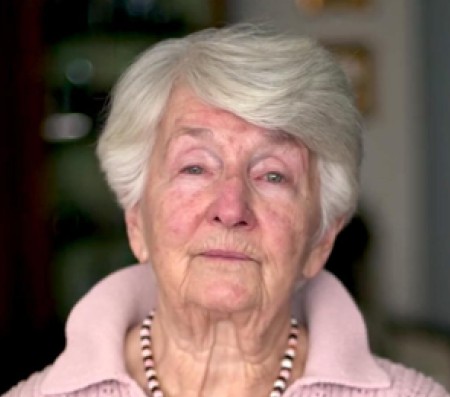
Hedy grew up in Northern Transylvania, which had a pre-war Jewish population of around 165,000. During her childhood, the region was in Romania, but in 1939* it was annexed by Hungary, whose authoritarian government maintained friendly relations with Nazi Germany. Northern Transylvanian Jews were subjected to a range of harsh antisemitic policies, including racial laws based on the Nuremberg laws. These policies removed Jewish people from professional jobs, confiscated Jewish-owned businesses, and prevented Jewish students from accessing higher education. Jewish men in Northern Transylvania were also sent to labour camps where they were forced to do heavy physical work in harsh conditions.
From 1939 to 1944, Jews in Northern Transylvania, though the target of state-sponsored antisemitism, were not ghettoized or deported to concentration camps or killing centres. This relative safety ended abruptly in March 1944 when, after the breakdown of the alliance between the Hungarian government and the Nazis, Hungary was invaded by Germany and a puppet government installed. Jews in Northern Transylvania were forced into ghettos, compelled to wear the yellow star on their clothing, and deported to concentration camps and killing centres. The Final Solution in this region was perpetrated by the Nazis and their local collaborators, including police and civil servants. In total, around 130,000 Northern Transylvanian Jews were deported, predominantly to Auschwitz-Birkenau. Most were murdered on arrival. Around 35,000 Northern Transylvanian Jews survived the Holocaust in concentration camps, labour camps, or in hiding; the majority of survivors emigrated after the war, and today the Jewish population of the region is very small.
Hedy grew up in a Transylvanian city of 100,000 people, of whom around 30,000 were Jewish; life growing up was peaceful, quiet, and modest, with little antisemitism to speak of. The family spoke Hungarian at home, but Hedy’s school was conducted in Romanian. Growing up, Hedy was interested in art, gymnastics, history, literature and poetry; she dreamed of being a gym or dance teacher. She describes herself as an average student, in contrast with her mother, an excellent student who had been unable to fulfill her dreams of a career in medicine due to financial limitations. Though she attended an Orthodox Jewish school and grew up in a kosher home, Hedy’s family were not rigidly observant.
1928: Hedy is born in Transylvania.
1939: Northern Transylvania is occupied by Hungary; Hedy and her community are subject
to antisemitic laws by the Hungarian government.
March 1944: Hungary, including Northern Transylvania, is occupied by Nazi Germany;
Transylvanian Jews are forced into ghettos.
Late May 1944: Hedy and her family are deported to Auschwitz-Birkenau.
Late May 1944: After three days on a cattle car, Hedy and her family arrive at Auschwitz-
Birkenau; her parents are murdered on arrival.
August 1944: Hedy, her aunt, and two cousins are transported from Auschwitz to
Fallersleben, Germany, to do forced labour in a factory.
February 1945: A French political prisoner tells Hedy that the Allies are advancing and the
war will soon end.
April 1945: Hedy is moved to another camp away from the Allied advance.
April 14th, 1945: Hedy is liberated from the camp by the US Army.
August 1945: Hedy returns to her hometown.
December 1947: Hedy and her new husband flee Romania for Hungary.
August 1948: Hedy and her husband emigrate to Canada.
1. In her talk, Hedy describes how many people, including her father, didn’t believe the
Holocaust could happen. Why do you think that this belief was so common?
2. What did you learn from Hedy’s testimony? Did any aspects of her story surprise you?
3. What role did hope play in Hedy’s survival during the Holocaust?
4. Why do you think Hedy and other Holocaust survivors stayed silent about their
experiences after the war?
5. Hedy ended her talk by urging students to “rock the boat” and speak up. What do you
think she meant by that? How could you apply this idea in your own life?
Key moments
- In small groups, put together a timeline of Hedy’s experiences (e.g. deportation,
liberation, emigration to Canada)
- For each moment on the timeline, write a paragraph describing what happened to
Hedy
- (Optional) Illustrate each moment with a drawing
- (Optional) Add world events to your timeline (e.g. the D-Day landings, VE Day) to
contextualize Hedy’s experiences. You may place Hedy’s experiences on one side of the
timeline and wider world events on the other, or use colour or font to distinguish
between them.
Resistance
- Listen to Hedy’s testimony and highlight moments of resistance to Nazism and the
Holocaust (e.g. the French political prisoner handing Hedy a secret note, Hedy stealing
carrots for her family)
- Write or discuss these questions
o How did people in Hedy’s testimony try to resist Nazism in small ways?
o Why did people choose to resist even though it was extremely dangerous to do so?
o What other kinds of resistance were there during the Holocaust? Be sure to think
about direct and indirect, big and small ways to resist.
- (Optional) in groups or individually, research acts of resistance during the Holocaust.


Copyright © FSWC. All Rights Reserved.


