


The lessons of the Holocaust figure prominently in FSWC’s education programs that promote the principles of inclusion, social justice and democratic values. In addition to the important historical facts behind Nazi Germany’s murder of six million Jews, we bring this dark chapter to life through the Holocaust survivor testimonies of those who, against all odds, survived the genocide.
Since the inception of FSWC, Holocaust survivors have discussed the horrors of concentration camps at our educational workshops and events. We are deeply grateful for their participation and for their strength in sharing their difficult personal journeys with young people, with the hope it will help prevent such a horrific tragedy in the future.
We are honoured to introduce you to some of the incredible men and women who have given so much of their time to contribute greatly to Holocaust education in Canada. The short summaries below and accompanying videos offer only a brief glimpse into the lived experience of antisemitism and trauma each of these people endured in their younger years duirng Holocaust.
Sadly, with the number of survivors constantly diminishing, the day is fast approaching when there won’t be anyone left who can give first-hand testimony of the excruciating reality Jews faced under the Nazis. All the more reason it is imperative to forever preserve and revisit these stories as part of the legacy of survivors.
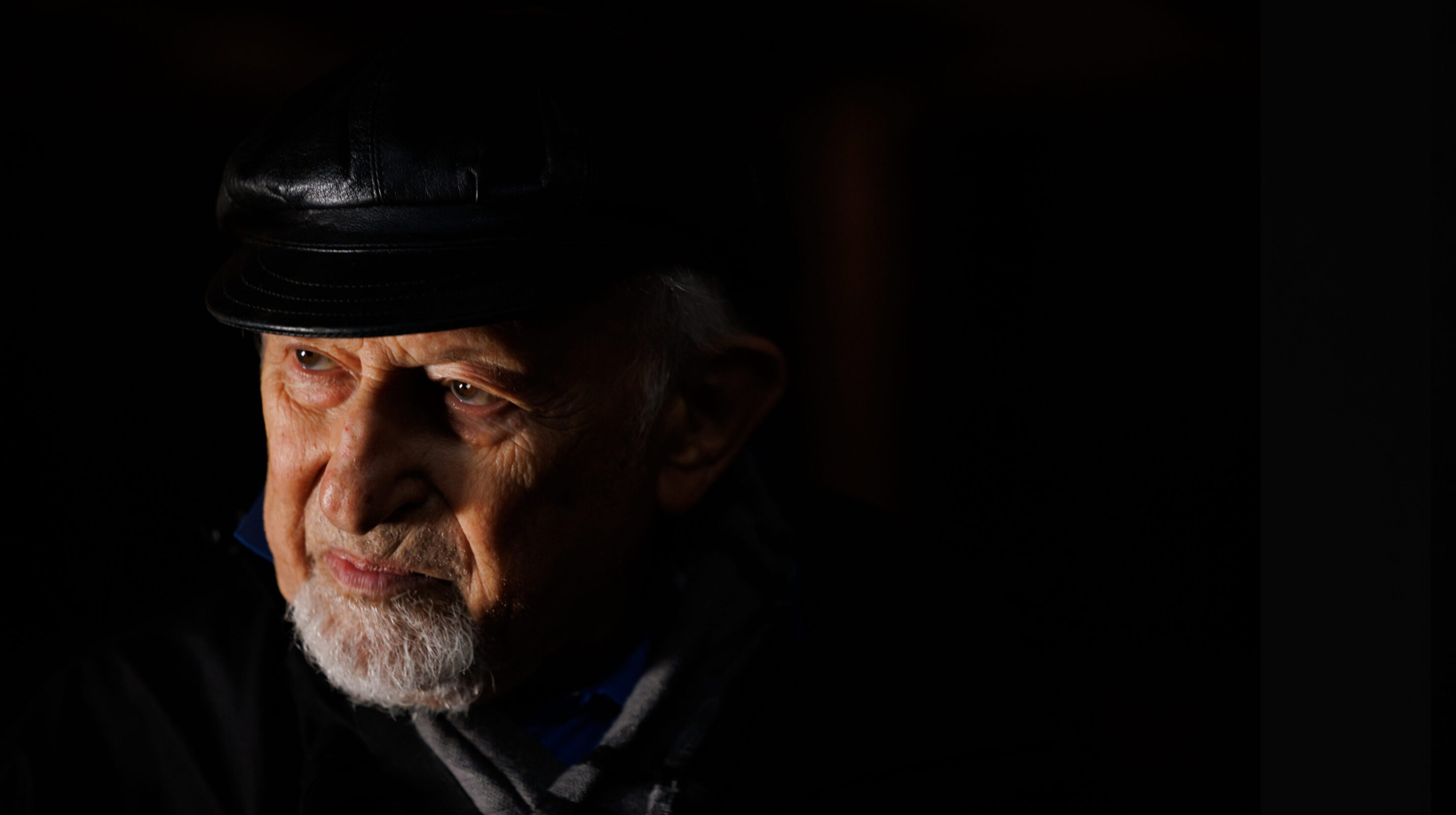
In 1939, around 3.3 million Jews livedin Poland, making it home to Europe’s largest Jewish community. In 1939, Nazi Germany invaded Poland, and the country was split between Germany and the USSR, which occupied its eastern half. Nate’s hometown, Chorzów, was part of theUpper Silesia region of Poland; many of the area’s inhabitants spoke German, and the region had previously been part of Prussia. In 1939, the region was annexed by Germany, and its Jewish inhabitants forced to live in ghettos. These ghettos were urban areas in which Jews were required to live; conditions in the ghettos were brutal, with overcrowding and malnutrition common. Thousands died of disease, starvation or mistreatment in the ghettos. Some ghettos, like those in Warsaw and Krakow, were closed to the outside world; others, like the one in Sosnowiec where Nate lived, were open. After the Nazi invasion of the USSR in 1941, the entire country came under Nazi control, and would become the epicentre of the Final Solution. In 1942, the Nazis began deporting Jews from the ghettos to concentration camps and killing centres including Auschwitz and Treblinka. Most deportees were gassed on arrival, while others were used as forced labour in the Nazi concentration camp system. Ultimately, about 90% of Poland’s pre-war Jewish population were murdered during the Holocaust, and most of the survivors never returned to their prewar homes.
Nate was born in 1928 in Chorzów, a large city in the Upper Silesia region of Poland. He characterises his hometown as a modern, cosmopolitan city, far from the “Fiddler on the Roof” stereotype of pre-war Polish Jewish life. Nate’s family—his mother, father and sister—were lower middle class. In the summer of 1939, Nate had just finished Grade 4, and enjoyed a summer vacation to the mountains with his family.
September 1st, 1939: Nazi Germany invades Poland. Nate’s father is sent to a labour camp
and his store confiscated.
1939-1940: Nate’s family are expelled from their hometown Chorzów to Sosnowiec, an
open ghetto.
August 2nd, 1943: Nate is deported to Auschwitz-Birkenau and selected for hard labour.
Late 1943-1944: Nate is transported to Fünfteichen, Germany to work at an armaments
factory.
January 19th, 1945: Nate is evacuated by the Nazis on a death march from Fünfteichen to
Gross-Rosen concentration camp.
February-March 1945: Nate is evacuated several more times: to Flossenbürg
concentration camp, then to Leonberg, an underground factory camp, and on to
Mühldorf forest camp.
April 2nd , 1945: Nate and his father are liberated by the US Army.
1946–1947: Nate and his father apply for emigration to Canada and are refused twice.
1948: Nate and his father are accepted to emigrate to Canada.
- Nate describes his father’s decision to join the Jewish Ghetto Police as a “choiceless choice”. What does this phrase mean? What other examples of choiceless choices are there in Nate’s testimony?
- How does Nate characterize his relationship with his father? How did that relationship help him to survive?
- Nate said that during the Holocaust, “the world turned its back.” What role did other countries, including Canada, play during this time—and what lessons should we learn from that today?
- Why does Nate believe it’s so important to share his testimony? How can we help keep the memory of the Holocaust alive?
- Nate says, “This is my victory. This is how I defeated Hitler,” referring to his family. What do you think he meant by that?
Letter to Nate
- Write a short (1 page) letter to Nate
- Reflect on the following questions in writing your letter: o What did you learn from Nate’s testimony? o How did you feel hearing his story? o What lessons or ideas will you take away from Nate’s testimony? o What questions do you have for Nate after hearing his testimony?
- (Optional) share your letter with a classmate or with the whole class
Timeline
- Individually or in groups, identify key moments in Nate’s testimony
- Create a timeline of these events. Your timeline should include a brief description of each event in Nate’s life
- Add major events from the history of the Second World War and the Holocaust (e.g. D-Day). You may wish to put Nate’s experiences on one side of the timeline and the world events on the other side, or use colours to help distinguish them
- (Optional) present your timeline to the class


Copyright © FSWC. All Rights Reserved.


