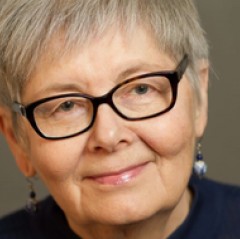
The lessons of the Holocaust figure prominently in FSWC’s education programs that promote the principles of inclusion, social justice and democratic values. In addition to the important historical facts behind Nazi Germany’s murder of six million Jews, we bring this dark chapter to life through the Holocaust survivor testimonies of those who, against all odds, survived the genocide.
Since the inception of FSWC, Holocaust survivors have discussed the horrors of concentration camps at our educational workshops and events. We are deeply grateful for their participation and for their strength in sharing their difficult personal journeys with young people, with the hope it will help prevent such a horrific tragedy in the future.
We are honoured to introduce you to some of the incredible men and women who have given so much of their time to contribute greatly to Holocaust education in Canada. The short summaries below and accompanying videos offer only a brief glimpse into the lived experience of antisemitism and trauma each of these people endured in their younger years duirng Holocaust.
Sadly, with the number of survivors constantly diminishing, the day is fast approaching when there won’t be anyone left who can give first-hand testimony of the excruciating reality Jews faced under the Nazis. All the more reason it is imperative to forever preserve and revisit these stories as part of the legacy of survivors.
Renate was born in Poland, which had a Jewish population of over 3 million in 1939. In September of that year, the country was divided by the coordinated simultaneous invasions of Nazi Germany from the west and the USSR from the east. The USSR then annexed eastern Poland, including parts of modern-day Ukraine and Belarus. While some Jewish residents were initially hopeful that the Soviet regime would be a lesser evil than the Nazis, the Soviet regime was harsh, suppressing Jewish religious and cultural life and eliminating civil liberties. Indeed, under Soviet occupation, hundreds of thousands of Polish citizens — including many Jews — were deported to Siberia and Central Asia.
In June 1941, Nazi Germany launched Operation Barbarossa, invading Soviet-held Polish territory and bringing it under Nazi control. This marked the beginning of the Holocaust in this part of Poland, whereby Einsatzgruppen, or mobile killing units, carried out mass shootings of Jews across the region. Jewish communities not murdered by the Einsatzgruppen were then forced into closed ghettos, where living conditions were appalling and death by starvation, disease or violence was common. Beginning in 1942, Jews from these ghettos were deported to concentration camps and killing centers such as Belzec and Sobibor. The vast majority of Jewish people living in the eastern half of Poland in 1941 were murdered in the Holocaust, with about 90% of Polish Jews being killed altogether.
Renate was born in 1941, two years after the start of the Second World War and months before the invasion of the USSR, which had occupied her birthplace of Stanisławów. Though life under the Soviet occupation could be harsh, Renate’s parents William and Charlotte were able to enjoy a relatively normal life and to pursue careers in their respective fields of pharmacy (her mother) and electrical engineering (her father). Indeed, during the occupation Jewish people had greater career opportunities than they had during the 1920s and 1930s. Renate’s parents had no inkling that the Soviet occupation would last less than two years and that their hometown would be invaded by the Nazis in June 1941.
1939: Renate’s parents William and Charlotte Tannenzapf marry in Stanisławów, then ineastern Poland, shortly before the Nazi and Soviet invasions.
March 1941: Renate is born in Stanisławów, during the Soviet occupation.
June 1941: Nazi Germany invades Soviet-occupied Poland, including Stanisławów, andthe family are forced into the ghetto.Summer
1942: Renate, around 18 months old, is hidden by a Polish widow.Summer
1944: the Nazis retreat, and Renate returns to her parents.
1945-48: Renate and her family live in several Displaced Persons camps.
1948: Renate and her family emigrate to Montreal.
1. Renate says that the first five years of life are crucial to development. What impact did her experiences during these years have on her postwar life and relationships?
2. Why do you think that the Polish widow who hid Renate chose to take her in, when the choice to hide a Jewish child was so dangerous?
3. What role did religion play in Renate’s childhood experiences?
4. Renate and her father both published a memoir in 2009. His part is called “Memories
from the Abyss”, while Renate’s part is called “But I Had a Happy Childhood”. Why do you think they chose these different titles? What do the titles reflect about their experiences?
5. Renate emphasizes the importance of education, both her own and her father's efforts to educate others. Why do you think education is so important to her?
1. Interviewing Renate
a. Make a list of 5-7 interview questions you would ask Renate if she visited your class
b. Questions should be open-ended, going beyond facts to focus on her experiences, emotions, and thoughts
c. As a class, consider the themes which came up most frequently among your questions (e.g. identity, memory)
2. Illustrated timeline
a. Create a visual timeline of Renate’s life, including key historical events and personal milestones
b. The timeline may be physical or digital and should include visuals like photographs and maps
(Optional) compare with the experiences of a different survivor to illustrate the diversity of survivor testimony


Copyright © FSWC. All Rights Reserved.